
Compare Creality 3D Ender 3 vs Longer 3D LK4 X vs QIDI Q1 PRO
Comparison between the best 3D printers
Choose the best 3D printer at the best price. The cheapest 3D printers are here.
Buy a 3D printer here with 3D Fila.
 |
 |
 |
|
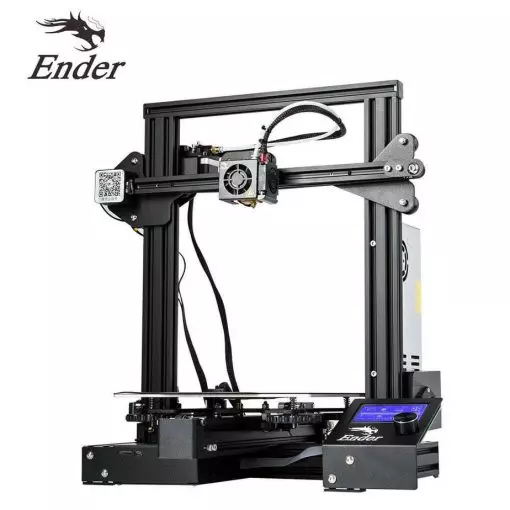
| Model | Creality 3D Ender 3[BUY Ender 3] |
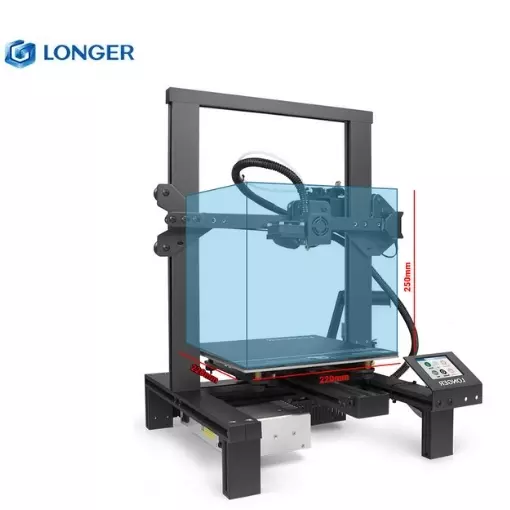
Longer 3D LK4 X |
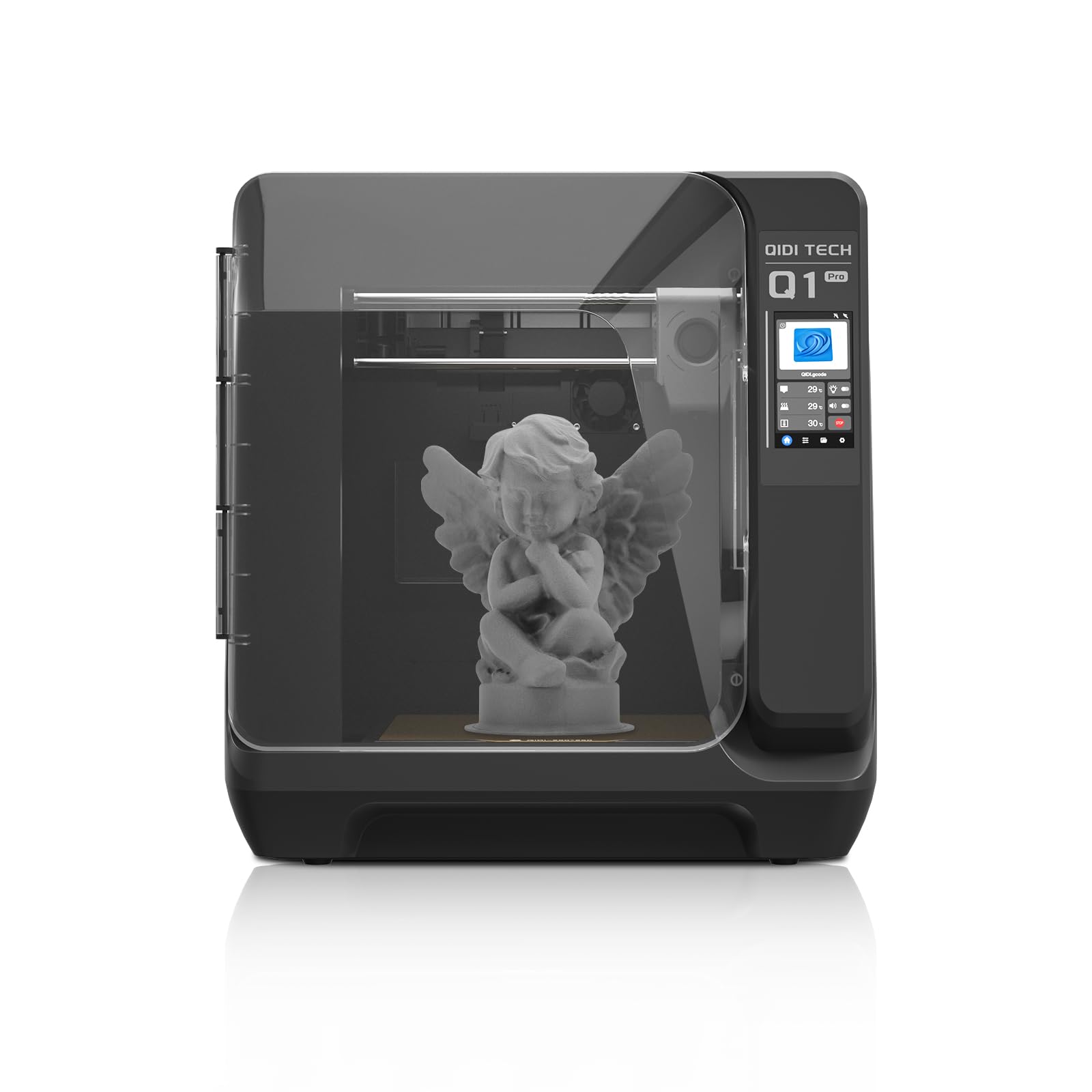
QIDI Q1 PRO[BUY Q1 PRO] |
| Printing Material | Filament | Filament | Filament |
| Estimated price | $210,00 | $299,00 | $449,00 |
| Date of registration in the system | |||
| Fabricante | Creality 3D | Longer 3D | QIDI |
| Release Year | 2018 | 2022 | 2024 |
| Print Volume [mm] | 220x220x250 | 220x220x250 | 245x245x245 |
| Printer Size [mm] | 440x440x465 | 465x485x615 | 467x477x489 |
| Weight [kg] | 6,62 | 9,8 | 20 |
| Power Loss Recovery | NO | YES | YES |
| Enclosed printer | NO | NO | NO |
| Bed Leveling | Manual | Automatic | Automatic |
| Filament End Sensor | NO | YES | YES |
| Bed type | Heated | Heated | Heated |
| Power supply system | Bowden | Bowden | Direct Drive |
| Standard nozzle | 0,4 | 0,4 | 0,4 |
| Maximum Nozzle Temperature [°C] | 255 | 250 | 350 |
| Maximum Bed Temperature [°C] | 110 | 100 | 120 |
| Maximum printing speed [mm/s] | 180 | 120 | 600 |
| Filament holder | YES | YES | YES |
| Camera for supervision | NO | NO | YES |
| Recommended filaments | PLA, TPU, ABS, PETG | PLA, TPU, ABS, PETG | PLAã€ABSã€ASAã€PETGã€TPUã€PCã€PAã€PA-CFã€PET-CFã€PAHT-CF etc. |
| Recommended slicers | Cura, Simplify, Slic3r | Cura, Simplify, Slic3r | QIDI Slicer/Cura/Simplify 3D/ORCA/PRUSA Slicer |
| Maximum Resolution [mm] | 0,1 | 0,1 | 0,1 |
| Kinematics | - | - | - |
| Extruder Type | - | - | - |
| Klipper Firmware | NO | NO | NO |
| Input Shaping | NO | NO | NO |
| Max Volumetric Flow [mm³/s] | - | - | - |
| Power Supply | 24V / 270W | 12V / 320W | 350 W |
| Connectivity | SD / USB | SD / USB | WiFi/USB Flash Drive/Ethernet Cable |
| Release date | 2018 | 2022 | 2024 |
| Extra features | The Ender 3 V1 is a DIY assembly 3D printer, a sales leader since 2017, standing out for its cost-benefit. With a wide printing capacity, it has a CNC machined structure for precision and stability. It offers high-precision prints with low noise, thanks to its innovative V-profile and pulleys. It has a self-adhesive magnetic platform for easy removal of models and excellent adhesion. The Ender 3 heats up quickly, reaching 100°C in 5 minutes, ideal for agile prints. It includes protection against power failures, allowing you to resume printing after interruptions, saving time and material. | Longer LK4 X offers intelligent 16-point auto-leveling and dual direct-gear extruders for precise filament control, compatible with multiple materials. It features an ultra-quiet 32-bit motherboard and open-source firmware, promoting creative freedom. Its PEI film platform ensures strong adhesion and easy model removal. Includes resume printing functions and filament out-of-stock protection. Assembly is simple, with 95% pre-assembled. It has a 4.3-inch touch screen, dual fan kit, low power consumption, manual belt tensioners and improved Teflon tube. | The QIDI Q1 Pro 3D printer stands out for its Core XY structure and heating chambers that reach up to 60ºC, ideal for advanced materials such as ABS and Nylon. It features Klipper firmware, an automatic leveling system, a high-flow extruder with a double metal nozzle and a hotend that reaches 350ºC. It offers connectivity via Wi-Fi, USB and Ethernet, as well as a 1080p camera for remote monitoring and an intuitive touchscreen for easy operation. |
| Support for multiple colors and materials (AMS and CFS) | NO | NO | NO |
Notes * |
|||
| Cost-benefit | 8 / 10 | 8 / 10 | 8 / 10 |
| Hardware | 0.5 / 10 | 2.4 / 10 | 4.8 / 10 |
| Screen | . | . | . |
| Print volume | 10 / 10 | 10 / 10 | 10 / 10 |
| Performance | 7 / 10 | 6 / 10 | 10 / 10 |
| [BUY Ender 3] | [BUY Q1 PRO] |
Conclusion |
| In summary, when comparing the Ender 3, LK4 X, and Q1 Pro 3D printers, several key factors emerge that can help potential buyers make an informed decision. The **Ender 3** is a well-regarded entry-level printer that offers an excellent cost-benefit ratio, making it a popular choice for beginners. Its manual bed leveling and lack of advanced features like power loss recovery or filament sensors may deter some, but it compensates with simplicity and a strong community support network. Its ability to handle common filament types and solid print quality solidifies its status as a go-to option for those just entering the 3D printing space. The **LK4 X**, while slightly more expensive, caters to users who seek added functionality. Its automatic bed leveling, filament sensor, and dual extruders provide enhanced usability and versatility for multi-material printing. Its intuitive touchscreen and quiet operation also appeal to users looking for a more modern experience. However, it’s essential to note that the performance and hardware quality are still somewhat limited compared to higher-end options. The **Q1 Pro** stands out as the most advanced option, designed for users who require precision and functionality for more complex projects. Its Core XY structure, high-temperature capabilities, and automatic leveling system cater to hobbyists and professionals alike. The inclusion of Wi-Fi connectivity and a camera for remote monitoring further add to its appeal. Despite being the most expensive of the three, its advanced features provide substantial value for those who need them. In conclusion, if budget and basic functionality are the primary considerations, the **Ender 3** is an ideal choice. For those seeking a balance of performance and features without breaking the bank, the **LK4 X** serves as a commendable middle ground. On the other hand, the **Q1 Pro** is the best option for serious users willing to invest in a high-performance machine that can accommodate a wider variety of materials and offer enhanced usability features. Each printer has its strengths, and the best choice ultimately depends on the buyer's specific needs and experience level. |