
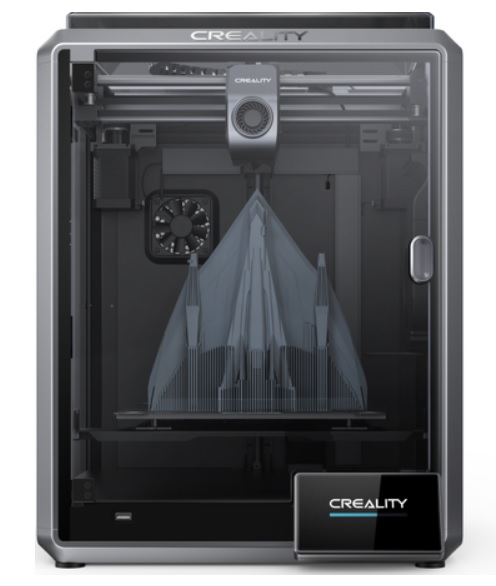
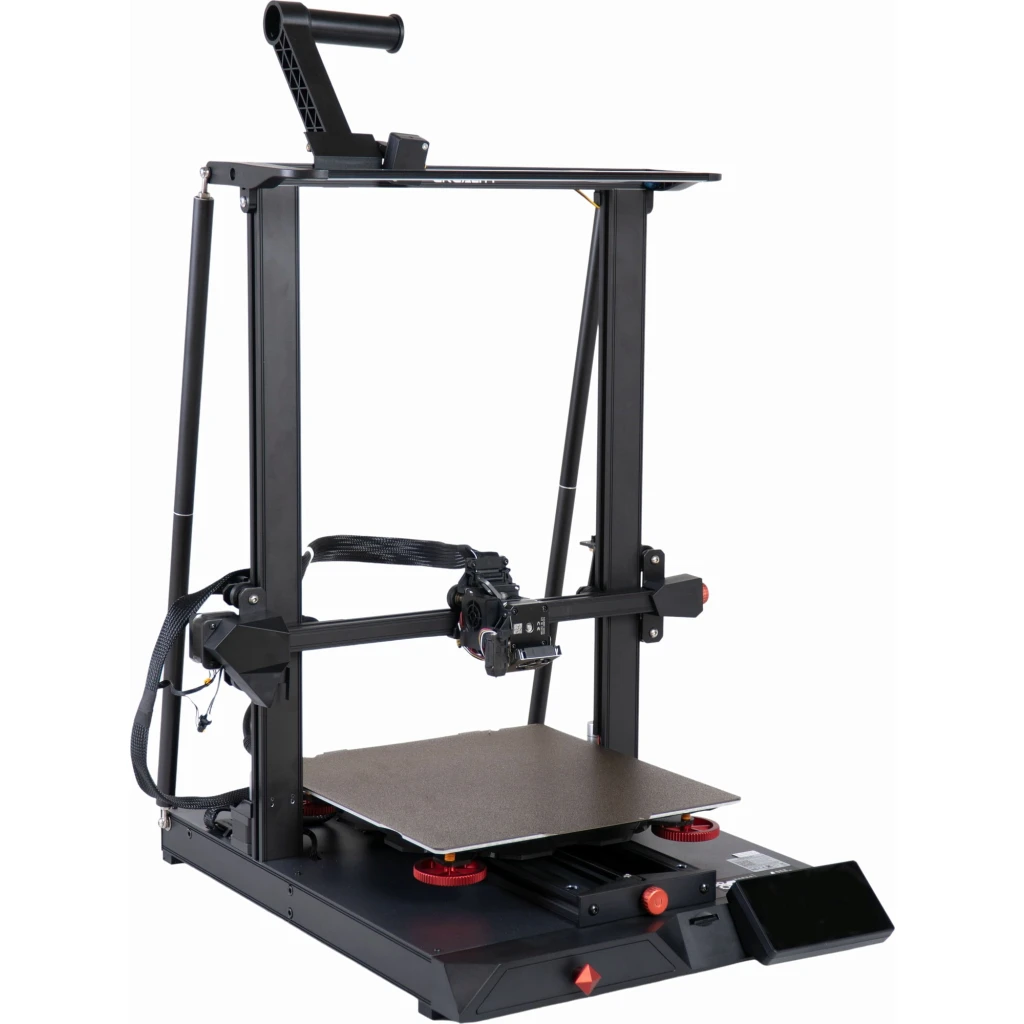
Compare Creality 3D K1C vs Creality 3D CR 10 Smart Pro
Comparison between the best 3D printers
Choose the best 3D printer at the best price. The cheapest 3D printers are here.
Buy a 3D printer here with 3D Fila.
 |
 |
|
| Model | Creality 3D K1C[BUY K1C] |
Creality 3D CR 10 Smart Pro[BUY CR 10 Smart Pro] |
| Printing Material | Filament | Filament |
| Estimated price | $449,00 | $900,00 |
| Date of registration in the system | ||
| Manufacturer | Creality 3D | Creality 3D |
| Release Year | 2024 | 2020 |
| Print Volume [mm] | 220x220x250 | 300x300x400 |
| Printer Size [mm] | 355x355x480 | 578x522x648 |
| Weight [kg] | 12,4 | 13,6 |
| Power Loss Recovery | YES | YES |
| Enclosed printer | YES | NO |
| Bed Leveling | Automatic | Manual |
| Filament End Sensor | YES | YES |
| Bed type | Heated | Heated |
| Power supply system | Direct Drive | Bowden |
| Standard nozzle | 0,4 | 0,4 |
| Maximum Nozzle Temperature [°C] | 300 | 300 |
| Maximum Bed Temperature [°C] | 120 | 100 |
| Maximum printing speed [mm/s] | 600 | 50 |
| Filament holder | YES | YES |
| Camera for supervision | YES | YES |
| Recommended filaments | ABS, PLA, PETG, PET, TPU, PA, ABS, ASA, PC, PLA-CF, PA-CF, PET-CF | PLA, PETG, Tritan, Flex, ABS |
| Recommended slicers | Creality Print; Cura, Simplify3D e PrusaSlicer | Cura, Simplify, Slic3r, IdeaMaker |
| Maximum Resolution [mm] | 0,1 | 0,1 |
| Kinematics | - | - |
| Extruder Type | - | - |
| Klipper Firmware | NO | NO |
| Input Shaping | NO | NO |
| Max Volumetric Flow [mm³/s] | - | - |
| Power Supply | 110/220V / 350W | 110/220V / 350W |
| Connectivity | Ethernet / USB / Wi-Fi | SD / USB / Wi-Fi / Ethernet |
| Release date | 2024 | 2020 |
| Extra features | The Creality K1C is a fully enclosed CoreXY 3D printer featuring an all-metal extruder, tri-metal âUnicornâ nozzle for abrasive materials, automatic bed leveling with nozzle cleaning, AI-assisted failure detection, built-in camera for timelapse, enhanced cooling system, root access to Klipper firmware, and compatibility with PLA-CF, PA-CF, PET-CF, TPU, ABS, and more. | Creality's CR-10 Smart Pro printer offers a large 300x300x400mm build volume, Sprite Pro direct extruder for multiple materials, CR Touch auto-leveling, PEI magnetic bed, 4.3" touchscreen, LED lighting, and Creality Cloud connectivity. Some areas of improvement include the use of brass spindle nuts and tinned wires. |
| Support for multiple colors and materials (AMS and CFS) | NO | NO |
Notes * |
||
| Cost-benefit | 8 / 10 | 5 / 10 |
| Hardware | 4.8 / 10 | 1.5 / 10 |
| Screen | . | . |
| Print volume | 10 / 10 | 10 / 10 |
| Performance | 10 / 10 | 5 / 10 |
| [BUY K1C] | [BUY CR 10 Smart Pro] |
Conclusion |
Conclusion: Comparison of the K1C and CR 10 Smart Pro 3D Printers When evaluating the Creality K1C and the CR 10 Smart Pro, both offer unique advantages and disadvantages that cater to different user needs. Below is a detailed comparison highlighting the pros and cons of each printer: K1C (Creality 3D)Pros:
Cons:
CR 10 Smart Pro (Creality 3D)Pros:
Cons:
Final Verdict: Choosing the right 3D printer ultimately depends on the user's specific needs and experience level:
In conclusion, if rapid prototyping and advanced features are your main priorities, the K1C stands out as the best buy. Conversely, if you are looking for a reliable and user-friendly option with a larger printing capacity, the CR 10 Smart Pro is an excellent choice. |