
Compare Bambu Lab H2S Combo vs Bambu Lab P1S
Comparison between the best 3D printers
Choose the best 3D printer at the best price. The cheapest 3D printers are here.
Buy a 3D printer here with 3D Fila.
 |
 |
|
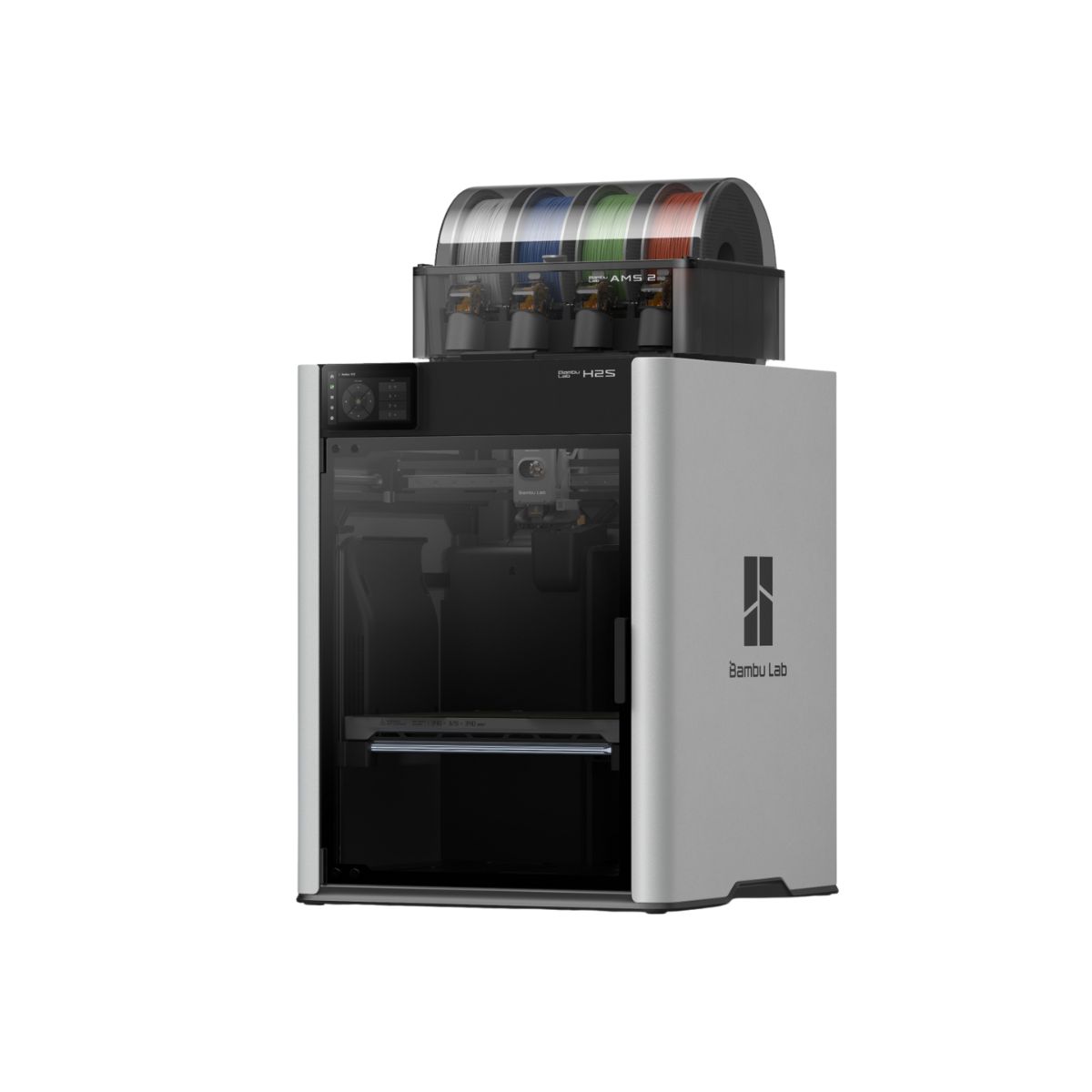
| Model | Bambu Lab H2S Combo |
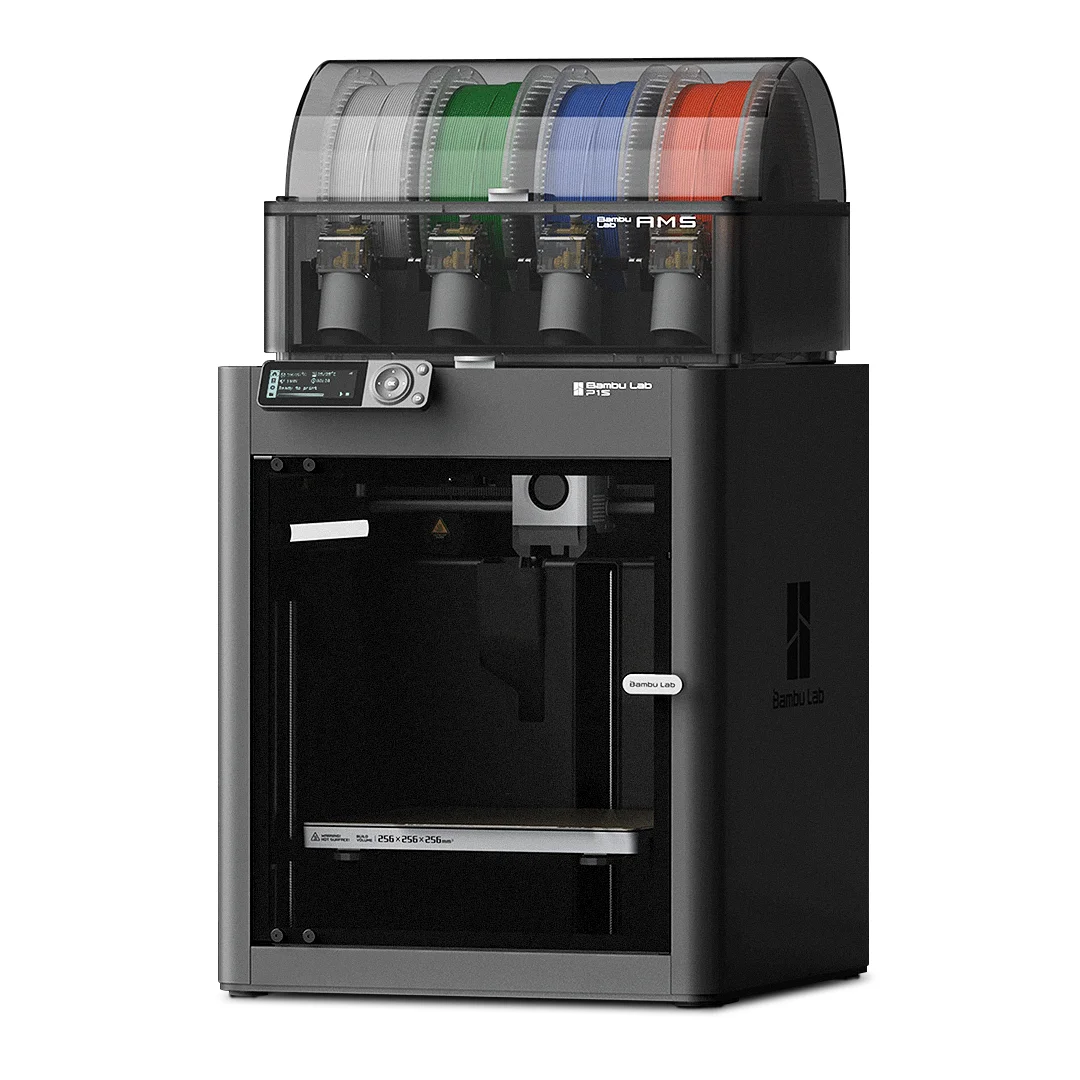
Bambu Lab P1S[BUY P1S] |
| Printing Material | Filament | Filament |
| Estimated price | $1499,00 | $949,00 |
| Date of registration in the system | ||
| Manufacturer | Bambu Lab | Bambu Lab |
| Release Year | 2025 | 2023 |
| Print Volume [mm] | 320x340x340 | 256x256x256 |
| Printer Size [mm] | 492x514x852 | 389x389x458 |
| Weight [kg] | 32,5 | 12,95 |
| Power Loss Recovery | YES | YES |
| Enclosed printer | YES | YES |
| Bed Leveling | Automatic | Automatic |
| Filament End Sensor | YES | YES |
| Bed type | Heated | Heated |
| Power supply system | Direct Drive | Direct Drive |
| Standard nozzle | 0,4 | 0,4 |
| Maximum Nozzle Temperature [°C] | 350 | 300 |
| Maximum Bed Temperature [°C] | 120 | 100 |
| Maximum printing speed [mm/s] | 1000 | 500 |
| Filament holder | YES | YES |
| Camera for supervision | YES | YES |
| Recommended filaments | ABS, PLA, PETG, PET, TPU, PA, ABS, ASA, PC, PLA-CF, PA-CF, PET-CF | PLA, PETG, TPU, PVA, PA, PA-CF, Nylon, PC |
| Recommended slicers | Bambu Studio | Bambu Studio, Super Slicer, Cura, Prusa Slicer, Orca |
| Maximum Resolution [mm] | 0,1 | 0,1 |
| Kinematics | - | - |
| Extruder Type | - | - |
| Klipper Firmware | NO | NO |
| Input Shaping | NO | NO |
| Max Volumetric Flow [mm³/s] | - | - |
| Power Supply | 330 W RMS | 350 W |
| Connectivity | USB, Wifi | Wifi, Bambu bus, Cartão SD |
| Release date | 2025 | 2023 |
| Extra features | Enclosed CoreXY (340Ã320Ã340 mm) with active chamber up to 65 °C, 350 °C hotend, 120 °C bed. <50 um precision (Vision Encoder) and Auto Hole/Contour Compensation. 3 cameras + 23 sensors with AI and pre-flight checks. AMS 2 Pro: drying with auto vent, spool rotation, and RFID; multicolor ready. Auto-leveling, active vibration compensation, high-torque servo extruder, and stabilized flow for high speed and top quality. | The Bambu Lab P1S stands out for its âout-of-the-boxâ practicality, eliminating the need for manual adjustments with automatic calibrations such as bed leveling and vibration compensation. It features multicolor printing capability through the AMS system, allowing up to 16 colors when connecting four AMS units. With an advanced control algorithm, the P1S offers fast printing speeds without sacrificing quality. Equipped with modern features such as filament end sensor, semi-automatic belt tension, direct extruder, welded frame and all-metal hotend, along with a fully enclosed chamber, the P1S promotes a superior printing experience, supporting a wide range of materials. |
| Support for multiple colors and materials (AMS and CFS) | YES | YES |
Notes * |
||
| Cost-benefit | 6 / 10 | 6 / 10 |
| Hardware | 7.2 / 10 | 6.3 / 10 |
| Screen | . | . |
| Print volume | 10 / 10 | 10 / 10 |
| Performance | 10 / 10 | 9 / 10 |
| [BUY P1S] |
Conclusion |
Conclusion: When comparing the H2S Combo and P1S from Bambu Lab, it's essential to take into account the specific requirements and preferences of potential users. Both printers are built on FDM technology and offer enclosed designs, which provide a controlled environment for printing, but they cater to different user profiles and needs. H2S Combo (Bambu Lab)Pros:
Cons:
P1S (Bambu Lab)Pros:
Cons:
Final VerdictIn summary, if you are a professional or an advanced user who requires high-speed printing, larger build volumes, and the ability to work with a variety of materials, the H2S Combo is the superior choice despite its higher price point. On the other hand, if you are a hobbyist, a beginner, or someone looking for a reliable, user-friendly 3D printer that offers great value for everyday projects, the P1S is undoubtedly the better buy. Its balance of features, ease of use, and affordability makes it an excellent choice for those who do not need the extensive capabilities of the H2S Combo. |