
Compare Creality CR10 SE vs Bambu Lab X1 carbon
Comparison between the best 3D printers
Choose the best 3D printer at the best price. The cheapest 3D printers are here.
Buy a 3D printer here with 3D Fila.
 |
 |
|
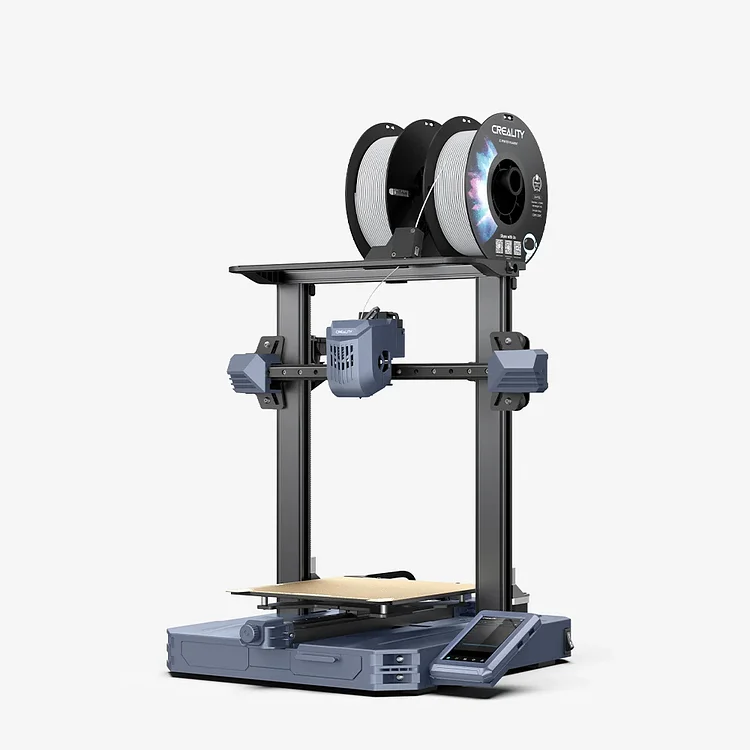
| Model | Creality CR10 SE |
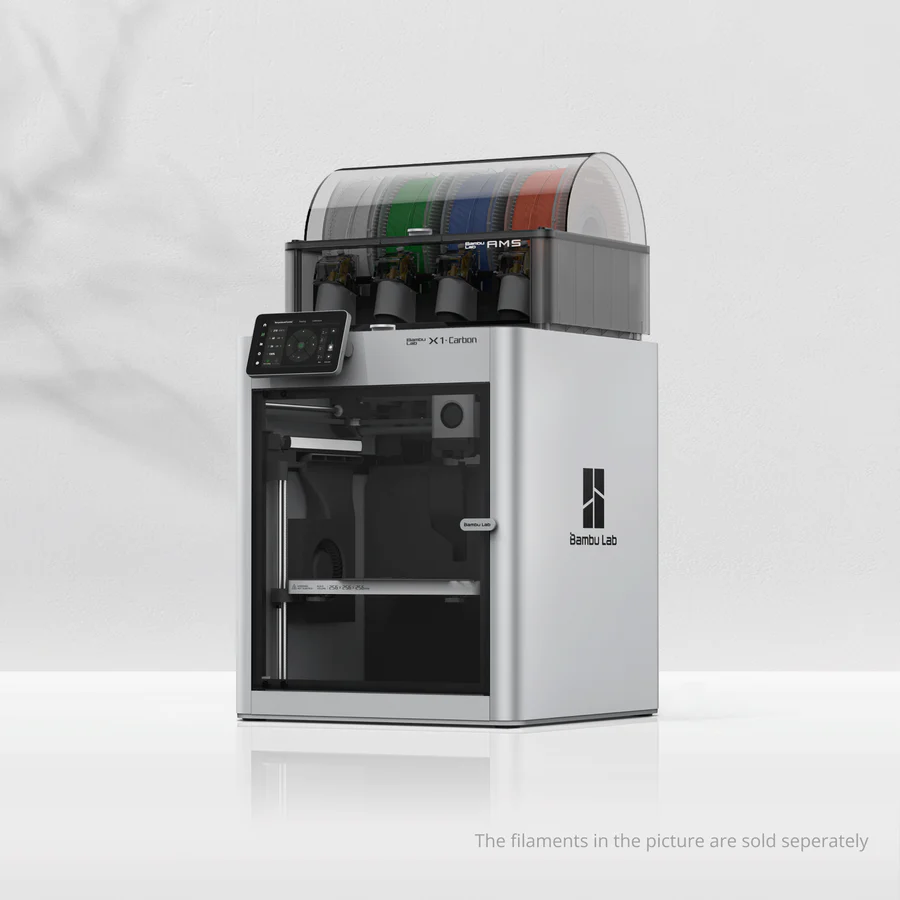
Bambu Lab X1 carbon |
| Printing Material | Filament | Filament |
| Estimated price | $386,00 | $1449,00 |
| Date of registration in the system | ||
| Manufacturer | Creality | Bambu Lab |
| Release Year | 2023 | 2023 |
| Print Volume [mm] | 220x220x265 | 256x256x256 |
| Printer Size [mm] | 490x470x625 | 389x389x457 |
| Weight [kg] | 6,9 | 14,13 |
| Power Loss Recovery | NO | YES |
| Enclosed printer | NO | YES |
| Bed Leveling | Automatic | |
| Filament End Sensor | NO | YES |
| Bed type | Heated | |
| Power supply system | Direct Drive | Direct Drive |
| Standard nozzle | 0,4 | 0,4 |
| Maximum Nozzle Temperature [°C] | 300 | 300 |
| Maximum Bed Temperature [°C] | 110 | 120 |
| Maximum printing speed [mm/s] | 600 | 500 |
| Filament holder | YES | YES |
| Camera for supervision | YES | YES |
| Recommended filaments | PLA, PETG, PET, TPU, PA Wood, ABS, ASA, PA, PLA-CF | PLA, PETG, TPU, PVA, PA, PA-CF, Nylon, PC |
| Recommended slicers | Creality Print, Cura, Simplify3D, PrusaSlicer, Orca Slice | Bambu Studio, Super Slicer, Cura, Prusa Slicer, Orca |
| Maximum Resolution [mm] | 0,1 | 0,1 |
| Kinematics | - | - |
| Extruder Type | - | - |
| Klipper Firmware | NO | NO |
| Input Shaping | NO | NO |
| Max Volumetric Flow [mm³/s] | - | - |
| Power Supply | 350 W | |
| Connectivity | USB, Wifi | Wifi, Bambu bus, Cartão SD |
| Release date | 2023 | 2023 |
| Extra features | The Creality CR10 SE stands out for its printing speed of up to 600 mm/s, easy and intuitive assembly, direct extruder with double gears, hotend with hardened steel nozzle and ceramic heater, automatic leveling with CR-Touch and pressure sensor, and use of Creality OS firmware based on Klipper, with automatic input shaping calibration. It also includes Wi-Fi connectivity, a filament out-of-stock sensor and a robust structure with linear rails on the X and Y axes. | The Bambu Lab X1 Carbon revolutionizes 3D printing with stunning design, high print speeds, and a streamlined user experience. It stands out with its CoreXY system, a hotend capable of reaching 300°C, allowing for a wide range of filaments. Its LiDAR-assisted bed leveling system, vibration compensation, and AMS multicolor printing capability raise the industry standard. Print quality is impressive, with the ability to fine-tune for perfection. The X1 Carbon, with its closed build volume, not only promises but also delivers one of the most advanced 3D printing experiences available to consumers. |
| Support for multiple colors and materials (AMS and CFS) | NO | YES |
Notes * |
||
| Cost-benefit | 8 / 10 | 6 / 10 |
| Hardware | 0.7 / 10 | 6.3 / 10 |
| Screen | . | . |
| Print volume | 10 / 10 | 10 / 10 |
| Performance | 10 / 10 | 9 / 10 |
Conclusion |
| In comparing the Creality CR10 SE and Bambu Lab X1 Carbon 3D printers, it is clear that both models cater to distinct user needs and preferences. The Creality CR10 SE is a budget-friendly option that excels in speed, offering a maximum printing velocity of 600 mm/s. Its straightforward assembly process, heated bed, and robust structure make it a suitable choice for entry-level to intermediate users. The machine supports a variety of materials and comes with automatic bed leveling, making it user-friendly. Despite its lower price point, it still maintains good functionality and print quality, earning a solid cost-benefit score. On the other hand, the Bambu Lab X1 Carbon is a high-end machine that justifies its premium price with advanced features such as enclosed printing, LiDAR-assisted bed leveling, and a sophisticated CoreXY system. It supports multiple materials and colors, boasting impressive print quality and offering a seamless user experience. The inclusion of features like power loss recovery and a dual-extrusion capability places it at the forefront of 3D printing technology. Ultimately, the choice between the two revolves around budget and intended use. Those seeking a reliable, budget-friendly printer for standard projects may find the CR10 SE to be a worthwhile investment. Conversely, users looking for professional-grade features and superior print quality will find the Bambu Lab X1 Carbon to be a more fitting choice, despite the higher cost. |