
Compare Creality 3D Ender 3 vs Longer 3D LK4 vs Creality CR10 SE
Comparison between the best 3D printers
Choose the best 3D printer at the best price. The cheapest 3D printers are here.
Buy a 3D printer here with 3D Fila.
 |
 |
 |
|
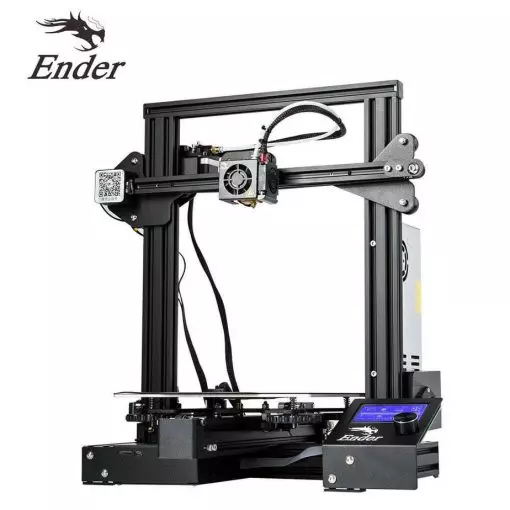
| Model | Creality 3D Ender 3[BUY Ender 3] |
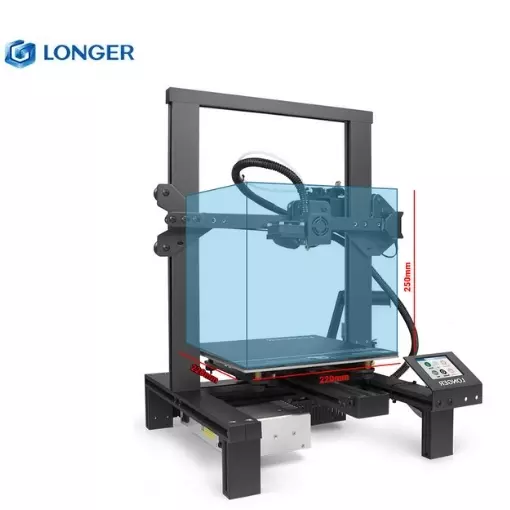
Longer 3D LK4 |
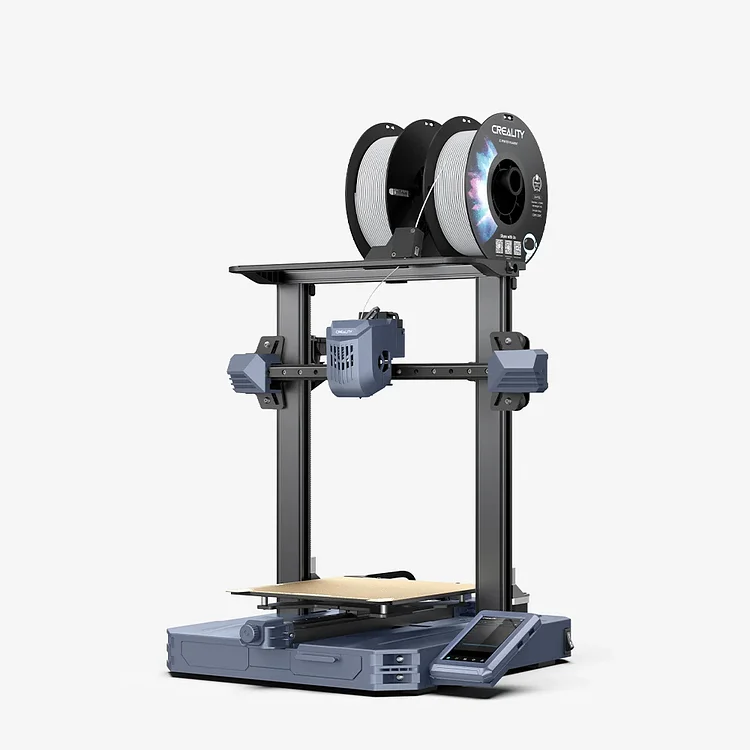
Creality CR10 SE |
| Printing Material | Filament | Filament | Filament |
| Estimated price | $210,00 | $200,00 | $386,00 |
| Date of registration in the system | |||
| Fabricante | Creality 3D | Longer 3D | Creality |
| Release Year | 2018 | 2019 | 2023 |
| Print Volume [mm] | 220x220x250 | 220x220x250 | 220x220x265 |
| Printer Size [mm] | 440x440x465 | 402x425x505 | 490x470x625 |
| Weight [kg] | 6,62 | 7,8 | 6,9 |
| Power Loss Recovery | NO | YES | NO |
| Enclosed printer | NO | NO | NO |
| Bed Leveling | Manual | Manual com Assistência | |
| Filament End Sensor | NO | YES | NO |
| Bed type | Heated | Heated | |
| Power supply system | Bowden | Bowden | Direct Drive |
| Standard nozzle | 0,4 | 0,4 | 0,4 |
| Maximum Nozzle Temperature [°C] | 255 | 250 | 300 |
| Maximum Bed Temperature [°C] | 110 | 100 | 110 |
| Maximum printing speed [mm/s] | 180 | 120 | 600 |
| Filament holder | YES | YES | YES |
| Camera for supervision | NO | NO | YES |
| Recommended filaments | PLA, TPU, ABS, PETG | PLA, TPU, ABS, PETG | PLA, PETG, PET, TPU, PA Wood, ABS, ASA, PA, PLA-CF |
| Recommended slicers | Cura, Simplify, Slic3r | Cura, Simplify, Slic3r | Creality Print, Cura, Simplify3D, PrusaSlicer, Orca Slice |
| Maximum Resolution [mm] | 0,1 | 0,1 | 0,1 |
| Kinematics | - | - | - |
| Extruder Type | - | - | - |
| Klipper Firmware | NO | NO | NO |
| Input Shaping | NO | NO | NO |
| Max Volumetric Flow [mm³/s] | - | - | - |
| Power Supply | 24V / 270W | 12V / 360W | |
| Connectivity | SD / USB | SD / USB | USB, Wifi |
| Release date | 2018 | 2019 | 2023 |
| Extra features | The Ender 3 V1 is a DIY assembly 3D printer, a sales leader since 2017, standing out for its cost-benefit. With a wide printing capacity, it has a CNC machined structure for precision and stability. It offers high-precision prints with low noise, thanks to its innovative V-profile and pulleys. It has a self-adhesive magnetic platform for easy removal of models and excellent adhesion. The Ender 3 heats up quickly, reaching 100°C in 5 minutes, ideal for agile prints. It includes protection against power failures, allowing you to resume printing after interruptions, saving time and material. | The Longer LK4 is a versatile 3D printer capable of working with a wide range of filaments, such as PLA, ABS, TPU, copper, wood and carbon fiber, thanks to its 0.4mm nozzle and heated bed up to 110°C. With a printing accuracy of between 0.05-0.4mm, it stands out for its solid construction with an aluminum frame, weighing around 7kg, and a robust 24V and 15A power supply. The kit includes an Allen key, a 7/10 key, a microSD card with USB adapter, a spatula, cable ties, a power cable, 5m of filament and a spare filament end sensor. Assembly is simplified, with around 90% of the equipment pre-assembled, and detailed instructions assist in the process. Special features include print recovery after power failure, a filament end sensor, a super-adhesive printing surface and an intuitive color touchscreen display. The design features smooth profiles for easy assembly, and the position of the filament holder optimizes the filament path to the extruder. The LK4 is a solid choice for 3D printing enthusiasts looking for quality and versatility. | The Creality CR10 SE stands out for its printing speed of up to 600 mm/s, easy and intuitive assembly, direct extruder with double gears, hotend with hardened steel nozzle and ceramic heater, automatic leveling with CR-Touch and pressure sensor, and use of Creality OS firmware based on Klipper, with automatic input shaping calibration. It also includes Wi-Fi connectivity, a filament out-of-stock sensor and a robust structure with linear rails on the X and Y axes. |
| Support for multiple colors and materials (AMS and CFS) | NO | NO | NO |
Notes * |
|||
| Cost-benefit | 8 / 10 | 8 / 10 | 8 / 10 |
| Hardware | 0.5 / 10 | 1 / 10 | 0.7 / 10 |
| Screen | . | . | . |
| Print volume | 10 / 10 | 10 / 10 | 10 / 10 |
| Performance | 7 / 10 | 6 / 10 | 10 / 10 |
| [BUY Ender 3] |
Conclusion |
| In comparing the Ender 3, LK4, and CR10 SE 3D printers, several key factors emerge that may influence a buyer's decision. **Cost-Effectiveness**: The Ender 3 stands out as a budget-friendly option. While it delivers solid performance for casual users and hobbyists, its features may be considered limited compared to the pricier models. The LK4, slightly more expensive, offers added versatility with its automatic filament end sensor and power loss recovery, making it a compelling choice for those who prioritize reliability and ease of use. The CR10 SE, while the most costly, justifies its price with advanced features such as high printing speeds, direct drive extruder, and Wi-Fi connectivity, appealing more to professionals or those needing high efficiency and extensive functionality. **Specifications & Features**: All three printers boast a similar print volume, yet the CR10 SE excels in maximum printing speed, significantly surpassing the others. It also incorporates automated leveling and superior temperature capabilities, making it highly adaptable for various filament types. The LK4 offers a good balance with its user-friendly features, like a color touchscreen and a heated bed, while the Ender 3 remains a reliable option for those who appreciate a straightforward DIY assembly process. **Usability Factors**: The LK4 and CR10 SE include features such as filament end sensors and recovery from power loss, increasing their overall reliability for extended printing sessions. The Ender 3, however, has no such recovery feature, which might deter users who expect uninterrupted long prints. Additionally, the CR10 SE’s camera supervision adds an element of convenience for monitoring prints remotely, a feature absent in the other two models. In conclusion, potential buyers should weigh their specific needs against the strengths and weaknesses of each printer. For budget-conscious users, the Ender 3 offers a commendable entry point. For those seeking a more versatile and user-friendly experience, the LK4 is an excellent mid-range choice. The CR10 SE, on the other hand, is ideal for serious users who require speed, advanced functionalities, and easy monitoring capabilities, though it comes at a higher price. Ultimately, the best choice depends on individual printing requirements, budget considerations, and the desired level of sophistication in printing capabilities. |