
Compare Creality 3D Ender 3 vs Creality 3D K1 Max vs Creality Ender 3 V3
Comparison between the best 3D printers
Choose the best 3D printer at the best price. The cheapest 3D printers are here.
Buy a 3D printer here with 3D Fila.
 |
 |
 |
|
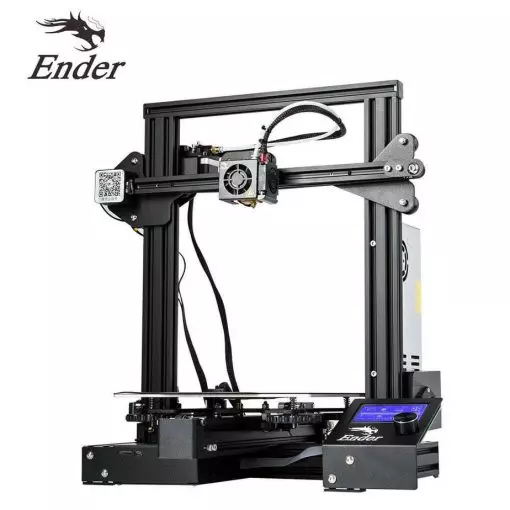
| Model | Creality 3D Ender 3[BUY Ender 3] |
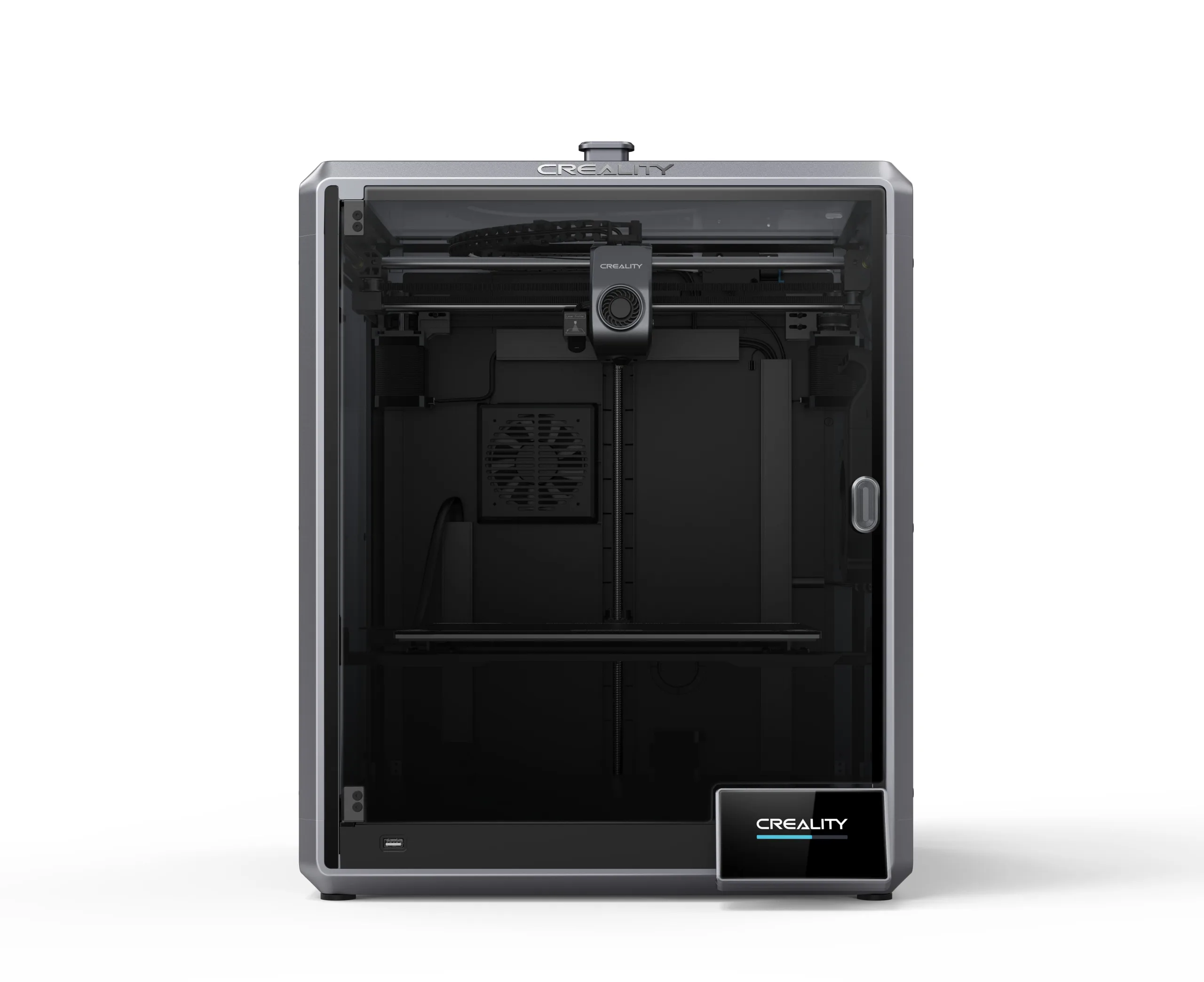
Creality 3D K1 Max[BUY K1 Max] |
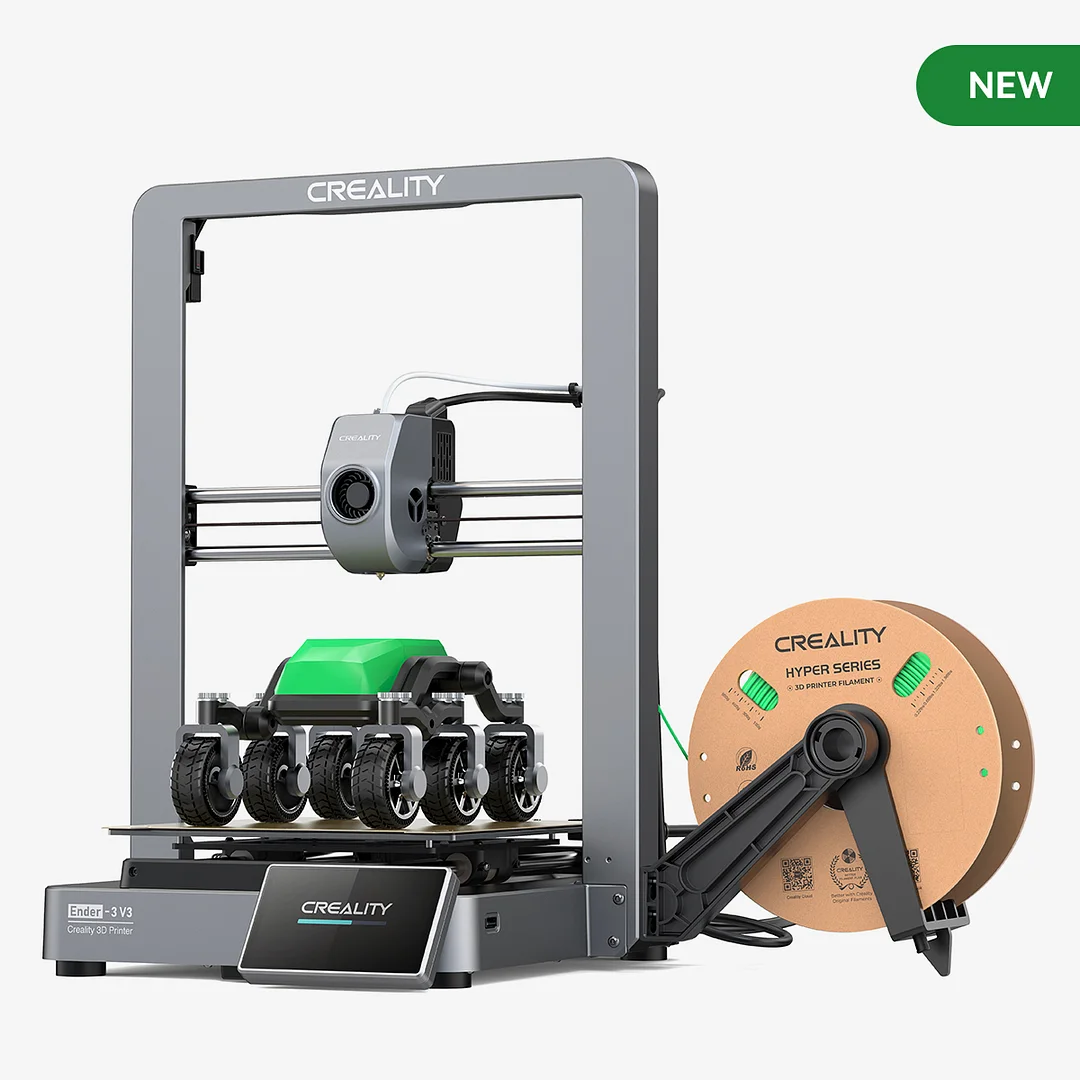
Creality Ender 3 V3[BUY Ender 3 V3] |
| Printing Material | Filament | Filament | Filament |
| Estimated price | $210,00 | $1300,00 | $389,00 |
| Date of registration in the system | |||
| Fabricante | Creality 3D | Creality 3D | Creality |
| Release Year | 2018 | 2023 | 2024 |
| Print Volume [mm] | 220x220x250 | 300x300x300 | 220x220x250 |
| Printer Size [mm] | 440x440x465 | 435x462x526 | 358x374x498 |
| Weight [kg] | 6,62 | 18 | 7,12 |
| Power Loss Recovery | NO | YES | YES |
| Enclosed printer | NO | YES | NO |
| Bed Leveling | Manual | Automatic | Automatic |
| Filament End Sensor | NO | YES | YES |
| Bed type | Heated | Heated | Heated |
| Power supply system | Bowden | Direct Drive | Direct Drive |
| Standard nozzle | 0,4 | 0,4 | 0,4 |
| Maximum Nozzle Temperature [°C] | 255 | 300 | 300 |
| Maximum Bed Temperature [°C] | 110 | 100 | 110 |
| Maximum printing speed [mm/s] | 180 | 600 | 600 |
| Filament holder | YES | YES | YES |
| Camera for supervision | NO | NO | NO |
| Recommended filaments | PLA, TPU, ABS, PETG | ABS, PLA, PETG, TPU, PA, ASA, PC, PLA-CF, PA-CF, PET-CF | PLA, PETG e TPU (95A+) |
| Recommended slicers | Cura, Simplify, Slic3r | Creality Print, Cura, Simplify, Slic3r, IdeaMaker e outros | Creality Print, Cura 5.0 ou superior, Prusa Slicer e Simplify3D |
| Maximum Resolution [mm] | 0,1 | 0,1 | 0,01 |
| Kinematics | - | - | - |
| Extruder Type | - | - | - |
| Klipper Firmware | NO | NO | NO |
| Input Shaping | NO | NO | NO |
| Max Volumetric Flow [mm³/s] | - | - | - |
| Power Supply | 24V / 270W | 350 W | |
| Connectivity | SD / USB | USB / Wi-Fi / Ethernet | USB drive, LAN, Creality Cloud APP |
| Release date | 2018 | 2023 | 2024 |
| Extra features | The Ender 3 V1 is a DIY assembly 3D printer, a sales leader since 2017, standing out for its cost-benefit. With a wide printing capacity, it has a CNC machined structure for precision and stability. It offers high-precision prints with low noise, thanks to its innovative V-profile and pulleys. It has a self-adhesive magnetic platform for easy removal of models and excellent adhesion. The Ender 3 heats up quickly, reaching 100°C in 5 minutes, ideal for agile prints. It includes protection against power failures, allowing you to resume printing after interruptions, saving time and material. | The Creality K1 Max stands out as a fast Core XY 3D printer with a large build volume of 300 x 300 x 300 mm. It is fully enclosed and equipped with AI sensors to prevent print failures. This model has a smooth and flexible PEI build platform, and uses an automatic leveling system with LIDAR, as well as a filament run-out sensor. LAN, Creality Cloud and USB Flash Disk connectivity are available, as well as a 4.3-inch touchscreen interface. The K1 Max is robust, weighing in at 18 kg, and includes an AI camera and limited version of the Klipper firmware. Its motion system is solid and the printer is efficient with high-temperature filaments, but it is not silent. Assembly is 99% complete, requiring only minor adjustments before use. | The Ender 3 V3 redefines 3D printing with its CoreXZ system, reaching speeds of up to 600mm/s, and stable metal construction with cast parts. It stands out for its powerful direct extrusion, quick-change tri-metal nozzle, and two powerful fans for instant cooling. Equipped with automatic calibration, it makes leveling and adjustments easy, promoting a fast and reliable printing experience with various materials. |
| Support for multiple colors and materials (AMS and CFS) | NO | NO | NO |
Notes * |
|||
| Cost-benefit | 8 / 10 | 6 / 10 | 8 / 10 |
| Hardware | 0.5 / 10 | 4.2 / 10 | 3.2 / 10 |
| Screen | . | . | . |
| Print volume | 10 / 10 | 10 / 10 | 10 / 10 |
| Performance | 7 / 10 | 10 / 10 | 10 / 10 |
| [BUY Ender 3] | [BUY K1 Max] | [BUY Ender 3 V3] |
Conclusion |
| In comparing the three 3D printers—the Ender 3, K1 Max, and Ender 3 V3—each model presents distinct strengths and weaknesses, catering to different user needs and budgets. The **Ender 3**, being the most affordable option, offers a good entry point into 3D printing. It features a decent print volume and simple manual bed leveling, making it a solid choice for beginners. While it does not include advanced features like power loss recovery or automatic settings, its cost-effectiveness and reliable performance make it an attractive option for hobbyists and those just exploring 3D printing. On the other end of the spectrum, the **K1 Max** is a premium option designed for professional use, boasting an impressive print volume and cutting-edge features such as automatic bed leveling, power loss recovery, and a fully enclosed build area. Its ability to handle high-temperature materials and quick printing speeds positions it as a top choice for more serious users or businesses that require efficiency and reliability. However, this comes at a significantly higher price point. The **Ender 3 V3** occupies a middle ground. It features a blend of automatic functions, robust construction, and high printing speeds, making it a versatile option for users looking for a balance between performance and price. Although it shares a smaller print volume similar to the Ender 3, it benefits from advanced features like direct drive and automatic calibration, catering to users who demand more from their 3D printer without reaching the higher expenses associated with the K1 Max. In conclusion, the choice among these three 3D printers ultimately hinges on the user's experience level, budget, and the specific demands of their projects. The **Ender 3** is ideal for beginners focused on affordability, the **K1 Max** suits professionals needing advanced capabilities, while the **Ender 3 V3** offers a middle-ground solution with a balance of features for more serious hobbyists or small business applications. |