
Compare Creality 3D Ender 3 vs Creality 3D K1 Max vs Creality 3D CR 6 Max
Comparison between the best 3D printers
Choose the best 3D printer at the best price. The cheapest 3D printers are here.
Buy a 3D printer here with 3D Fila.
 |
 |
 |
|
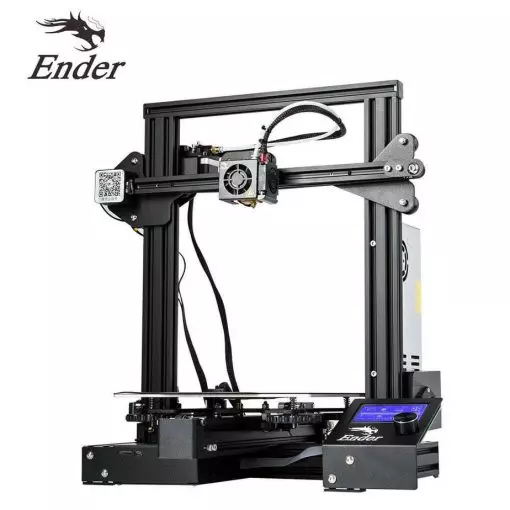
| Model | Creality 3D Ender 3[BUY Ender 3] |
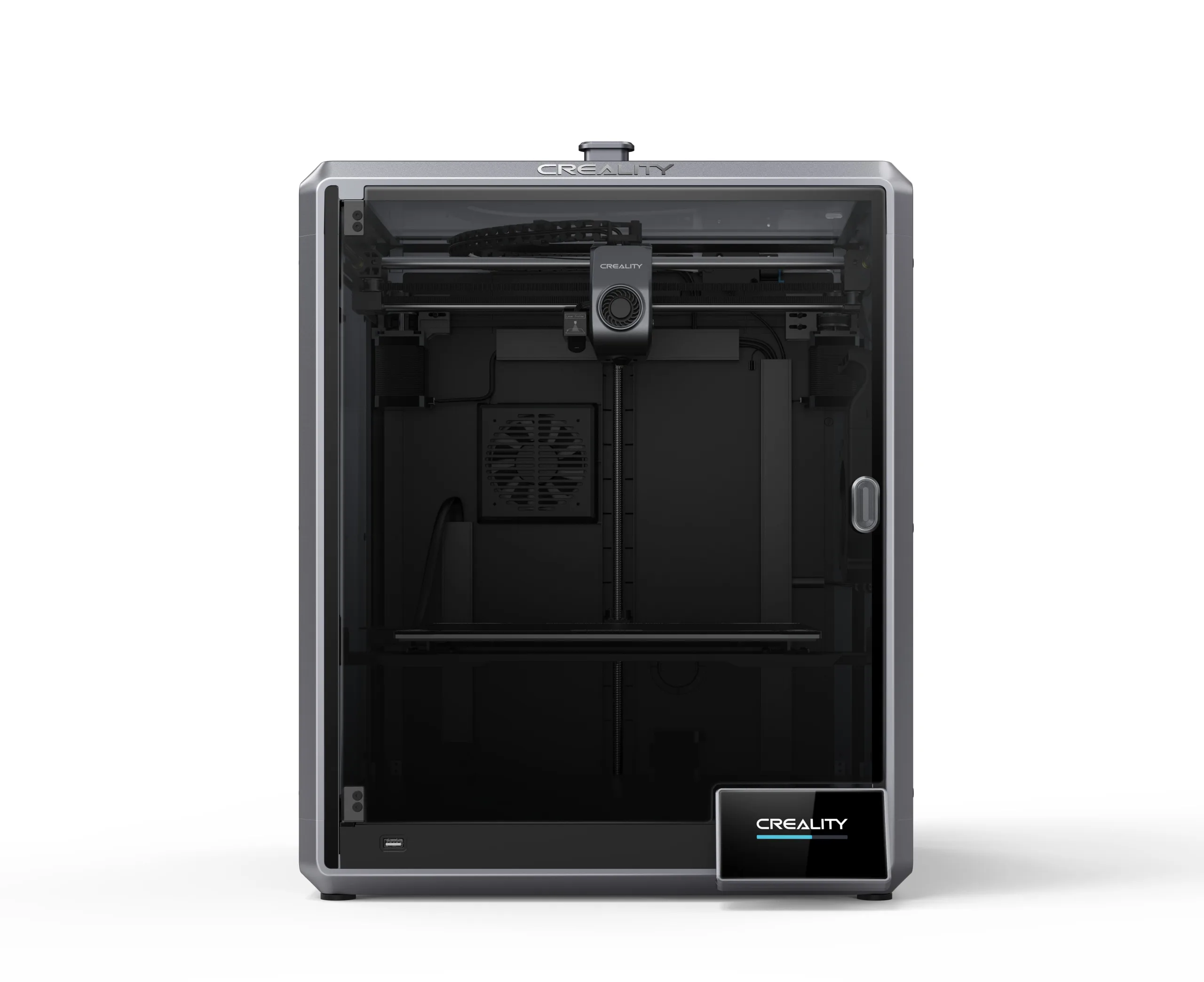
Creality 3D K1 Max[BUY K1 Max] |
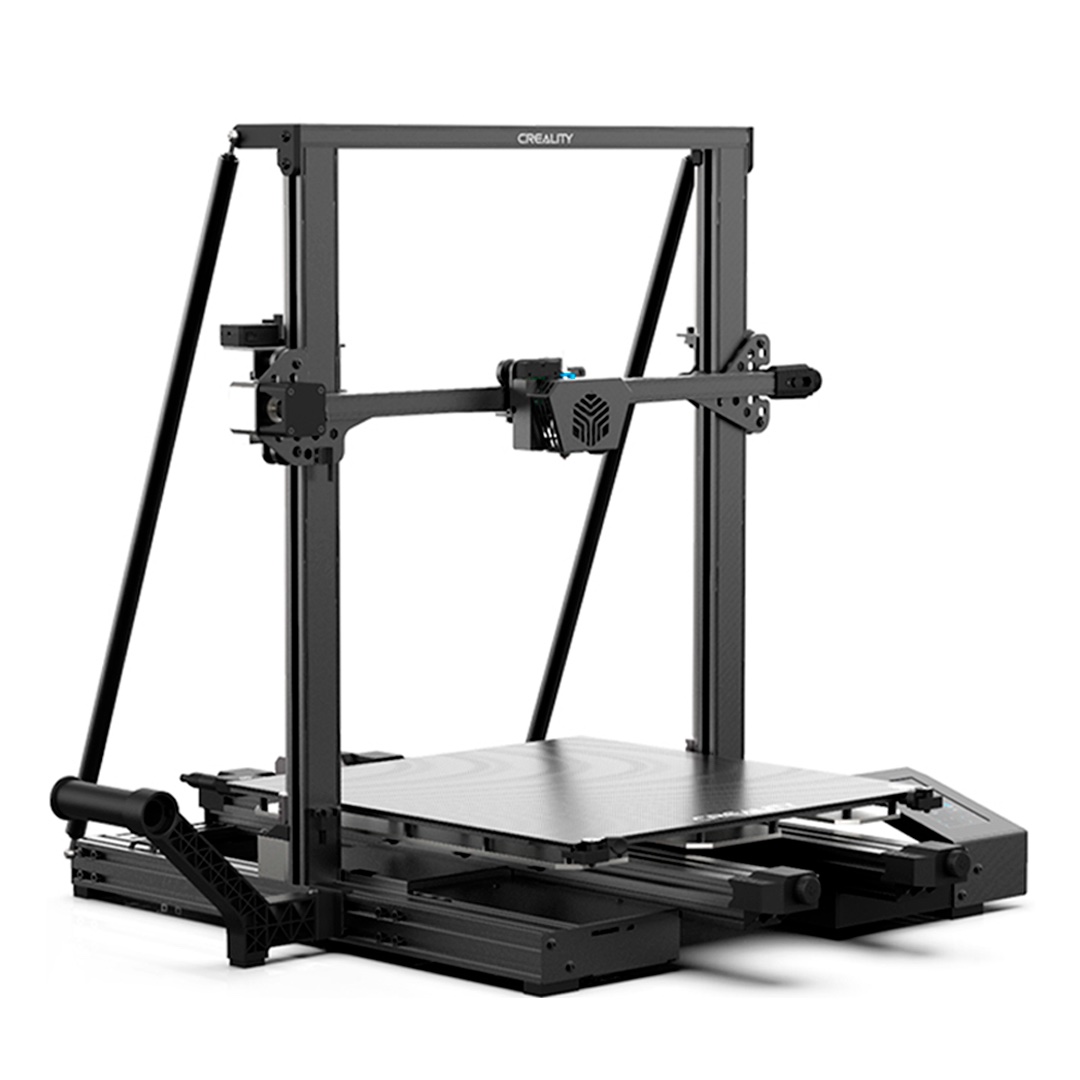
Creality 3D CR 6 Max |
| Printing Material | Filament | Filament | Filament |
| Estimated price | $210,00 | $1300,00 | $700,00 |
| Date of registration in the system | |||
| Fabricante | Creality 3D | Creality 3D | Creality 3D |
| Release Year | 2018 | 2023 | 2021 |
| Print Volume [mm] | 220x220x250 | 300x300x300 | 400x400x400 |
| Printer Size [mm] | 440x440x465 | 435x462x526 | 725x640x691 |
| Weight [kg] | 6,62 | 18 | 14 |
| Power Loss Recovery | NO | YES | YES |
| Enclosed printer | NO | YES | NO |
| Bed Leveling | Manual | Automatic | Automatic |
| Filament End Sensor | NO | YES | YES |
| Bed type | Heated | Heated | Heated |
| Power supply system | Bowden | Direct Drive | Bowden |
| Standard nozzle | 0,4 | 0,4 | 0,4 |
| Maximum Nozzle Temperature [°C] | 255 | 300 | 260 |
| Maximum Bed Temperature [°C] | 110 | 100 | 90 |
| Maximum printing speed [mm/s] | 180 | 600 | 100 |
| Filament holder | YES | YES | YES |
| Camera for supervision | NO | NO | NO |
| Recommended filaments | PLA, TPU, ABS, PETG | ABS, PLA, PETG, TPU, PA, ASA, PC, PLA-CF, PA-CF, PET-CF | PLA, PETG |
| Recommended slicers | Cura, Simplify, Slic3r | Creality Print, Cura, Simplify, Slic3r, IdeaMaker e outros | Cura, Simplify, Slic3r, IdeaMaker |
| Maximum Resolution [mm] | 0,1 | 0,1 | 0,1 |
| Kinematics | - | - | - |
| Extruder Type | - | - | - |
| Klipper Firmware | NO | NO | NO |
| Input Shaping | NO | NO | NO |
| Max Volumetric Flow [mm³/s] | - | - | - |
| Power Supply | 24V / 270W | 110/220V / 500W | |
| Connectivity | SD / USB | USB / Wi-Fi / Ethernet | SD / USB |
| Release date | 2018 | 2023 | 2021 |
| Extra features | The Ender 3 V1 is a DIY assembly 3D printer, a sales leader since 2017, standing out for its cost-benefit. With a wide printing capacity, it has a CNC machined structure for precision and stability. It offers high-precision prints with low noise, thanks to its innovative V-profile and pulleys. It has a self-adhesive magnetic platform for easy removal of models and excellent adhesion. The Ender 3 heats up quickly, reaching 100°C in 5 minutes, ideal for agile prints. It includes protection against power failures, allowing you to resume printing after interruptions, saving time and material. | The Creality K1 Max stands out as a fast Core XY 3D printer with a large build volume of 300 x 300 x 300 mm. It is fully enclosed and equipped with AI sensors to prevent print failures. This model has a smooth and flexible PEI build platform, and uses an automatic leveling system with LIDAR, as well as a filament run-out sensor. LAN, Creality Cloud and USB Flash Disk connectivity are available, as well as a 4.3-inch touchscreen interface. The K1 Max is robust, weighing in at 18 kg, and includes an AI camera and limited version of the Klipper firmware. Its motion system is solid and the printer is efficient with high-temperature filaments, but it is not silent. Assembly is 99% complete, requiring only minor adjustments before use. | Crealityâs CR-6 Max printer offers a large 400 x 400 x 400mm build area, perfect for larger projects without dividers. Its auto-leveling system and force sensor simplify setup. It has a 4.3-inch touchscreen and convenient features like a tool drawer and filament holder. Plus, its modular hotend, redesigned extruder, and silicon carbide-coated build plate improve print quality. |
| Support for multiple colors and materials (AMS and CFS) | NO | NO | NO |
Notes * |
|||
| Cost-benefit | 8 / 10 | 6 / 10 | 6 / 10 |
| Hardware | 0.5 / 10 | 4.2 / 10 | 2 / 10 |
| Screen | . | . | . |
| Print volume | 10 / 10 | 10 / 10 | 10 / 10 |
| Performance | 7 / 10 | 10 / 10 | 6 / 10 |
| [BUY Ender 3] | [BUY K1 Max] |
Conclusion |
| In conclusion, the comparison among the Ender 3, K1 Max, and CR-6 Max highlights distinct advantages and trade-offs that cater to different user needs and budgets. The **Ender 3**, known for its low cost and DIY assembly, offers a solid entry point for beginners in 3D printing. Its compact build volume and basic features make it a practical choice for hobbyists focused on small-scale projects. However, it lacks advanced functionalities like automatic bed leveling and a filament end sensor, which can limit user experience and efficiency. On the other hand, the **K1 Max** represents a significant upgrade in terms of performance and features, boasting rapid print speeds, a fully enclosed design, and an array of smart technology, including automatic leveling and a filament run-out sensor. Although it's the most expensive option, its capabilities cater to users who demand higher quality and faster results in a professional or semi-professional setting. The K1 Max is particularly well-suited for those working with a broader range of materials, owing to its elevated processing temperatures. Finally, the **CR-6 Max** stands out for its large build volume, making it ideal for ambitious projects requiring extensive space. Its automated features enhance usability, but it is hindered slightly by its overall performance ratings compared to the K1 Max. While it offers a good balance between features and price, users may find it lacks some of the high-end capabilities of the K1 Max. Ultimately, the choice between these 3D printers should be guided by the user's specific needs: budget, desired build volume, print quality, and technological features. For those prioritizing affordability and simplicity, the Ender 3 is a commendable choice. However, for users needing speed and advanced features, the K1 Max is worth the investment, while the CR-6 Max provides a middle ground for larger projects without compromising too much on automation and ease of use. |