
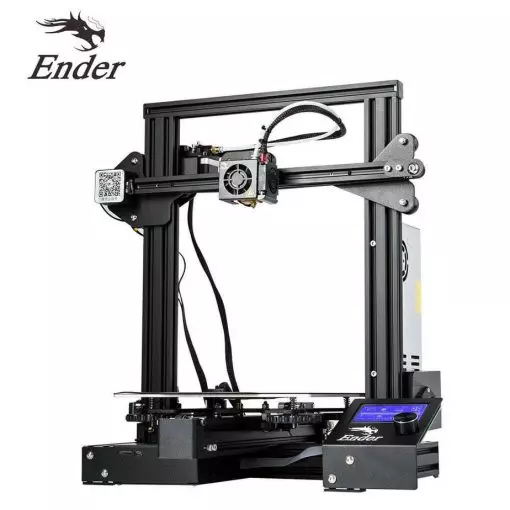
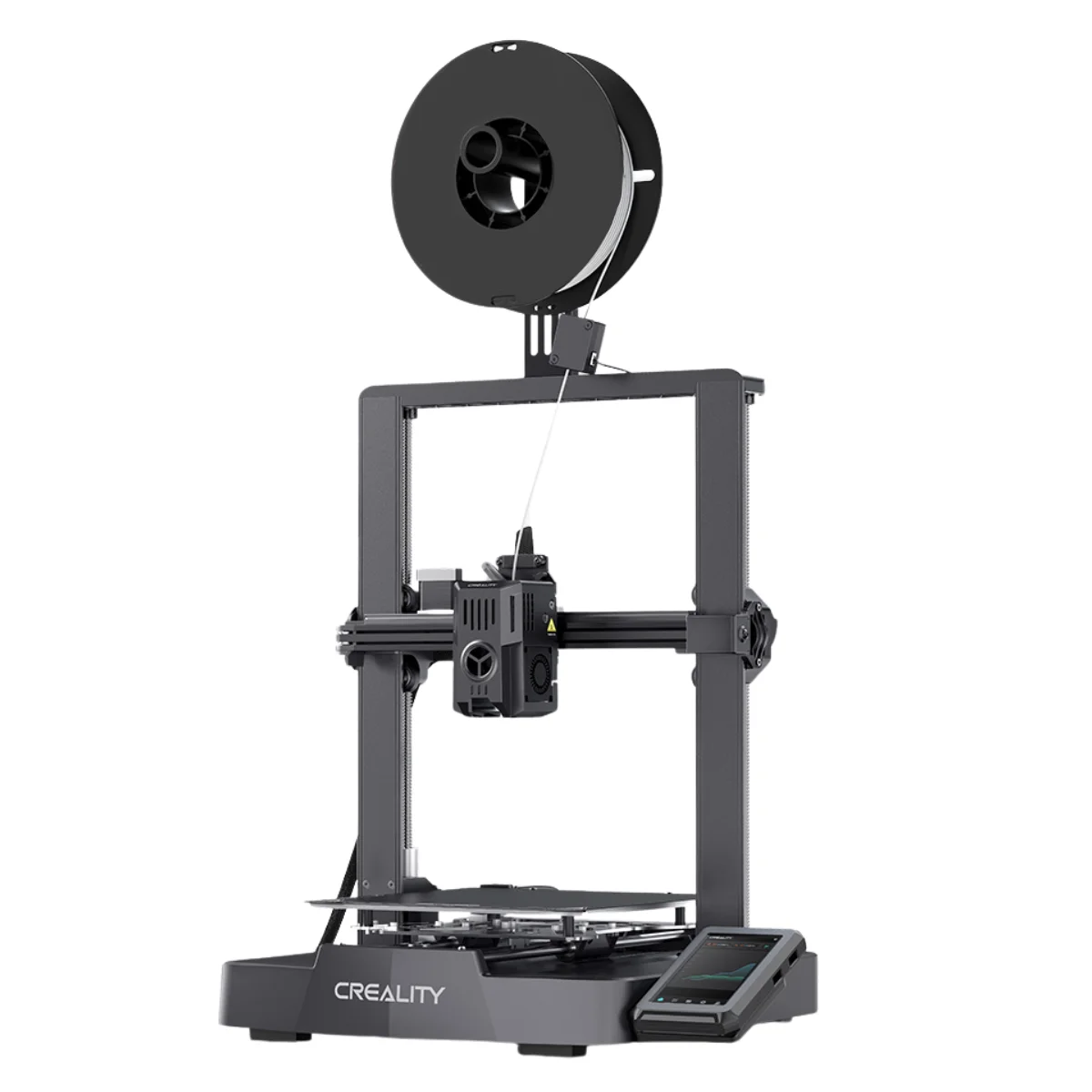
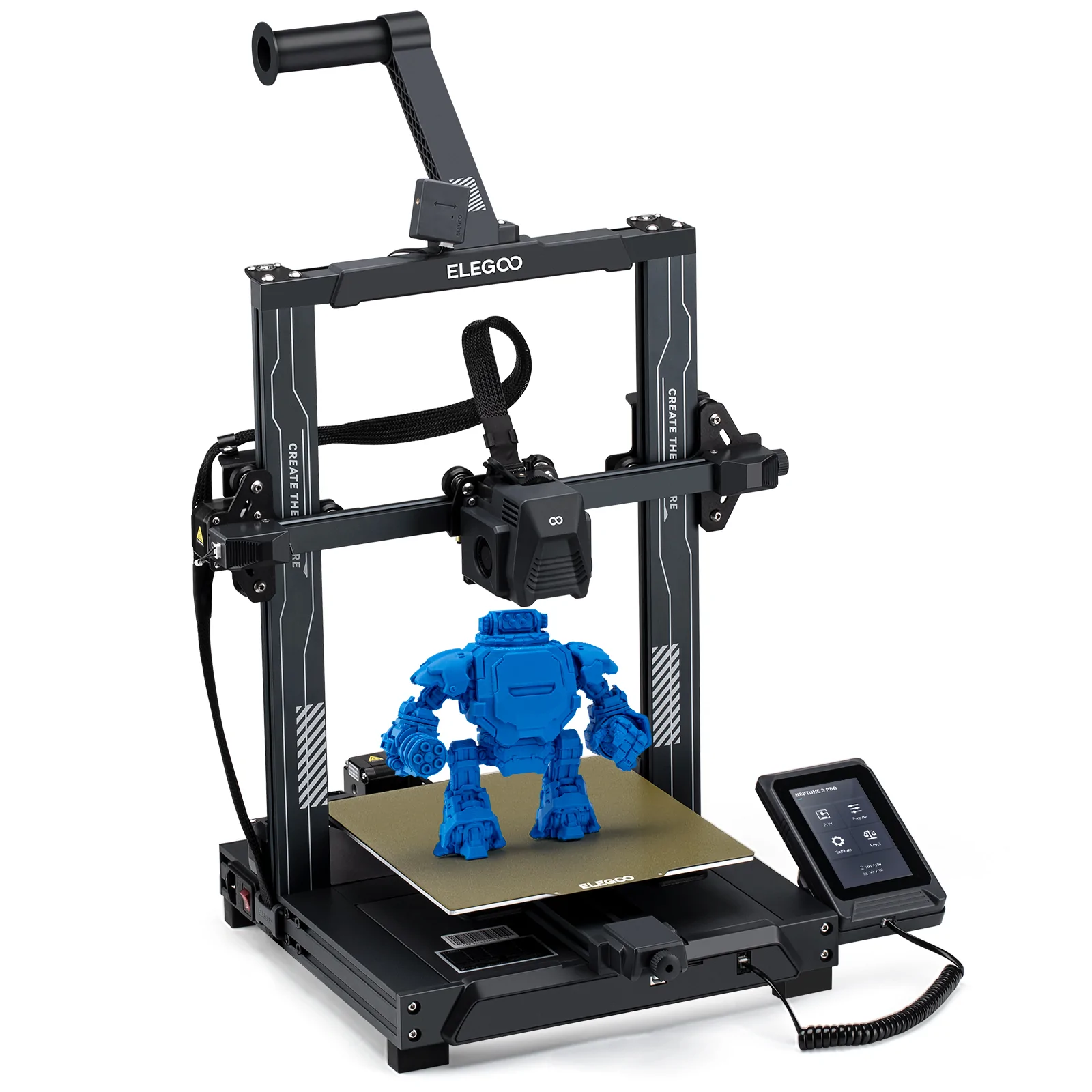
Compare Creality 3D Ender 3 vs Creality Ender 3 V3 KE vs Elegoo Neptune 3 PRO
Comparison between the best 3D printers
Choose the best 3D printer at the best price. The cheapest 3D printers are here.
Buy a 3D printer here with 3D Fila.
 |
 |
 |
|
| Model | Creality 3D Ender 3[BUY Ender 3] |
Creality Ender 3 V3 KE[BUY Ender 3 V3 KE] |
Elegoo Neptune 3 PRO |
| Printing Material | Filament | Filament | Filament |
| Estimated price | $210,00 | $279,00 | $230,00 |
| Date of registration in the system | |||
| Fabricante | Creality 3D | Creality | Elegoo |
| Release Year | 2018 | 2023 | 2022 |
| Print Volume [mm] | 220x220x250 | 220x220x240 | 225x225x280 |
| Printer Size [mm] | 440x440x465 | 433x366x490 | 445x515x475 |
| Weight [kg] | 6,62 | 7,8 | 8,1 |
| Power Loss Recovery | NO | YES | YES |
| Enclosed printer | NO | NO | NO |
| Bed Leveling | Manual | Automatic | Automatic |
| Filament End Sensor | NO | YES | YES |
| Bed type | Heated | Heated | Heated |
| Power supply system | Bowden | Direct Drive | Direct Drive |
| Standard nozzle | 0,4 | 0,4 | 0,4 |
| Maximum Nozzle Temperature [°C] | 255 | 300 | 260 |
| Maximum Bed Temperature [°C] | 110 | 100 | 100 |
| Maximum printing speed [mm/s] | 180 | 500 | 80 |
| Filament holder | YES | YES | YES |
| Camera for supervision | NO | NO | NO |
| Recommended filaments | PLA, TPU, ABS, PETG | PLA, PETG e TPU (95A+), ASA | PLA, PETG, Tritan, Flex, ABS |
| Recommended slicers | Cura, Simplify, Slic3r | Creality Print, Cura 5.0 ou superior, Prusa Slicer, Orca | Cura, Simplify, Slic3r, IdeaMaker e outros |
| Maximum Resolution [mm] | 0,1 | 0,1 | 0,1 |
| Kinematics | - | - | - |
| Extruder Type | - | - | - |
| Klipper Firmware | NO | NO | NO |
| Input Shaping | NO | NO | NO |
| Max Volumetric Flow [mm³/s] | - | - | - |
| Power Supply | 24V / 270W | 350 W | 250 |
| Connectivity | SD / USB | USB drive, LAN, Creality Cloud APP | |
| Release date | 2018 | 2023 | 2022 |
| Extra features | The Ender 3 V1 is a DIY assembly 3D printer, a sales leader since 2017, standing out for its cost-benefit. With a wide printing capacity, it has a CNC machined structure for precision and stability. It offers high-precision prints with low noise, thanks to its innovative V-profile and pulleys. It has a self-adhesive magnetic platform for easy removal of models and excellent adhesion. The Ender 3 heats up quickly, reaching 100°C in 5 minutes, ideal for agile prints. It includes protection against power failures, allowing you to resume printing after interruptions, saving time and material. | The Ender 3 V3 KE, an advancement in the Ender line, achieves print speeds of up to 500mm/s with its touchscreen and WiFi connectivity. Although it has a slightly smaller print area than the SE model, it makes up for it with superior print quality. Its robust design, high-quality components, and intuitive wireless control are appreciated, although Creality's mobile app lacks practicality and does not have a closed system. It stands out for its linear track on the X-axis for stability at high speeds and the hotend that supports up to 300°C, ideal for high-temperature filaments. | The Elegoo Neptune 3 Pro printer stands out for its easy assembly and automatic bed leveling, ideal for different levels of users. Equipped with a direct-drive extruder and dual gears, it offers excellent adhesion to slippery materials such as TPU. It incorporates dual screws on the Z-axis, ensuring stable prints, and features an integrated task light for improved visibility. With a PEI-coated build plate and a detachable touchscreen, it combines functionality and convenience. The printer also features an efficient cooling system, filament sensor and a simplified user interface. |
| Support for multiple colors and materials (AMS and CFS) | NO | NO | NO |
Notes * |
|||
| Cost-benefit | 8 / 10 | 8 / 10 | 8 / 10 |
| Hardware | 0.5 / 10 | 2.8 / 10 | 2.4 / 10 |
| Screen | . | . | . |
| Print volume | 10 / 10 | 10 / 10 | 10 / 10 |
| Performance | 7 / 10 | 9 / 10 | 5 / 10 |
| [BUY Ender 3] | [BUY Ender 3 V3 KE] |
Conclusion |
| In conclusion, when comparing the Ender 3, Ender 3 V3 KE, and Neptune 3 Pro, each printer offers distinct advantages and disadvantages, ultimately catering to different user needs and budgets. The **Ender 3**, being the most budget-friendly option, is excellent for beginners or those looking for basic functionality. It features manual bed leveling and lacks power loss recovery, which may be trade-offs for the lower price. Despite its limitations, it has a solid community support and a reputation for decent print quality. The **Ender 3 V3 KE** presents itself as a more advanced choice, reflecting its higher price point with notable features such as automatic bed leveling, impressive print speeds, and robust build quality. This model is suited for users looking for enhanced performance and more control over their 3D printing process, although its required mobile app can be cumbersome. Meanwhile, the **Neptune 3 Pro** offers a good balance between affordability and features like automatic bed leveling and a direct-drive extruder, making it a versatile option for various filament types. Its design and additional features, such as a task light and filament sensor, provide convenience and reliability, appealing to both beginners and seasoned users. Considering price and capabilities, the Ender 3 and Neptune 3 Pro present solid value for those prioritizing ease of use and reliable performance. In contrast, the Ender 3 V3 KE may be better suited for users seeking higher speeds and advanced features, justifying its higher investment. Ultimately, your choice should align with your specific printing needs, budget, and the level of technology you are comfortable handling. Each printer has its strengths, making them all suitable options within their respective price ranges. |