
Compare Creality 3D Ender 3 vs Creality Ender 3 V3 KE vs Creality 3D Ender 6
Comparison between the best 3D printers
Choose the best 3D printer at the best price. The cheapest 3D printers are here.
Buy a 3D printer here with 3D Fila.
 |
 |
 |
|
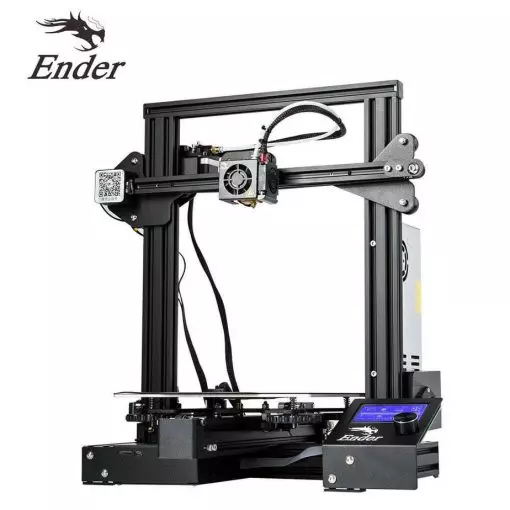
| Model | Creality 3D Ender 3[BUY Ender 3] |
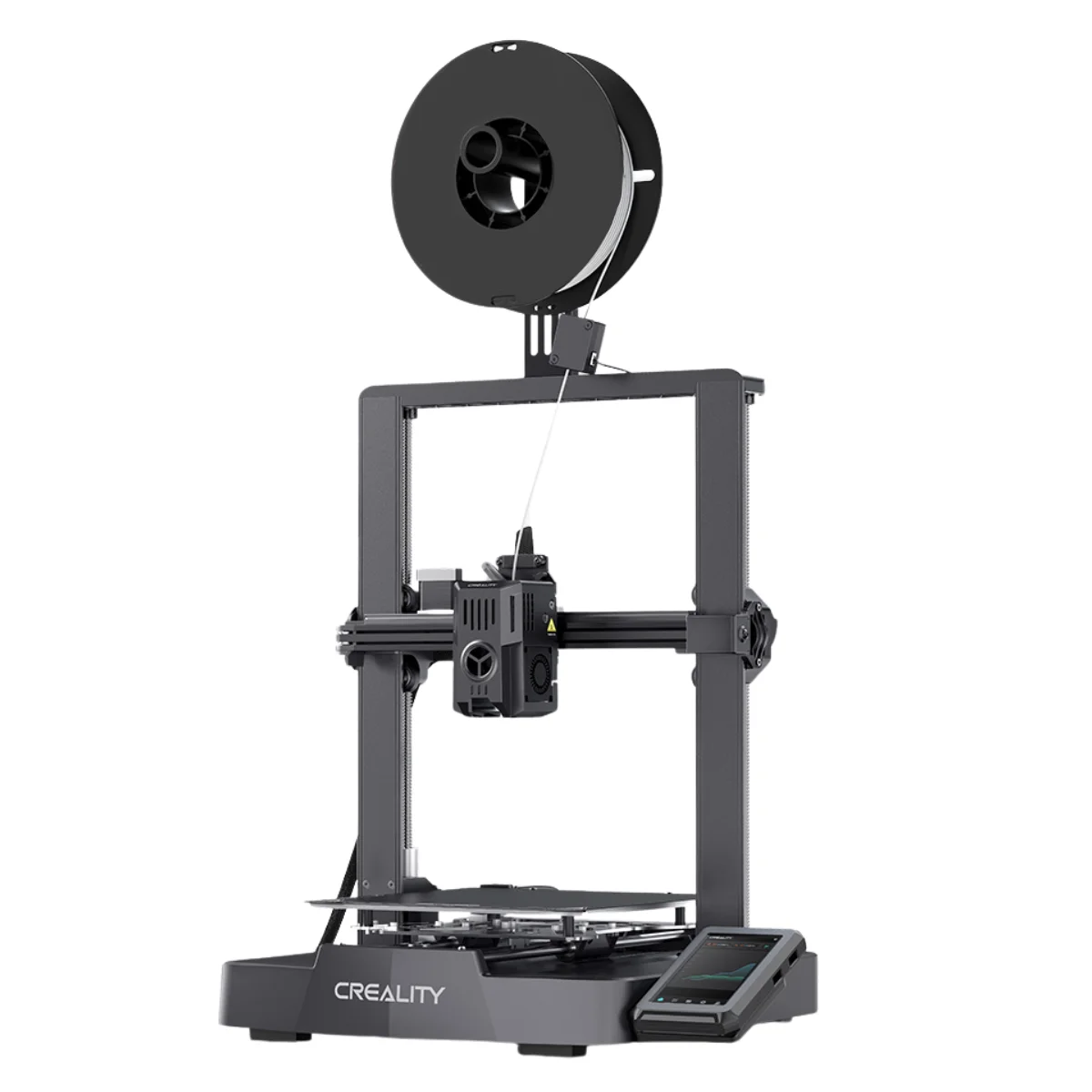
Creality Ender 3 V3 KE[BUY Ender 3 V3 KE] |
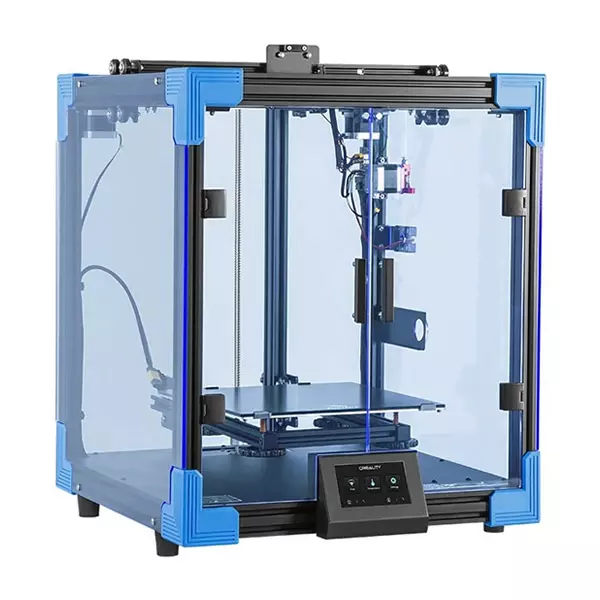
Creality 3D Ender 6[BUY Ender 6] |
| Printing Material | Filament | Filament | Filament |
| Estimated price | $210,00 | $279,00 | $499,00 |
| Date of registration in the system | |||
| Fabricante | Creality 3D | Creality | Creality 3D |
| Release Year | 2018 | 2023 | 2020 |
| Print Volume [mm] | 220x220x250 | 220x220x240 | 250x250x400 |
| Printer Size [mm] | 440x440x465 | 433x366x490 | 495x495x650 |
| Weight [kg] | 6,62 | 7,8 | 22 |
| Power Loss Recovery | NO | YES | YES |
| Enclosed printer | NO | NO | NO |
| Bed Leveling | Manual | Automatic | Manual |
| Filament End Sensor | NO | YES | YES |
| Bed type | Heated | Heated | Heated |
| Power supply system | Bowden | Direct Drive | Bowden |
| Standard nozzle | 0,4 | 0,4 | 0,4 |
| Maximum Nozzle Temperature [°C] | 255 | 300 | 260 |
| Maximum Bed Temperature [°C] | 110 | 100 | 100 |
| Maximum printing speed [mm/s] | 180 | 500 | 150 |
| Filament holder | YES | YES | YES |
| Camera for supervision | NO | NO | NO |
| Recommended filaments | PLA, TPU, ABS, PETG | PLA, PETG e TPU (95A+), ASA | PLA, TPU, ABS, PETG |
| Recommended slicers | Cura, Simplify, Slic3r | Creality Print, Cura 5.0 ou superior, Prusa Slicer, Orca | Cura, Simplify, Slic3r |
| Maximum Resolution [mm] | 0,1 | 0,1 | 0,1 |
| Kinematics | - | - | - |
| Extruder Type | - | - | - |
| Klipper Firmware | NO | NO | NO |
| Input Shaping | NO | NO | NO |
| Max Volumetric Flow [mm³/s] | - | - | - |
| Power Supply | 24V / 270W | 350 W | 24V / 504W |
| Connectivity | SD / USB | USB drive, LAN, Creality Cloud APP | SD / USB |
| Release date | 2018 | 2023 | 2020 |
| Extra features | The Ender 3 V1 is a DIY assembly 3D printer, a sales leader since 2017, standing out for its cost-benefit. With a wide printing capacity, it has a CNC machined structure for precision and stability. It offers high-precision prints with low noise, thanks to its innovative V-profile and pulleys. It has a self-adhesive magnetic platform for easy removal of models and excellent adhesion. The Ender 3 heats up quickly, reaching 100°C in 5 minutes, ideal for agile prints. It includes protection against power failures, allowing you to resume printing after interruptions, saving time and material. | The Ender 3 V3 KE, an advancement in the Ender line, achieves print speeds of up to 500mm/s with its touchscreen and WiFi connectivity. Although it has a slightly smaller print area than the SE model, it makes up for it with superior print quality. Its robust design, high-quality components, and intuitive wireless control are appreciated, although Creality's mobile app lacks practicality and does not have a closed system. It stands out for its linear track on the X-axis for stability at high speeds and the hotend that supports up to 300°C, ideal for high-temperature filaments. | The Creality Ender 6 stands out in the world of 3D printers with its CoreXY system, offering fast and high-quality prints. With a robust design, it has acrylic panels to protect against air currents, optimizing the printing of materials that require higher temperatures. It features a generic Creality hotend, effective up to ~240°C. Its differentials include 10mm GATES belts, promoting stability at high speeds, and a 360W power supply for reliable performance. The machine also has an intuitive user interface through a 4.3-inch touchscreen. |
| Support for multiple colors and materials (AMS and CFS) | NO | NO | NO |
Notes * |
|||
| Cost-benefit | 8 / 10 | 8 / 10 | 7 / 10 |
| Hardware | 0.5 / 10 | 2.8 / 10 | 1.5 / 10 |
| Screen | . | . | . |
| Print volume | 10 / 10 | 10 / 10 | 10 / 10 |
| Performance | 7 / 10 | 9 / 10 | 7 / 10 |
| [BUY Ender 3] | [BUY Ender 3 V3 KE] | [BUY Ender 6] |
Conclusion |
| In conclusion, when comparing the Ender 3, Ender 3 V3 KE, and Ender 6 3D printers, each model offers distinct advantages that cater to varying user needs and budgets. The **Ender 3** stands out as the most cost-effective option, providing solid printing capabilities for hobbyists and beginners. However, it lacks convenient features such as power loss recovery and automatic bed leveling, which may hinder the overall user experience for those aiming for more precision and reliability. On the other hand, the **Ender 3 V3 KE** delivers a balance of performance and innovation at a moderate price point. It boasts high print speeds, WiFi connectivity, and has features like an automatic bed leveling system and a filament end sensor, making it appealing for users seeking improved functionality over the base model. Its enhanced print quality and flexibility with materials elevate the printing experience, but it still offers limited print volume compared to more advanced models. Finally, the **Ender 6**, while it is the most expensive, justifies its price with its CoreXY design, larger print volume, and enclosed build which supports a variety of filaments. It is suitable for users who require high-speed printing with higher quality outputs and are willing to invest in a more robust machine. However, its high weight and cost may not appeal to casual users. In summary, your choice should depend on your budget, required features, and intended usage. For price-sensitive beginners, the Ender 3 is a great introduction to 3D printing, while the Ender 3 V3 KE offers a more refined experience without a massive investment. For serious enthusiasts or professionals, the Ender 6 emerges as a powerful option, albeit at a higher cost. |