
Compare Creality 3D Ender 3 vs BigTreeTech BIQU B1 vs Bambu Lab A1 Mini
Comparison between the best 3D printers
Choose the best 3D printer at the best price. The cheapest 3D printers are here.
Buy a 3D printer here with 3D Fila.
 |
 |
 |
|
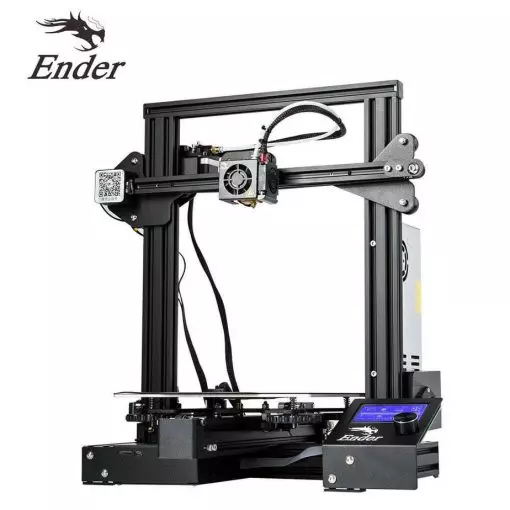
| Model | Creality 3D Ender 3[BUY Ender 3] |
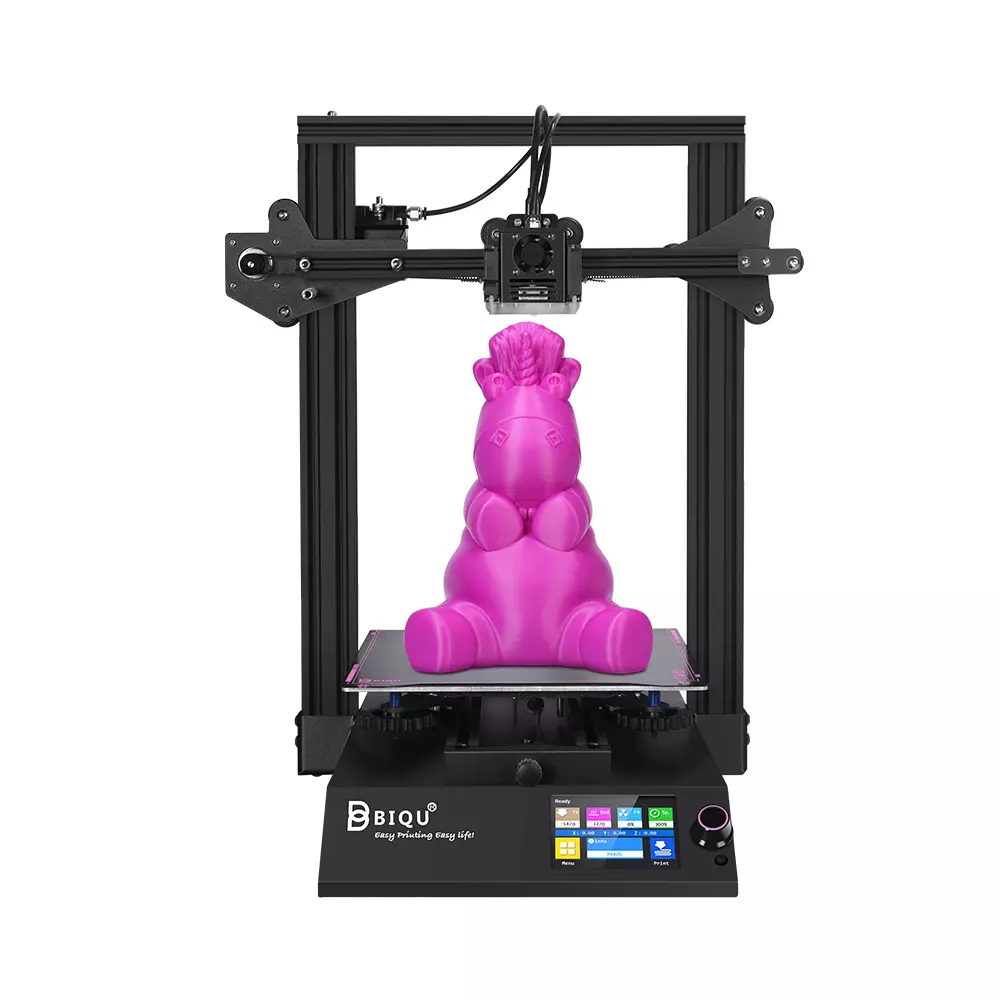
BigTreeTech BIQU B1 |
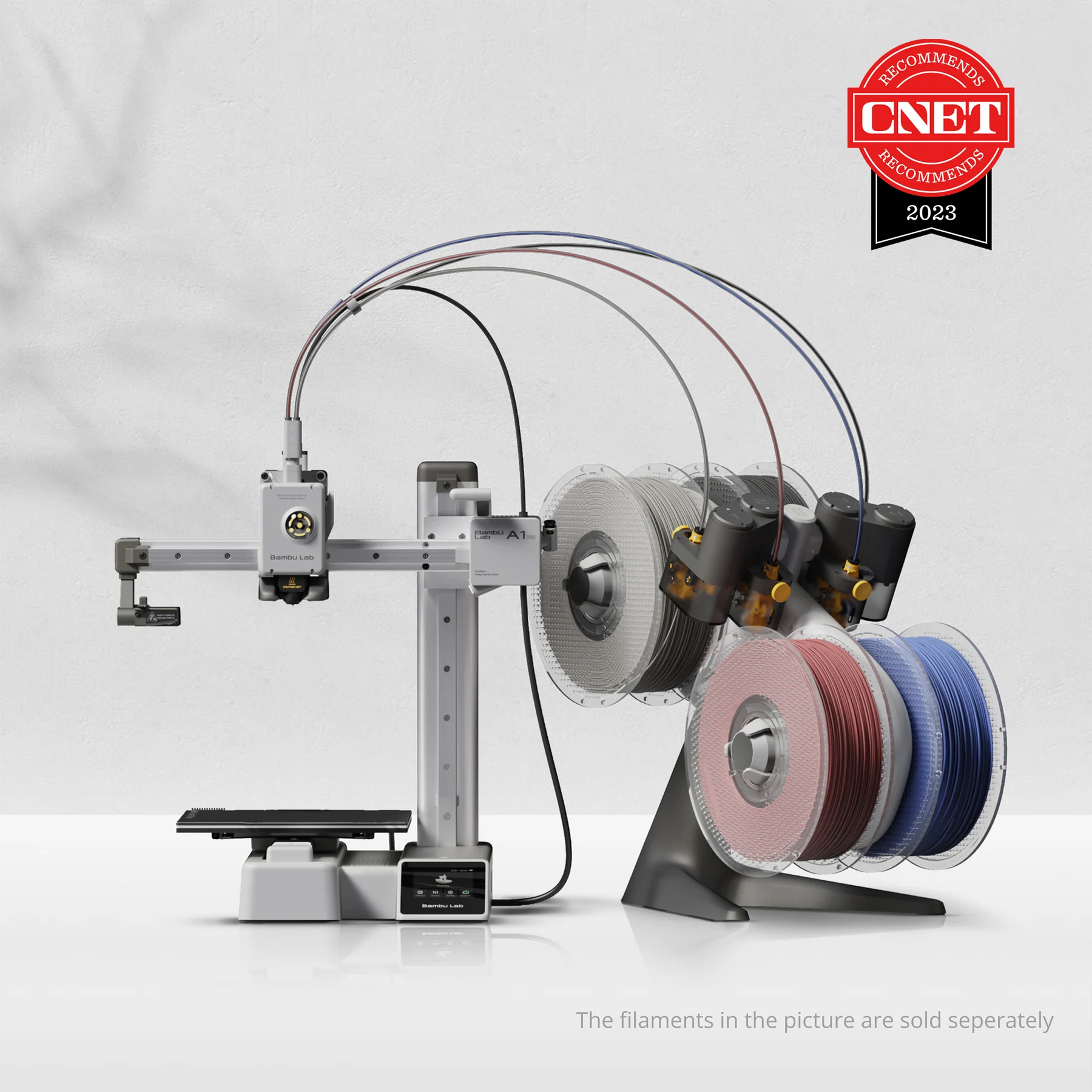
Bambu Lab A1 Mini |
| Printing Material | Filament | Filament | Filament |
| Estimated price | $210,00 | $269,00 | $549,00 |
| Date of registration in the system | |||
| Fabricante | Creality 3D | BigTreeTech | Bambu Lab |
| Release Year | 2018 | 2020 | 2023 |
| Print Volume [mm] | 220x220x250 | 235x235x270 | 180x180x180 |
| Printer Size [mm] | 440x440x465 | 412x402x492 | 315x347x365 |
| Weight [kg] | 6,62 | 8,00 | 5,5 |
| Power Loss Recovery | NO | YES | YES |
| Enclosed printer | NO | NO | NO |
| Bed Leveling | Manual | Manual | Automatic |
| Filament End Sensor | NO | YES | YES |
| Bed type | Heated | Heated | Heated |
| Power supply system | Bowden | Bowden | Direct Drive |
| Standard nozzle | 0,4 | 0,4 | 0,4 |
| Maximum Nozzle Temperature [°C] | 255 | 250 | 300 |
| Maximum Bed Temperature [°C] | 110 | 100 | 80 |
| Maximum printing speed [mm/s] | 180 | 100 | 500 |
| Filament holder | YES | YES | YES |
| Camera for supervision | NO | NO | YES |
| Recommended filaments | PLA, TPU, ABS, PETG | PLA, TPU, ABS, PETG | PLA, PETG, TPU, PVA |
| Recommended slicers | Cura, Simplify, Slic3r | Cura, Simplify, Slic3r | Bambu Studio, Super Slicer, Cura, Prusa Slicer, Orca |
| Maximum Resolution [mm] | 0,1 | 0,1 | 0,1 |
| Kinematics | - | - | - |
| Extruder Type | - | - | - |
| Klipper Firmware | NO | NO | NO |
| Input Shaping | NO | NO | NO |
| Max Volumetric Flow [mm³/s] | - | - | - |
| Power Supply | 24V / 270W | 24V / 360W | 150 W |
| Connectivity | SD / USB | SD / USB | Wifi, Bambu bus, Cartão SD |
| Release date | 2018 | 2020 | 2023 |
| Extra features | The Ender 3 V1 is a DIY assembly 3D printer, a sales leader since 2017, standing out for its cost-benefit. With a wide printing capacity, it has a CNC machined structure for precision and stability. It offers high-precision prints with low noise, thanks to its innovative V-profile and pulleys. It has a self-adhesive magnetic platform for easy removal of models and excellent adhesion. The Ender 3 heats up quickly, reaching 100°C in 5 minutes, ideal for agile prints. It includes protection against power failures, allowing you to resume printing after interruptions, saving time and material. | The BIQU B1 is an advanced 3D printer with a silent 32-bit BTT SKR V1.4 motherboard and ARM Cortex-M3 CPU, offering DIY interfaces (I2C, SPI, WiFi) and dual Z-axis. Its dual BTT B1 TFT35 V3.0 operating system allows real-time monitoring and multiple printing modes, including G-code visualization effects. It stands out for its BIQU SSS (Super Spring Steel), ensuring easy model adhesion and simplified removal, with the possibility of using it on both sides. It includes a filament sensor, automatically pausing printing in case of filament breakage. The multicolored RGB lights integrated into the hotend allow you to view the printing status even at night. Additional notes include the need for a BIQU-specific Type-C cable and extra interfaces for smart filament sensor and BL Touch. | The Bambu Lab A1 Mini stands out not only for its impressive speed and automatic calibration, but also for its multi-color printing capability thanks to AMS Lite. This innovative system makes multi-color printing easy, making it accessible to everyone. AMS Lite, specific to the A1 Mini, supports up to four different materials simultaneously, providing creative freedom without complications. With comprehensive sensors for energy monitoring and recovery, a camera for timelapses and Wi-Fi control, the A1 Mini and AMS Lite together offer an intuitive and advanced 3D printing experience, ideal for materials such as PLA, PETG and TPU, and designed for simplicity and fast maintenance with quick-change nozzles. |
| Support for multiple colors and materials (AMS and CFS) | NO | NO | YES |
Notes * |
|||
| Cost-benefit | 8 / 10 | 8 / 10 | 8 / 10 |
| Hardware | 0.5 / 10 | 1 / 10 | 5.6 / 10 |
| Screen | . | . | . |
| Print volume | 10 / 10 | 10 / 10 | 10 / 10 |
| Performance | 7 / 10 | 6 / 10 | 9 / 10 |
| [BUY Ender 3] |
Conclusion |
| In comparing the three 3D printers, the Ender 3, BIQU B1, and Bambu Lab A1 Mini, several key factors emerged that can help prospective users make an informed decision. The Ender 3 stands out for its outstanding value for money, being the most affordable option. It offers a solid printing volume and is well-regarded for its ease of assembly and operation. However, it lacks features like power loss recovery and automatic bed leveling, which are beneficial for users who may experience issues during longer print jobs. The BIQU B1, while priced between the two other models, offers an enhanced user experience with features such as a 32-bit motherboard and a dual Z-axis. This printer excels in terms of silent operation and added functionality like a filament sensor, which improves reliability during printing. Its print volume is slightly larger than that of the Ender 3, but it falls short in speed compared to the A1 Mini. The Bambu Lab A1 Mini, despite being the most expensive, justifies its price with advanced features including automatic calibration and multi-material capabilities. Its remarkable printing speed and additional monitoring tools, like a camera, provide an intuitive and streamlined printing process. This printer would be an excellent choice for those prioritizing innovation and efficiency, as well as for users interested in more complex print projects. In conclusion, for budget-conscious users, the Ender 3 offers the best cost-benefit ratio, especially for basic printing needs. The BIQU B1 serves as a balanced mid-range option, providing more advanced features without breaking the bank. On the other hand, the Bambu Lab A1 Mini targets users looking for high-speed performance and versatility in material usage, making it ideal for more ambitious 3D printing projects. Ultimately, the best choice will depend on the specific needs, budget, and desired features of the user. |