
Compare BigTreeTech BIQU B1 vs Creality 3D Ender 6 vs Creality Ender 3 V3 Plus
Comparison between the best 3D printers
Choose the best 3D printer at the best price. The cheapest 3D printers are here.
Buy a 3D printer here with 3D Fila.
 |
 |
 |
|
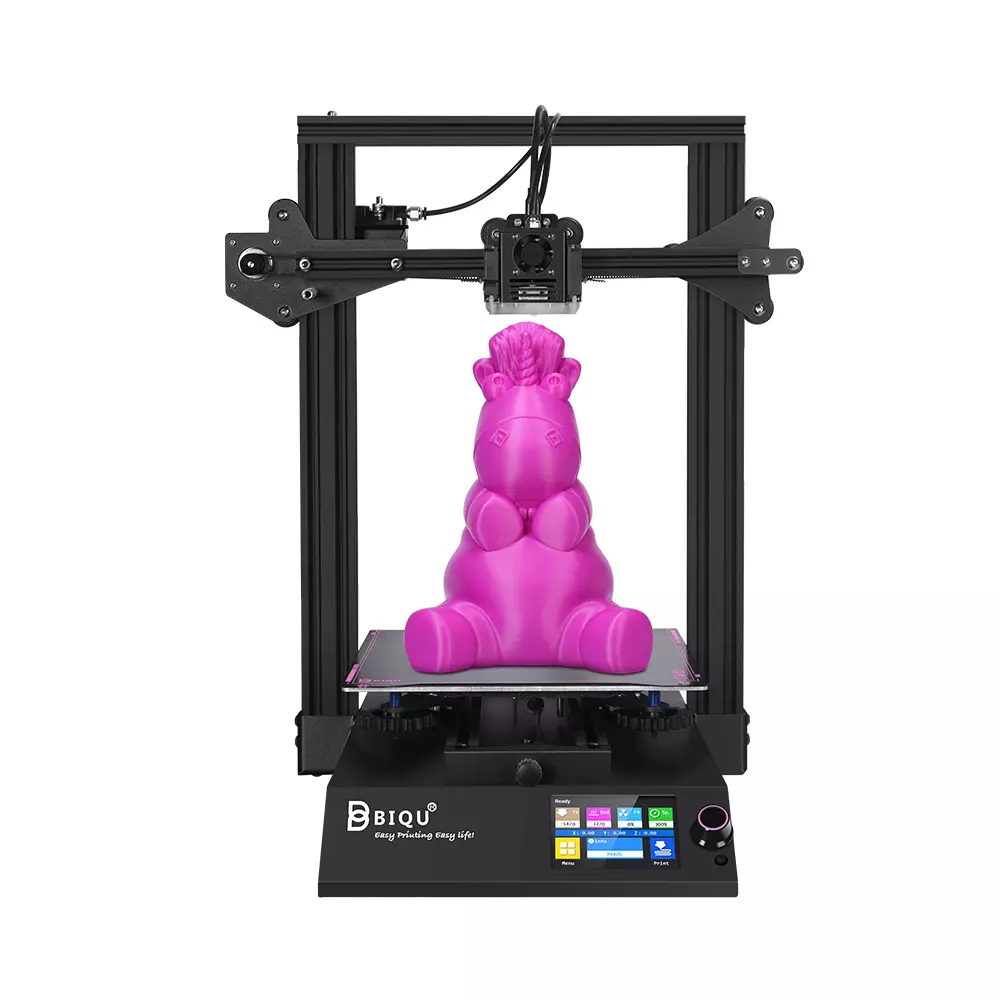
| Model | BigTreeTech BIQU B1 |
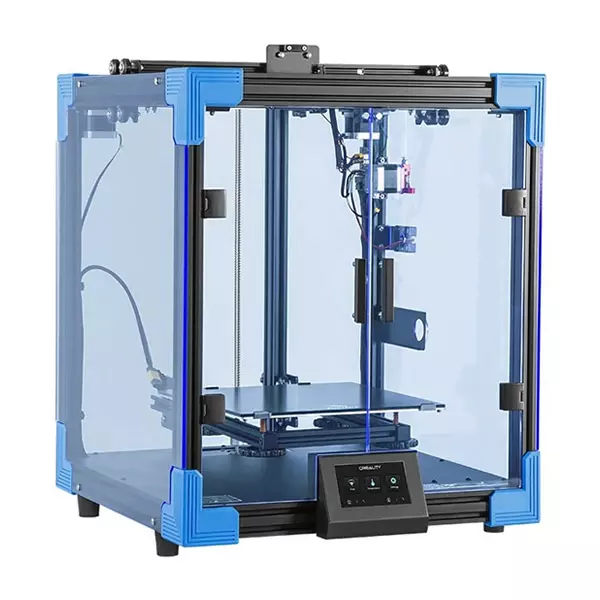
Creality 3D Ender 6[BUY Ender 6] |
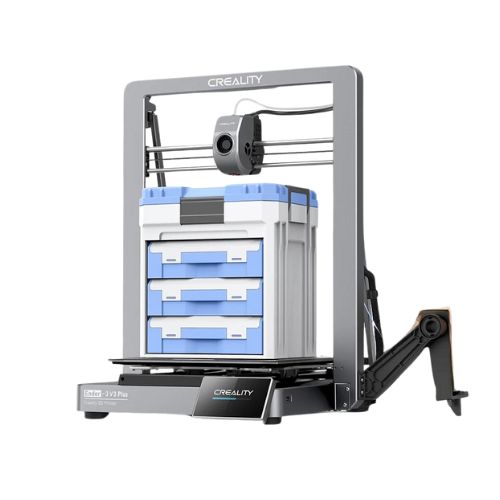
Creality Ender 3 V3 Plus |
| Printing Material | Filament | Filament | Filament |
| Estimated price | $269,00 | $499,00 | $479,00 |
| Date of registration in the system | |||
| Fabricante | BigTreeTech | Creality 3D | Creality |
| Release Year | 2020 | 2020 | 2024 |
| Print Volume [mm] | 235x235x270 | 250x250x400 | 300x300x330 |
| Printer Size [mm] | 412x402x492 | 495x495x650 | 410x445x577 |
| Weight [kg] | 8,00 | 22 | 11,5 |
| Power Loss Recovery | YES | YES | YES |
| Enclosed printer | NO | YES | NO |
| Bed Leveling | Manual | Manual | Automatic |
| Filament End Sensor | YES | YES | YES |
| Bed type | Heated | Heated | Heated |
| Power supply system | Bowden | Bowden | Direct Drive |
| Standard nozzle | 0,4 | 0,4 | 0,4 |
| Maximum Nozzle Temperature [°C] | 250 | 260 | 300 |
| Maximum Bed Temperature [°C] | 100 | 100 | 100 |
| Maximum printing speed [mm/s] | 100 | 150 | 600 |
| Filament holder | YES | YES | YES |
| Camera for supervision | NO | NO | NO |
| Recommended filaments | PLA, TPU, ABS, PETG | PLA, TPU, ABS, PETG | PLA, TPU(95A), PETG, ABS, PLA-CF, PETG-CF, CR-carbon |
| Recommended slicers | Cura, Simplify, Slic3r | Cura, Simplify, Slic3r | Bambu Studio, Super Slicer, Cura, Prusa Slicer, Orca Slicer, Creality Print |
| Maximum Resolution [mm] | 0,1 | 0,1 | 0,1 |
| Kinematics | - | - | - |
| Extruder Type | - | - | - |
| Klipper Firmware | NO | NO | NO |
| Input Shaping | NO | NO | NO |
| Max Volumetric Flow [mm³/s] | - | - | - |
| Power Supply | 24V / 360W | 24V / 504W | 350 W |
| Connectivity | SD / USB | SD / USB | Wifi, Bambu bus, Cartão SD |
| Release date | 2020 | 2020 | 2024 |
| Extra features | The BIQU B1 is an advanced 3D printer with a silent 32-bit BTT SKR V1.4 motherboard and ARM Cortex-M3 CPU, offering DIY interfaces (I2C, SPI, WiFi) and dual Z-axis. Its dual BTT B1 TFT35 V3.0 operating system allows real-time monitoring and multiple printing modes, including G-code visualization effects. It stands out for its BIQU SSS (Super Spring Steel), ensuring easy model adhesion and simplified removal, with the possibility of using it on both sides. It includes a filament sensor, automatically pausing printing in case of filament breakage. The multicolored RGB lights integrated into the hotend allow you to view the printing status even at night. Additional notes include the need for a BIQU-specific Type-C cable and extra interfaces for smart filament sensor and BL Touch. | The Creality Ender 6 stands out in the world of 3D printers with its CoreXY system, offering fast and high-quality prints. With a robust design, it has acrylic panels to protect against air currents, optimizing the printing of materials that require higher temperatures. It features a generic Creality hotend, effective up to ~240°C. Its differentials include 10mm GATES belts, promoting stability at high speeds, and a 360W power supply for reliable performance. The machine also has an intuitive user interface through a 4.3-inch touchscreen. | The Ender 3 V3 Plus incorporates significant advancements in 3D printing, featuring a build volume of 300300330mm. It features a Creality operating system based on Klipper, which supports advanced functions such as linear advance and input shaping, and allows precise adjustments through root access or expert mode. The CoreXZ motion system allows a printing speed of up to 600mm/s, with an acceleration of up to 20000mm/s². Equipped with a flexible build plate and a quick-change nozzle with a hardened steel tip, the printer offers simplified maintenance and increased durability. Additionally, the high-speed direct drive technology of the extruder, together with an automatic leveling system and filament end sensors, raise the standard for reliability and efficiency. Compatible with a variety of filaments, including PLA and PETG, the Ender 3 V3 Plus is a robust choice for 3D printing enthusiasts and professionals. |
| Support for multiple colors and materials (AMS and CFS) | NO | NO | NO |
Notes * |
|||
| Cost-benefit | 8 / 10 | 7 / 10 | 7 / 10 |
| Hardware | 1 / 10 | 1.5 / 10 | 3.2 / 10 |
| Screen | . | . | . |
| Print volume | 10 / 10 | 10 / 10 | 10 / 10 |
| Performance | 6 / 10 | 7 / 10 | 10 / 10 |
| [BUY Ender 6] |
Conclusion |
| In summary, each of the three 3D printers offers unique strengths catering to different user needs and budgets. The **BIQU B1**, while the most economical option, presents a solid entry-level choice for beginners and hobbyists. It boasts features like power loss recovery and a filament end sensor, which enhance usability. However, its manual bed leveling and smaller print volume might limit its potential for more advanced projects. The **Creality Ender 6**, positioned in the mid-range, distinguishes itself with its enclosed design and CoreXY motion system, enabling faster printing speeds and better temperature management. Its user-friendly touchscreen interface and improved stability make it suitable for users who appreciate robust construction and speed, although its weight and price may deter some buyers. The **Ender 3 V3 Plus** emerges as the top-tier option, with advanced features like automatic bed leveling, a direct drive system, and high-speed capabilities that cater to both enthusiasts and professionals. Its larger build volume and versatile filament support allow it to tackle a broader range of projects effectively. Overall, if budget is a key consideration and you're new to 3D printing, the BIQU B1 is a solid choice. If you're looking for a balance between performance and cost, the Ender 6 is a strong contender. However, for those seeking top performance with advanced features for varied applications, the Ender 3 V3 Plus offers the best value despite its higher price. Thus, the choice ultimately hinges on individual needs, print volume requirements, and budget constraints. |