

Compare Creality 3D K1C vs Bambu Lab H2D
Comparison between the best 3D printers
Choose the best 3D printer at the best price. The cheapest 3D printers are here.
Buy a 3D printer here with 3D Fila.
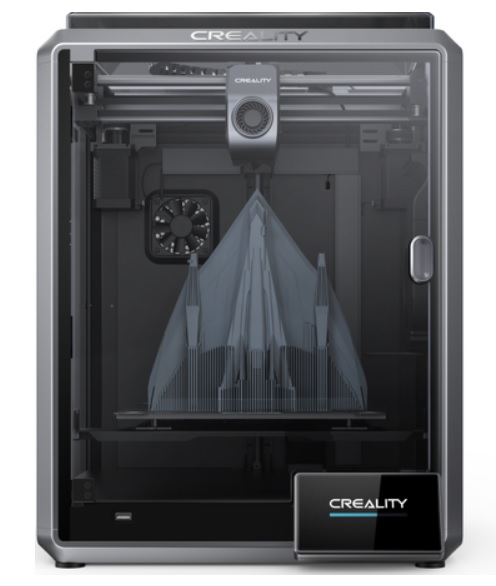 |
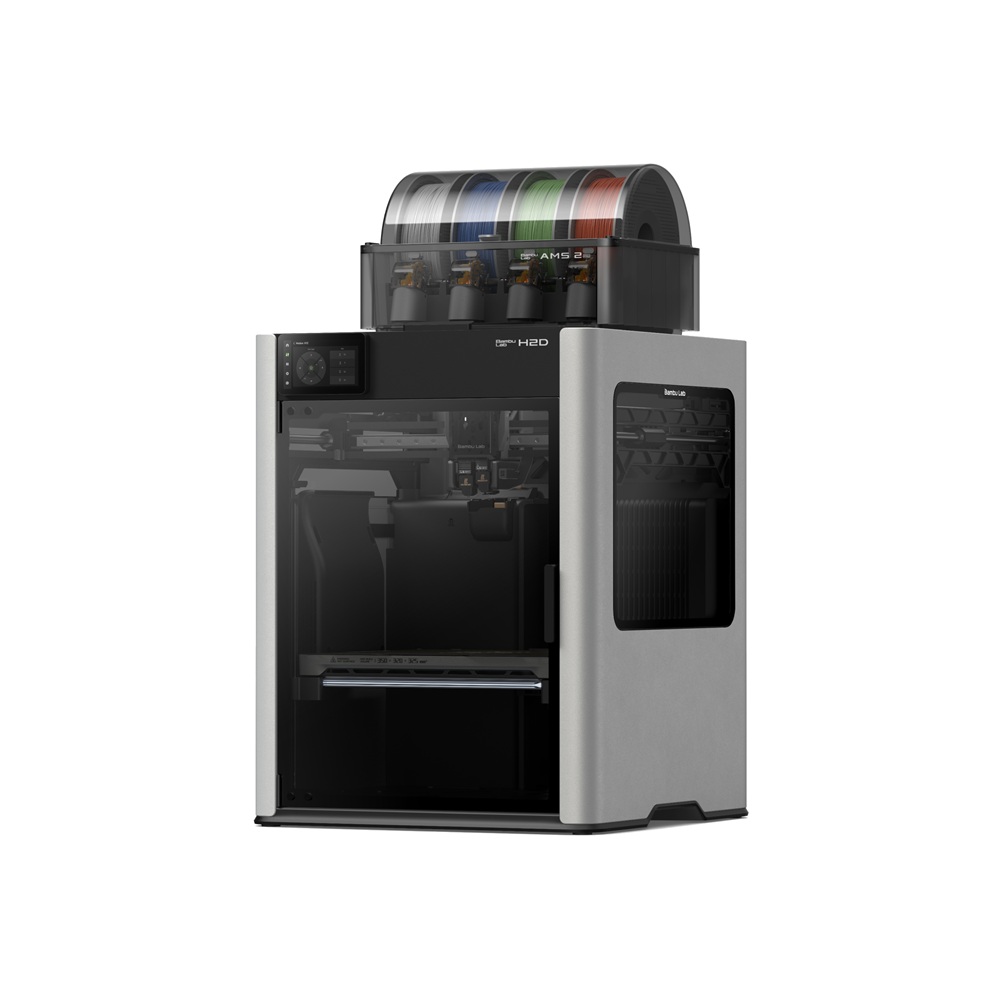 |
|
| Model | Creality 3D K1C[BUY K1C] |
Bambu Lab H2D |
| Printing Material | Filament | Filament |
| Estimated price | $449,00 | $1899,00 |
| Date of registration in the system | ||
| Manufacturer | Creality 3D | Bambu Lab |
| Release Year | 2024 | 2025 |
| Print Volume [mm] | 220x220x250 | 350x320x325 |
| Printer Size [mm] | 355x355x480 | 492x514x626 |
| Weight [kg] | 12,4 | 42,3 |
| Power Loss Recovery | YES | YES |
| Enclosed printer | YES | YES |
| Bed Leveling | Automatic | Automatic |
| Filament End Sensor | YES | YES |
| Bed type | Heated | Heated |
| Power supply system | Direct Drive | Direct Drive |
| Standard nozzle | 0,4 | 0,4 |
| Maximum Nozzle Temperature [°C] | 300 | 350 |
| Maximum Bed Temperature [°C] | 120 | 120 |
| Maximum printing speed [mm/s] | 600 | 600 |
| Filament holder | YES | YES |
| Camera for supervision | YES | YES |
| Recommended filaments | ABS, PLA, PETG, PET, TPU, PA, ABS, ASA, PC, PLA-CF, PA-CF, PET-CF | PLA, PETG, ABS, ASA, TPU, PVA, Nylon (PA) |
| Recommended slicers | Creality Print; Cura, Simplify3D e PrusaSlicer | Bambu Studio |
| Maximum Resolution [mm] | 0,1 | 0,01 |
| Kinematics | - | - |
| Extruder Type | - | - |
| Klipper Firmware | NO | NO |
| Input Shaping | NO | NO |
| Max Volumetric Flow [mm³/s] | - | - |
| Power Supply | 110/220V / 350W | |
| Connectivity | Ethernet / USB / Wi-Fi | Wifi, Bambu bus, Cartão SD |
| Release date | 2024 | 2025 |
| Extra features | The Creality K1C is a fully enclosed CoreXY 3D printer featuring an all-metal extruder, tri-metal âUnicornâ nozzle for abrasive materials, automatic bed leveling with nozzle cleaning, AI-assisted failure detection, built-in camera for timelapse, enhanced cooling system, root access to Klipper firmware, and compatibility with PLA-CF, PA-CF, PET-CF, TPU, ABS, and more. | Bambu Labâs H2D combines high-speed 3D printing with a chamber heated up to 65 °C, dual extrusion with automatic nozzle switching, an AMS for filament drying and exchange, and AI sensors that detect failures. It offers optional laser and digital cutting capabilities, features intelligent calibration through computer vision, vibration control, enhanced fire safety, and real-time camera monitoring. |
| Support for multiple colors and materials (AMS and CFS) | NO | YES |
Notes * |
||
| Cost-benefit | 8 / 10 | 6 / 10 |
| Hardware | 4.8 / 10 | 8.1 / 10 |
| Screen | . | . |
| Print volume | 10 / 10 | 10 / 10 |
| Performance | 10 / 10 | 10 / 10 |
| [BUY K1C] |
Conclusion |
Conclusion: Comparing the K1C (Creality 3D) and H2D (Bambu Lab) When it comes to choosing between the K1C and the H2D, both 3D printers showcase advanced features and capabilities, but they cater to different user profiles and requirements. Creality K1C Pros:
Cons:
Bambu Lab H2D Pros:
Cons:
Final Verdict: For users who are just starting their 3D printing journey or for hobbyists looking for a reliable machine for smaller projects, the Creality K1C is the optimal choice. Its balance of features, user-friendly setup, and affordability make it an attractive option for those not requiring extensive capabilities. Conversely, for professionals or serious enthusiasts who require larger build volumes, advanced material compatibility, and additional functionalities, the Bambu Lab H2D stands out as the superior investment. Its higher price reflects the extensive features and capabilities that can significantly enhance productivity and creativity in 3D printing. Ultimately, the best buy depends on your specific needs: if you prioritize ease of use and budget, go for the K1C; if you need advanced features and larger print capacity, the H2D is worth the investment. |