

Compare Creality 3D K1C vs Creality 3D Ender 6
Comparison between the best 3D printers
Choose the best 3D printer at the best price. The cheapest 3D printers are here.
Buy a 3D printer here with 3D Fila.
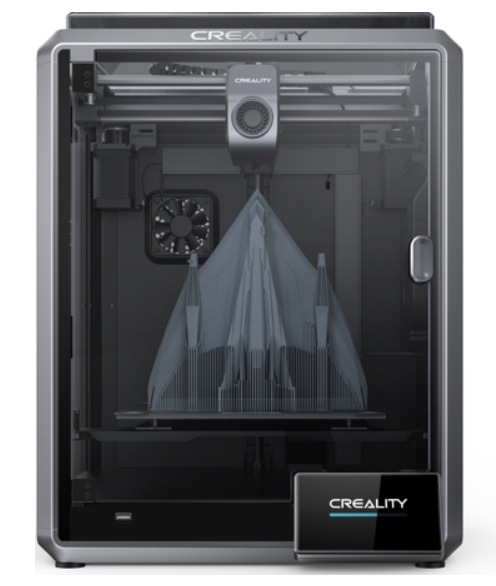 |
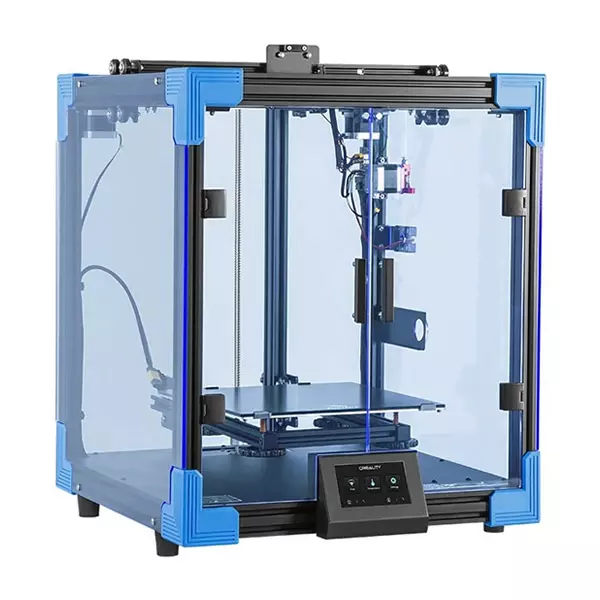 |
|
| Model | Creality 3D K1C[BUY K1C] |
Creality 3D Ender 6[BUY Ender 6] |
| Printing Material | Filament | Filament |
| Estimated price | $449,00 | $499,00 |
| Date of registration in the system | ||
| Manufacturer | Creality 3D | Creality 3D |
| Release Year | 2024 | 2020 |
| Print Volume [mm] | 220x220x250 | 250x250x400 |
| Printer Size [mm] | 355x355x480 | 495x495x650 |
| Weight [kg] | 12,4 | 22 |
| Power Loss Recovery | YES | YES |
| Enclosed printer | YES | YES |
| Bed Leveling | Automatic | Manual |
| Filament End Sensor | YES | YES |
| Bed type | Heated | Heated |
| Power supply system | Direct Drive | Bowden |
| Standard nozzle | 0,4 | 0,4 |
| Maximum Nozzle Temperature [°C] | 300 | 260 |
| Maximum Bed Temperature [°C] | 120 | 100 |
| Maximum printing speed [mm/s] | 600 | 150 |
| Filament holder | YES | YES |
| Camera for supervision | YES | NO |
| Recommended filaments | ABS, PLA, PETG, PET, TPU, PA, ABS, ASA, PC, PLA-CF, PA-CF, PET-CF | PLA, TPU, ABS, PETG |
| Recommended slicers | Creality Print; Cura, Simplify3D e PrusaSlicer | Cura, Simplify, Slic3r |
| Maximum Resolution [mm] | 0,1 | 0,1 |
| Kinematics | - | - |
| Extruder Type | - | - |
| Klipper Firmware | NO | NO |
| Input Shaping | NO | NO |
| Max Volumetric Flow [mm³/s] | - | - |
| Power Supply | 110/220V / 350W | 24V / 504W |
| Connectivity | Ethernet / USB / Wi-Fi | SD / USB |
| Release date | 2024 | 2020 |
| Extra features | The Creality K1C is a fully enclosed CoreXY 3D printer featuring an all-metal extruder, tri-metal âUnicornâ nozzle for abrasive materials, automatic bed leveling with nozzle cleaning, AI-assisted failure detection, built-in camera for timelapse, enhanced cooling system, root access to Klipper firmware, and compatibility with PLA-CF, PA-CF, PET-CF, TPU, ABS, and more. | The Creality Ender 6 stands out in the world of 3D printers with its CoreXY system, offering fast and high-quality prints. With a robust design, it has acrylic panels to protect against air currents, optimizing the printing of materials that require higher temperatures. It features a generic Creality hotend, effective up to ~240°C. Its differentials include 10mm GATES belts, promoting stability at high speeds, and a 360W power supply for reliable performance. The machine also has an intuitive user interface through a 4.3-inch touchscreen. |
| Support for multiple colors and materials (AMS and CFS) | NO | NO |
Notes * |
||
| Cost-benefit | 8 / 10 | 7 / 10 |
| Hardware | 4.8 / 10 | 1.5 / 10 |
| Screen | . | . |
| Print volume | 10 / 10 | 10 / 10 |
| Performance | 10 / 10 | 7 / 10 |
| [BUY K1C] | [BUY Ender 6] |
Conclusion |
Conclusion and Comparison of 3D Printers: K1C vs Ender 6 When evaluating the K1C and Ender 6 3D printers from Creality, it is essential to consider both the technical specifications and the intended user profiles to determine which model offers the best value. K1C (Creality 3D)
Ender 6 (Creality 3D)
Final Verdict: For beginners or users who prioritize ease of use, safety, and advanced features, the K1C emerges as the better choice with its automatic bed leveling, high-speed capabilities, and compatibility with a range of materials. It's an excellent model for those looking to explore diverse printing applications without the hassle of manual setup. On the other hand, for experienced users or professionals who require a larger build volume and are comfortable with manual adjustments, the Ender 6 offers a robust solution with a proven design, larger print capacity, and solid performance for larger projects. Ultimately, the choice depends on the user's specific needs and experience level. The K1C is ideal for those looking for a user-friendly experience with modern features, while the Ender 6 serves well for users seeking a reliable workhorse for larger prints. |