
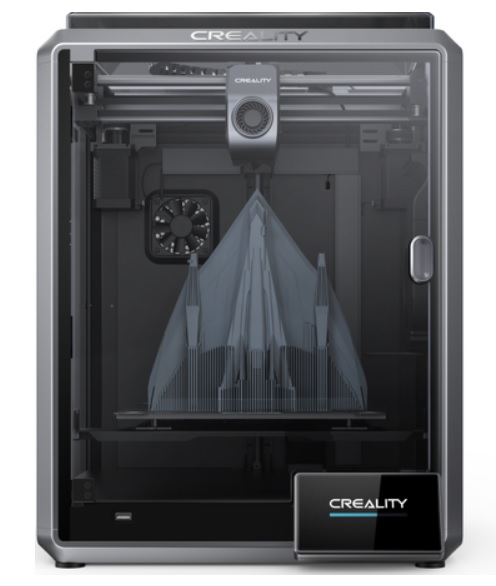
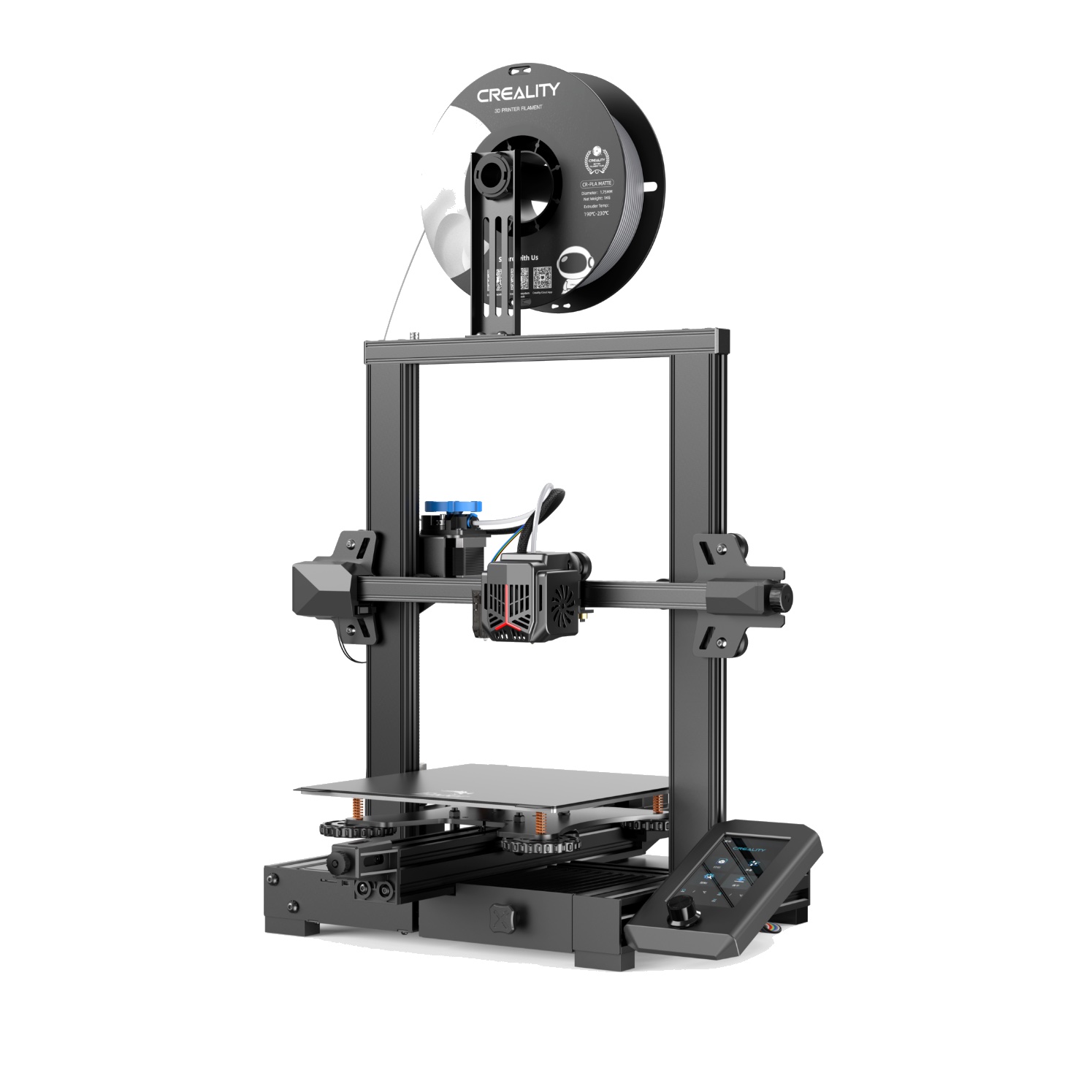
Compare Creality 3D K1C vs Creality 3D Ender 3 V2 Neo
Comparison between the best 3D printers
Choose the best 3D printer at the best price. The cheapest 3D printers are here.
Buy a 3D printer here with 3D Fila.
 |
 |
|
| Model | Creality 3D K1C[BUY K1C] |
Creality 3D Ender 3 V2 Neo[BUY Ender 3 V2 Neo] |
| Printing Material | Filament | Filament |
| Estimated price | $449,00 | $310,00 |
| Date of registration in the system | ||
| Manufacturer | Creality 3D | Creality 3D |
| Release Year | 2024 | 2022 |
| Print Volume [mm] | 220x220x250 | 220x220x250 |
| Printer Size [mm] | 355x355x480 | 438x424x472 |
| Weight [kg] | 12,4 | 9,8 |
| Power Loss Recovery | YES | YES |
| Enclosed printer | YES | NO |
| Bed Leveling | Automatic | Automatic |
| Filament End Sensor | YES | YES |
| Bed type | Heated | Heated |
| Power supply system | Direct Drive | Bowden |
| Standard nozzle | 0,4 | 0,4 |
| Maximum Nozzle Temperature [°C] | 300 | 260 |
| Maximum Bed Temperature [°C] | 120 | 100 |
| Maximum printing speed [mm/s] | 600 | 80 |
| Filament holder | YES | YES |
| Camera for supervision | YES | NO |
| Recommended filaments | ABS, PLA, PETG, PET, TPU, PA, ABS, ASA, PC, PLA-CF, PA-CF, PET-CF | PLA, PETG |
| Recommended slicers | Creality Print; Cura, Simplify3D e PrusaSlicer | Cura, Simplify, Slic3r, IdeaMaker |
| Maximum Resolution [mm] | 0,1 | 0,1 |
| Kinematics | - | - |
| Extruder Type | - | - |
| Klipper Firmware | NO | NO |
| Input Shaping | NO | NO |
| Max Volumetric Flow [mm³/s] | - | - |
| Power Supply | 110/220V / 350W | |
| Connectivity | Ethernet / USB / Wi-Fi | SD / USB |
| Release date | 2024 | 2022 |
| Extra features | The Creality K1C is a fully enclosed CoreXY 3D printer featuring an all-metal extruder, tri-metal âUnicornâ nozzle for abrasive materials, automatic bed leveling with nozzle cleaning, AI-assisted failure detection, built-in camera for timelapse, enhanced cooling system, root access to Klipper firmware, and compatibility with PLA-CF, PA-CF, PET-CF, TPU, ABS, and more. | The Ender 3 V2 Neo printer stands out for its automatic bed leveling with the CR Touch system, ensuring high-quality initial layers. It features an all-metal Bowden extruder for increased durability and improved filament handling. Its flexible, PC-coated magnetic build plate makes it easy to remove prints and is durable and easy to clean. It also includes a new user interface with model preview and an updated gantry design. The Ender 3 V2 Neo maintains the same build volume and temperatures as the previous version, supporting popular filaments such as PLA and ABS. It features a quiet 32-bit mainboard and additional features such as a filament sensor, print recovery, simple 3-step assembly, an integrated toolbox, and belt tensioners. |
| Support for multiple colors and materials (AMS and CFS) | NO | NO |
Notes * |
||
| Cost-benefit | 8 / 10 | 7 / 10 |
| Hardware | 4.8 / 10 | 2.4 / 10 |
| Screen | . | . |
| Print volume | 10 / 10 | 10 / 10 |
| Performance | 10 / 10 | 5 / 10 |
| [BUY K1C] | [BUY Ender 3 V2 Neo] |
Conclusion |
Conclusion: Detailed Comparison of K1C and Ender 3 V2 Neo When comparing the K1C and the Ender 3 V2 Neo, both 3D printers from Creality, it’s important to consider user profiles, printing needs, and feature sets to determine which one offers the best value. K1C (Creality 3D)
Ender 3 V2 Neo (Creality 3D)
Final Verdict The best buy between the K1C and Ender 3 V2 Neo heavily depends on the user's profile:
In summary, both printers have their distinct advantages. The K1C excels in technology and speed, perfect for ambitious projects, while the Ender 3 V2 Neo offers a solid foundation for beginners at a more accessible price point. |