

Compare Creality 3D K1C vs GTMax Core A2V2
Comparison between the best 3D printers
Choose the best 3D printer at the best price. The cheapest 3D printers are here.
Buy a 3D printer here with 3D Fila.
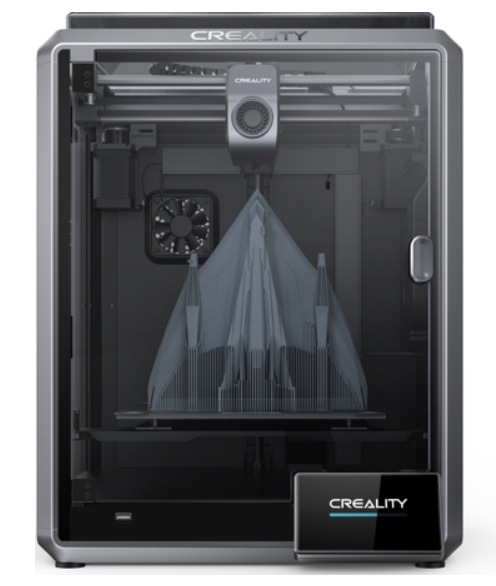 |
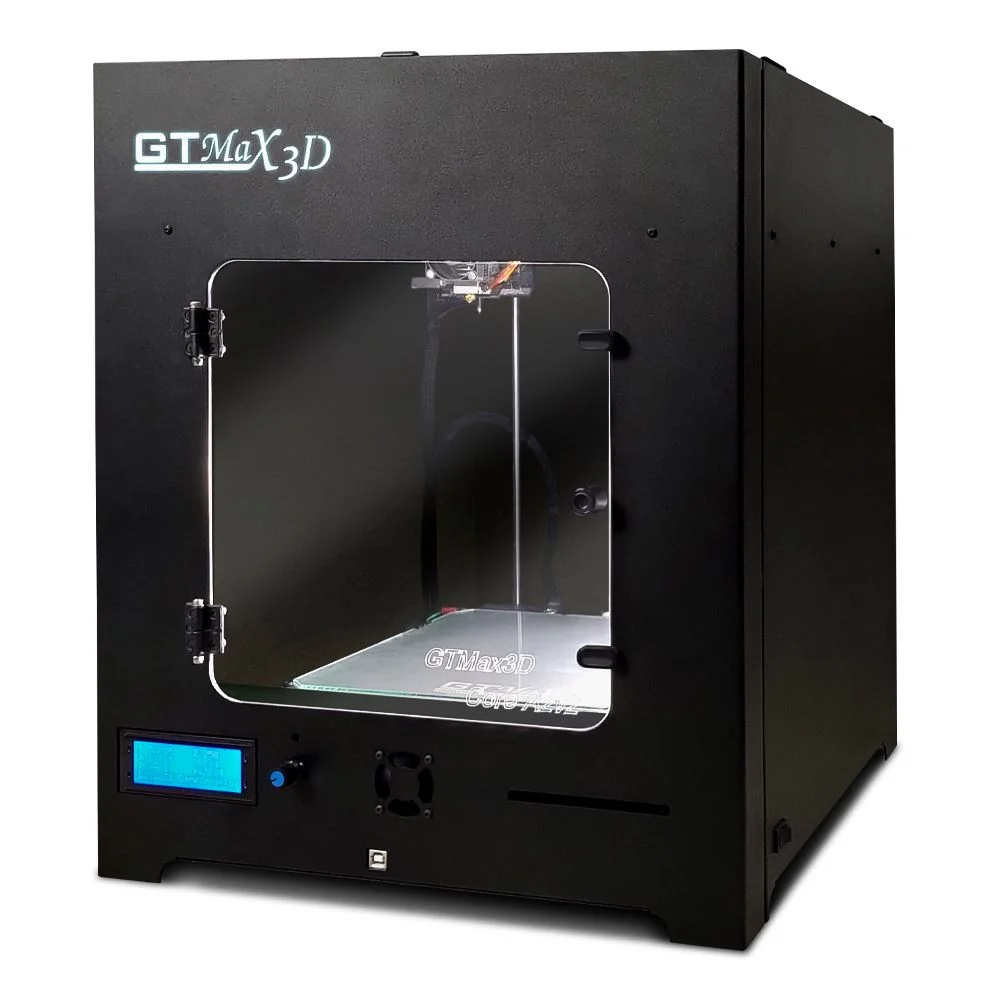 |
|
| Model | Creality 3D K1C[BUY K1C] |
GTMax Core A2V2 |
| Printing Material | Filament | Filament |
| Estimated price | $449,00 | $684,00 |
| Date of registration in the system | ||
| Manufacturer | Creality 3D | GTMax |
| Release Year | 2024 | 2019 |
| Print Volume [mm] | 220x220x250 | 220x220x240 |
| Printer Size [mm] | 355x355x480 | 425x460x512 |
| Weight [kg] | 12,4 | |
| Power Loss Recovery | YES | YES |
| Enclosed printer | YES | YES |
| Bed Leveling | Automatic | |
| Filament End Sensor | YES | YES |
| Bed type | Heated | Heated |
| Power supply system | Direct Drive | Bowden |
| Standard nozzle | 0,4 | 0,4 |
| Maximum Nozzle Temperature [°C] | 300 | 295 |
| Maximum Bed Temperature [°C] | 120 | 135 |
| Maximum printing speed [mm/s] | 600 | 150 |
| Filament holder | YES | YES |
| Camera for supervision | YES | NO |
| Recommended filaments | ABS, PLA, PETG, PET, TPU, PA, ABS, ASA, PC, PLA-CF, PA-CF, PET-CF | PLA, PETG, Tritan, Flex, ABS |
| Recommended slicers | Creality Print; Cura, Simplify3D e PrusaSlicer | Cura, Simplify, Slic3r, IdeaMaker |
| Maximum Resolution [mm] | 0,1 | 0,05 |
| Kinematics | - | - |
| Extruder Type | - | - |
| Klipper Firmware | NO | NO |
| Input Shaping | NO | NO |
| Max Volumetric Flow [mm³/s] | - | - |
| Power Supply | 110/220V / 350W | |
| Connectivity | Ethernet / USB / Wi-Fi | SD / USB |
| Release date | 2024 | 2019 |
| Extra features | The Creality K1C is a fully enclosed CoreXY 3D printer featuring an all-metal extruder, tri-metal âUnicornâ nozzle for abrasive materials, automatic bed leveling with nozzle cleaning, AI-assisted failure detection, built-in camera for timelapse, enhanced cooling system, root access to Klipper firmware, and compatibility with PLA-CF, PA-CF, PET-CF, TPU, ABS, and more. | The GTMax3D ProCore A2v2 is a compact and robust 3D printer with a printing area of ??220 x 220 x 240 mm. It offers high print quality, ranging from 0.05 mm to 0.32 mm. Its features include automatic filament detection and changing, travel speed of up to 300 mm/s, and a heated aluminum bed with a glass top. It has automatic bed leveling with 16 points and an all-metal hotend that reaches up to 298°C. The printer has a carbon steel frame with electrostatic painting, is automatic bivolt and has connectivity via USB and SD card. The Bowden system and core xy kinematics complete its advanced features. |
| Support for multiple colors and materials (AMS and CFS) | NO | NO |
Notes * |
||
| Cost-benefit | 8 / 10 | 6 / 10 |
| Hardware | 4.8 / 10 | 1.5 / 10 |
| Screen | . | . |
| Print volume | 10 / 10 | 10 / 10 |
| Performance | 10 / 10 | 7 / 10 |
| [BUY K1C] |
Conclusion |
| In comparing the Creality K1C and the GTMax Core A2V2 3D printers, several key factors emerge that can guide a potential buyer in making an informed choice. **Cost-Efficiency and Value:** The K1C stands out with its significantly lower price point without compromising on essential features, providing greater value for budget-conscious users. It scores higher in cost-benefit evaluation compared to the Core A2V2, which may make it a more appealing choice for those new to 3D printing or looking for a solid entry-level option. **Feature Set and Technology:** The K1C integrates advanced features such as AI-assisted failure detection, a tri-metal nozzle for handling abrasive materials, and root access to Klipper firmware. In contrast, while the Core A2V2 offers reliable print quality and a compact design, its technology appears to be slightly dated with its 2019 release, leading to fewer high-tech enhancements compared to its counterpart. **Printing Performance:** The K1C excels in maximum printing speed and maximum nozzle temperature, allowing for quick and efficient printing. It also supports a wider variety of filament types, which may benefit users seeking versatile printing possibilities. Conversely, the Core A2V2's maximum resolution is marginally better, yet it is limited by slower print speeds which might affect the efficiency in a production setting. **Physical Specifications and Design:** With similar print volumes, both models cater well to standard printing needs. However, the K1C benefits from a slightly more compact design, making it more space-efficient. Both models come with an enclosed structure, enhancing safety and temperature control during printing. **Usability and Connectivity:** The K1C features a modern touchscreen interface and multiple connectivity options, including Ethernet and Wi-Fi, which may appeal to tech-savvy users. The Core A2V2, while functional, relies on more traditional USB and SD connections. In conclusion, the Creality K1C emerges as the stronger option overall, combining favorable pricing, a robust set of features, and superior performance capabilities. While the GTMax Core A2V2 has its merits, particularly in print quality, it falls short in terms of innovation, speed, and cost-effectiveness. For buyers prioritizing value and advanced features in their 3D printing venture, the K1C appears to be the more compelling choice. |