

Compare Creality 3D K1C vs Creality CR10 SE
Comparison between the best 3D printers
Choose the best 3D printer at the best price. The cheapest 3D printers are here.
Buy a 3D printer here with 3D Fila.
 |
 |
|
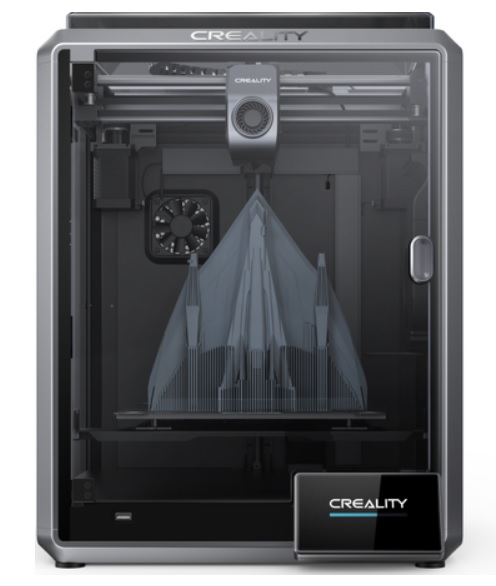
| Model | Creality 3D K1C[BUY K1C] |
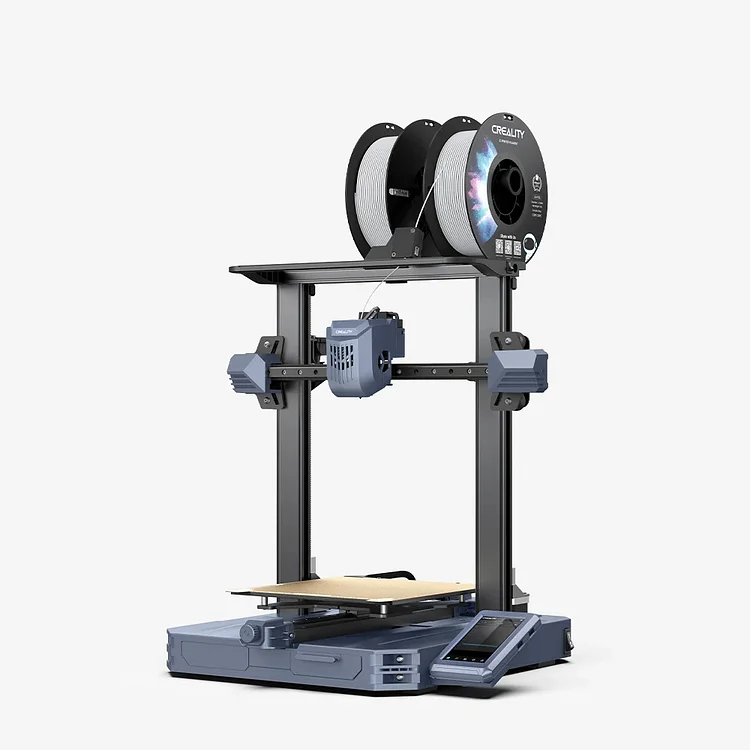
Creality CR10 SE |
| Printing Material | Filament | Filament |
| Estimated price | $449,00 | $386,00 |
| Date of registration in the system | ||
| Manufacturer | Creality 3D | Creality |
| Release Year | 2024 | 2023 |
| Print Volume [mm] | 220x220x250 | 220x220x265 |
| Printer Size [mm] | 355x355x480 | 490x470x625 |
| Weight [kg] | 12,4 | 6,9 |
| Power Loss Recovery | YES | NO |
| Enclosed printer | YES | NO |
| Bed Leveling | Automatic | |
| Filament End Sensor | YES | NO |
| Bed type | Heated | |
| Power supply system | Direct Drive | Direct Drive |
| Standard nozzle | 0,4 | 0,4 |
| Maximum Nozzle Temperature [°C] | 300 | 300 |
| Maximum Bed Temperature [°C] | 120 | 110 |
| Maximum printing speed [mm/s] | 600 | 600 |
| Filament holder | YES | YES |
| Camera for supervision | YES | YES |
| Recommended filaments | ABS, PLA, PETG, PET, TPU, PA, ABS, ASA, PC, PLA-CF, PA-CF, PET-CF | PLA, PETG, PET, TPU, PA Wood, ABS, ASA, PA, PLA-CF |
| Recommended slicers | Creality Print; Cura, Simplify3D e PrusaSlicer | Creality Print, Cura, Simplify3D, PrusaSlicer, Orca Slice |
| Maximum Resolution [mm] | 0,1 | 0,1 |
| Kinematics | - | - |
| Extruder Type | - | - |
| Klipper Firmware | NO | NO |
| Input Shaping | NO | NO |
| Max Volumetric Flow [mm³/s] | - | - |
| Power Supply | 110/220V / 350W | |
| Connectivity | Ethernet / USB / Wi-Fi | USB, Wifi |
| Release date | 2024 | 2023 |
| Extra features | The Creality K1C is a fully enclosed CoreXY 3D printer featuring an all-metal extruder, tri-metal âUnicornâ nozzle for abrasive materials, automatic bed leveling with nozzle cleaning, AI-assisted failure detection, built-in camera for timelapse, enhanced cooling system, root access to Klipper firmware, and compatibility with PLA-CF, PA-CF, PET-CF, TPU, ABS, and more. | The Creality CR10 SE stands out for its printing speed of up to 600 mm/s, easy and intuitive assembly, direct extruder with double gears, hotend with hardened steel nozzle and ceramic heater, automatic leveling with CR-Touch and pressure sensor, and use of Creality OS firmware based on Klipper, with automatic input shaping calibration. It also includes Wi-Fi connectivity, a filament out-of-stock sensor and a robust structure with linear rails on the X and Y axes. |
| Support for multiple colors and materials (AMS and CFS) | NO | NO |
Notes * |
||
| Cost-benefit | 8 / 10 | 8 / 10 |
| Hardware | 4.8 / 10 | 0.7 / 10 |
| Screen | . | . |
| Print volume | 10 / 10 | 10 / 10 |
| Performance | 10 / 10 | 10 / 10 |
| [BUY K1C] |
Conclusion |
Conclusion: 3D Printer Comparison - K1C vs. CR10 SE When considering the Creality K1C and the CR10 SE, both printers offer excellent features for FDM technology users, but they cater to slightly different user profiles. Below is a detailed comparison of their pros and cons, followed by a final verdict. K1C (Creality 3D)
CR10 SE (Creality)
Final Verdict: For users who prioritize versatility and the ability to work with a wide range of materials, particularly abrasive composites, the K1C is the superior choice. Its enclosed design and advanced features make it ideal for professional users or hobbyists who are serious about their 3D printing projects. On the other hand, for beginners or those looking for a budget-friendly option without sacrificing too much in terms of quality and features, the CR10 SE presents a compelling case. Its open design and ease of assembly make it a great choice for those new to 3D printing or for users who primarily work with standard filaments. Ultimately, the choice between the two will depend on the user's specific needs, experience level, and the types of materials they plan to print with. |