
Compare Creality 3D K1C vs Creality 3D CR 6 Max
Comparison between the best 3D printers
Choose the best 3D printer at the best price. The cheapest 3D printers are here.
Buy a 3D printer here with 3D Fila.
 |
 |
|
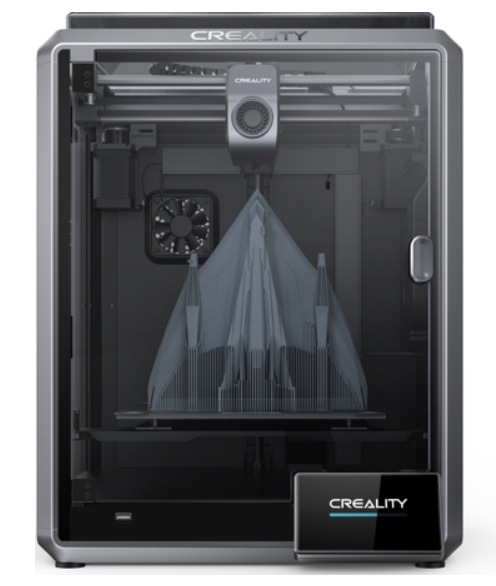
| Model | Creality 3D K1C[BUY K1C] |
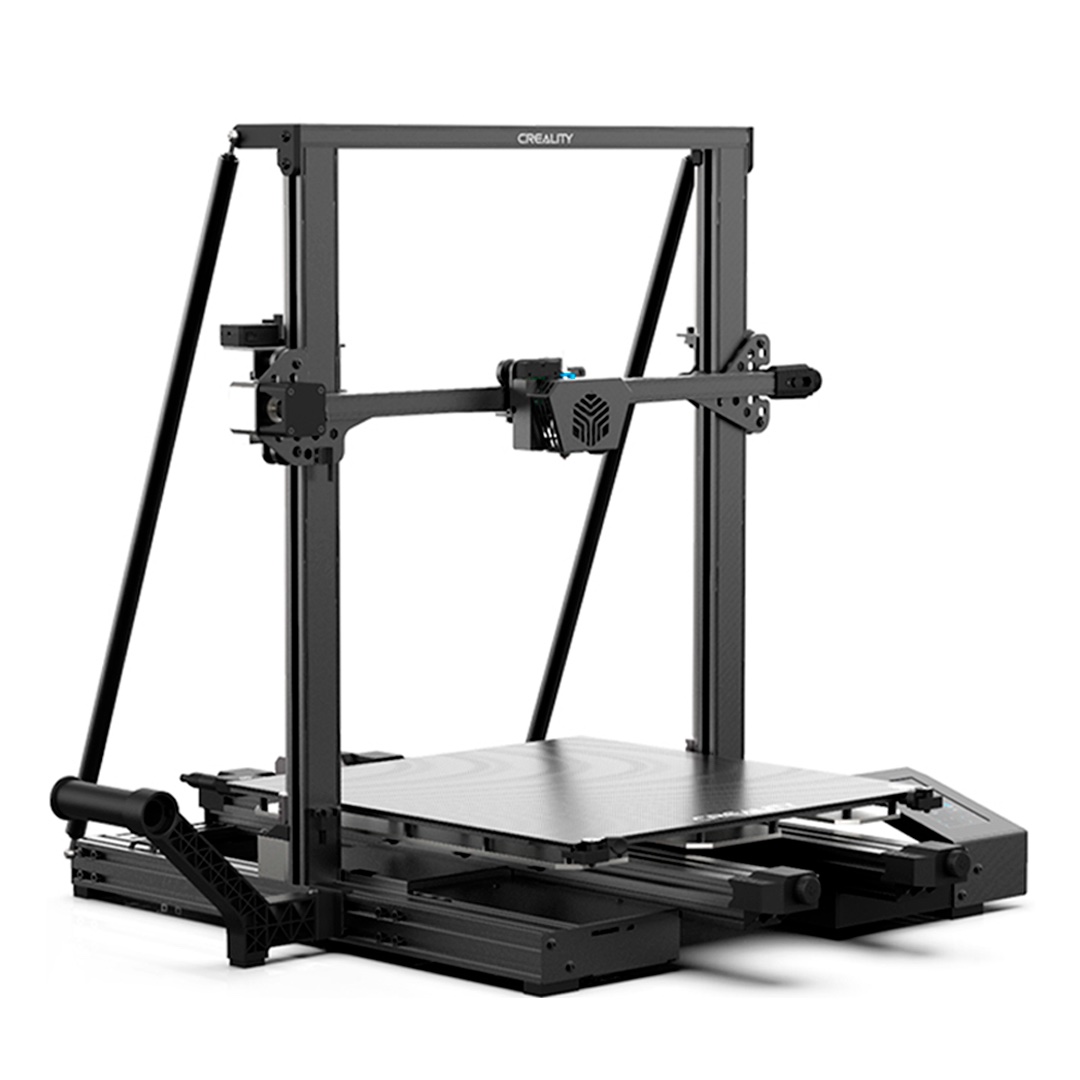
Creality 3D CR 6 Max |
| Printing Material | Filament | Filament |
| Estimated price | $449,00 | $700,00 |
| Date of registration in the system | ||
| Manufacturer | Creality 3D | Creality 3D |
| Release Year | 2024 | 2021 |
| Print Volume [mm] | 220x220x250 | 400x400x400 |
| Printer Size [mm] | 355x355x480 | 725x640x691 |
| Weight [kg] | 12,4 | 14 |
| Power Loss Recovery | YES | YES |
| Enclosed printer | YES | NO |
| Bed Leveling | Automatic | Automatic |
| Filament End Sensor | YES | YES |
| Bed type | Heated | Heated |
| Power supply system | Direct Drive | Bowden |
| Standard nozzle | 0,4 | 0,4 |
| Maximum Nozzle Temperature [°C] | 300 | 260 |
| Maximum Bed Temperature [°C] | 120 | 90 |
| Maximum printing speed [mm/s] | 600 | 100 |
| Filament holder | YES | YES |
| Camera for supervision | YES | NO |
| Recommended filaments | ABS, PLA, PETG, PET, TPU, PA, ABS, ASA, PC, PLA-CF, PA-CF, PET-CF | PLA, PETG |
| Recommended slicers | Creality Print; Cura, Simplify3D e PrusaSlicer | Cura, Simplify, Slic3r, IdeaMaker |
| Maximum Resolution [mm] | 0,1 | 0,1 |
| Kinematics | - | - |
| Extruder Type | - | - |
| Klipper Firmware | NO | NO |
| Input Shaping | NO | NO |
| Max Volumetric Flow [mm³/s] | - | - |
| Power Supply | 110/220V / 350W | 110/220V / 500W |
| Connectivity | Ethernet / USB / Wi-Fi | SD / USB |
| Release date | 2024 | 2021 |
| Extra features | The Creality K1C is a fully enclosed CoreXY 3D printer featuring an all-metal extruder, tri-metal âUnicornâ nozzle for abrasive materials, automatic bed leveling with nozzle cleaning, AI-assisted failure detection, built-in camera for timelapse, enhanced cooling system, root access to Klipper firmware, and compatibility with PLA-CF, PA-CF, PET-CF, TPU, ABS, and more. | Crealityâs CR-6 Max printer offers a large 400 x 400 x 400mm build area, perfect for larger projects without dividers. Its auto-leveling system and force sensor simplify setup. It has a 4.3-inch touchscreen and convenient features like a tool drawer and filament holder. Plus, its modular hotend, redesigned extruder, and silicon carbide-coated build plate improve print quality. |
| Support for multiple colors and materials (AMS and CFS) | NO | NO |
Notes * |
||
| Cost-benefit | 8 / 10 | 6 / 10 |
| Hardware | 4.8 / 10 | 2 / 10 |
| Screen | . | . |
| Print volume | 10 / 10 | 10 / 10 |
| Performance | 10 / 10 | 6 / 10 |
| [BUY K1C] |
Conclusion |
Conclusion: Comparative Analysis of 3D Printers - K1C vs. CR 6 Max When evaluating the Creality K1C and CR 6 Max, it's essential to consider their respective strengths and weaknesses to determine the best fit for various user profiles. K1C (Creality 3D) Pros:
Cons:
CR 6 Max (Creality 3D) Pros:
Cons:
Final Verdict: For users who prioritize speed, advanced features, and the ability to work with a wide range of materials, the K1C is the best option, particularly for those engaged in rapid prototyping or specialized projects. Its enclosed design and AI features make it appealing for tech-savvy users looking to push the boundaries of their 3D printing capabilities. On the other hand, the CR 6 Max stands out for those who require a larger build volume and value ease of use. It is particularly well-suited for beginners or hobbyists focused on larger prints without the complexities of advanced features. Its established reputation makes it a reliable choice for those who want a straightforward and dependable 3D printing experience. In conclusion, the best buy ultimately depends on the user’s specific needs: choose the K1C for speed and versatility, or the CR 6 Max for size and user-friendliness. |