
Compare Creality 3D K1C vs Anet A8 V2
Comparison between the best 3D printers
Choose the best 3D printer at the best price. The cheapest 3D printers are here.
Buy a 3D printer here with 3D Fila.
 |
 |
|
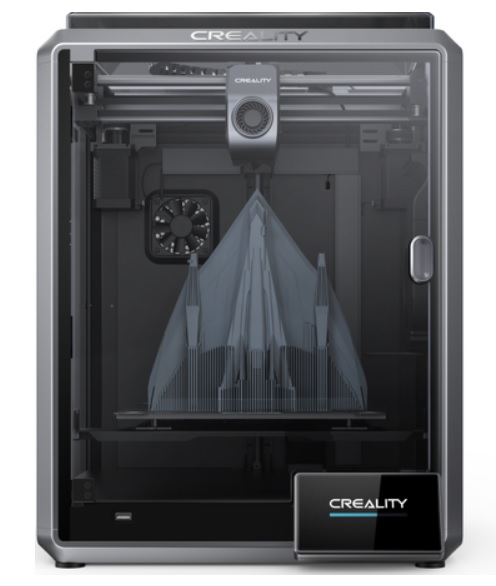
| Model | Creality 3D K1C[BUY K1C] |
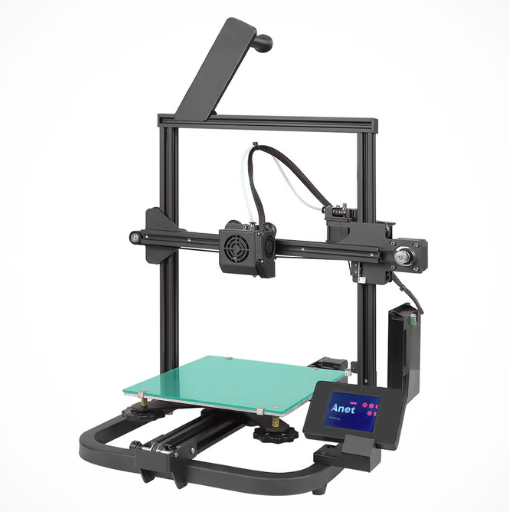
Anet A8 V2 |
| Printing Material | Filament | Filament |
| Estimated price | $449,00 | $129,00 |
| Date of registration in the system | ||
| Manufacturer | Creality 3D | Anet |
| Release Year | 2024 | 2021 |
| Print Volume [mm] | 220x220x250 | 220x220x250 |
| Printer Size [mm] | 355x355x480 | 428x441x486 |
| Weight [kg] | 12,4 | 6,2 |
| Power Loss Recovery | YES | NO |
| Enclosed printer | YES | NO |
| Bed Leveling | Automatic | Manual |
| Filament End Sensor | YES | NO |
| Bed type | Heated | |
| Power supply system | Direct Drive | Bowden |
| Standard nozzle | 0,4 | 0,4 |
| Maximum Nozzle Temperature [°C] | 300 | 230 |
| Maximum Bed Temperature [°C] | 120 | |
| Maximum printing speed [mm/s] | 600 | 150 |
| Filament holder | YES | YES |
| Camera for supervision | YES | NO |
| Recommended filaments | ABS, PLA, PETG, PET, TPU, PA, ABS, ASA, PC, PLA-CF, PA-CF, PET-CF | PLA |
| Recommended slicers | Creality Print; Cura, Simplify3D e PrusaSlicer | Cura, Simplify, Slic3r, IdeaMaker |
| Maximum Resolution [mm] | 0,1 | 0,1 |
| Kinematics | - | - |
| Extruder Type | - | - |
| Klipper Firmware | NO | NO |
| Input Shaping | NO | NO |
| Max Volumetric Flow [mm³/s] | - | - |
| Power Supply | 110/220V / 350W | 110/220V / 250W |
| Connectivity | Ethernet / USB / Wi-Fi | SD / USB |
| Release date | 2024 | 2021 |
| Extra features | The Creality K1C is a fully enclosed CoreXY 3D printer featuring an all-metal extruder, tri-metal âUnicornâ nozzle for abrasive materials, automatic bed leveling with nozzle cleaning, AI-assisted failure detection, built-in camera for timelapse, enhanced cooling system, root access to Klipper firmware, and compatibility with PLA-CF, PA-CF, PET-CF, TPU, ABS, and more. | The Anet A8 V2 is a Cartesian-XZ type 3D printer with a build volume of 220 x 220 x 250 mm, Ender 3 design and V-slot assembly. It has a 32-bit motherboard and touchscreen interface, promising ease of use. It uses open source firmware and has thermal failure protection. It stands out for its cable organization and the absence of a heated bed, focusing on energy savings and PLA printing. It comes with an external power adapter, aiming at greater safety, especially for beginners and educational use. |
| Support for multiple colors and materials (AMS and CFS) | NO | NO |
Notes * |
||
| Cost-benefit | 8 / 10 | 8 / 10 |
| Hardware | 4.8 / 10 | 0 / 10 |
| Screen | . | . |
| Print volume | 10 / 10 | 10 / 10 |
| Performance | 10 / 10 | 7 / 10 |
| [BUY K1C] |
Conclusion |
Conclusion: Comparing the K1C (Creality 3D) and A8 V2 (Anet) In the realm of 3D printing, choosing the right printer often hinges on user needs, experience level, and intended applications. Here, we compare two distinct models: the K1C from Creality 3D and the A8 V2 from Anet, both of which serve different segments of the market. K1C (Creality 3D)
A8 V2 (Anet)
Final Verdict: For beginners or those on a strict budget, the A8 V2 (Anet) offers a great entry point into the world of 3D printing. Its affordability, ease of access, and safety features make it an excellent choice for educational purposes or simple projects. On the other hand, for advanced users or professionals seeking a reliable and feature-rich printer, the K1C (Creality 3D) stands out. Its enclosed design, high-speed capabilities, and compatibility with a variety of materials provide a robust solution for serious printing needs. Ultimately, the best buy will depend on your specific requirements: choose the K1C for advanced, high-quality printing and the A8 V2 for a cost-effective introduction to 3D printing. |