
Compare Creality 3D Halot Max vs Creality 3D K1C
Comparison between the best 3D printers
Choose the best 3D printer at the best price. The cheapest 3D printers are here.
Buy a 3D printer here with 3D Fila.
 |
 |
|
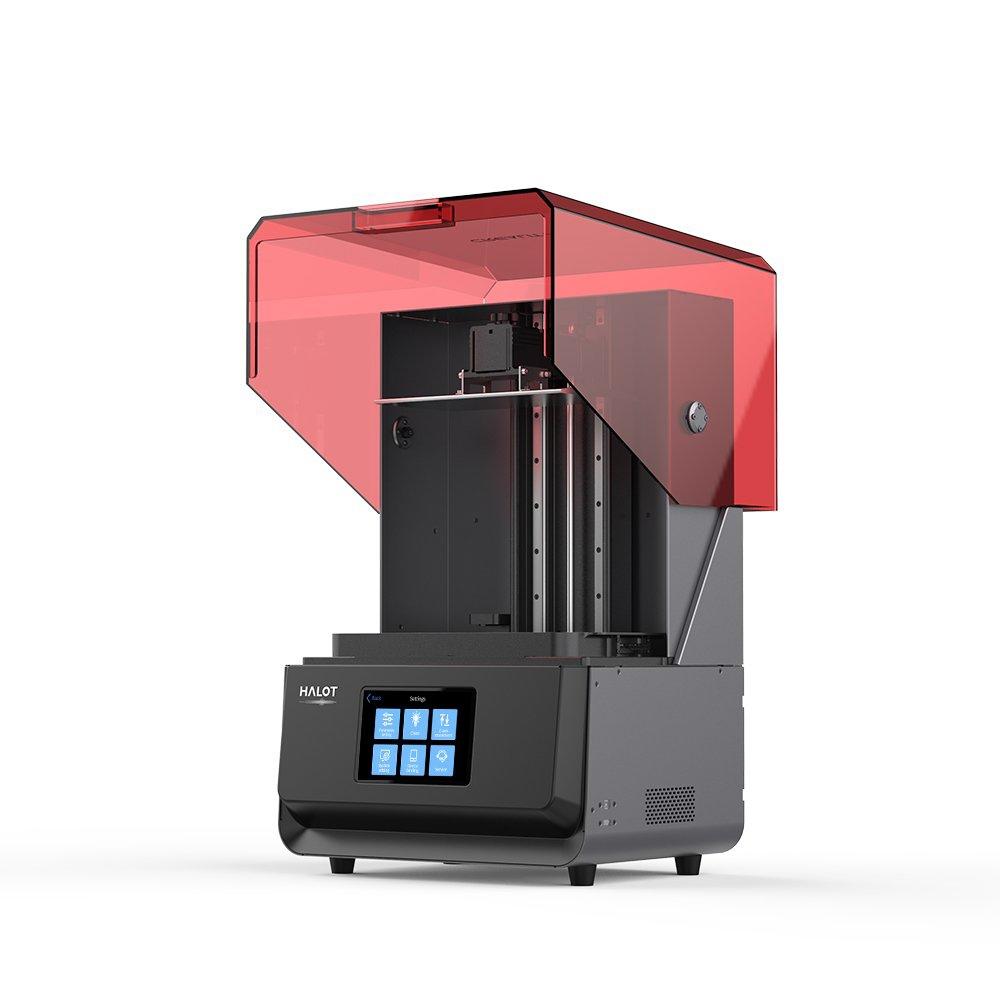
| Model | Creality 3D Halot Max[BUY Halot Max] |
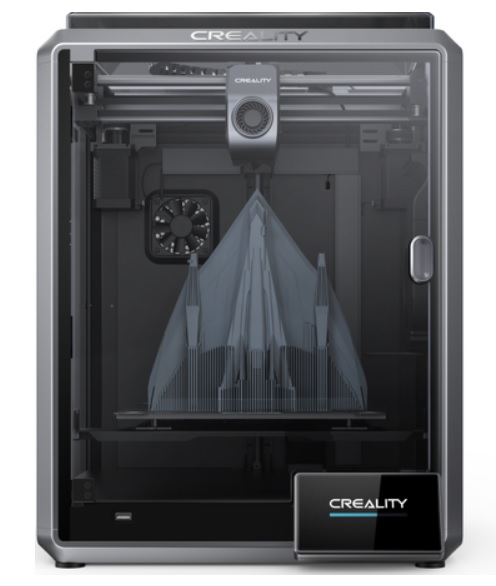
Creality 3D K1C[BUY K1C] |
| Printing Material | Resin | Filament |
| Estimated price | $3000,00 | $449,00 |
| Date of registration in the system | ||
| Manufacturer | Creality 3D | Creality 3D |
| Release Year | 2021 | 2024 |
| Print Volume [mm] | 293x165x300 | 220x220x250 |
| Printer Size [mm] | 480x387x770 | 355x355x480 |
| Weight [kg] | 32,5 | 12,4 |
| Power Loss Recovery | NO | YES |
| Maximum Resolution [mm] | 0,03 | 0,1 |
| Kinematics | - | - |
| Extruder Type | - | - |
| Klipper Firmware | NO | NO |
| Input Shaping | NO | NO |
| Max Volumetric Flow [mm³/s] | - | - |
| Power Supply | 110/220V / 350W | |
| Connectivity | SD / USB / Wi-Fi | Ethernet / USB / Wi-Fi |
| Release date | 2021 | 2024 |
| Extra features | The Halot Max printer stands out for its large print size (293 x 165 x 300 mm) and uses SLA technology. It has an integral light source for improved accuracy and a strong core with an advanced operating system. Its Z-axis module ensures high precision, supported by efficient slicing software. The machine offers online OTA updates and boasts an adjustable layer thickness between 10 and 200 microns. Its XY-axis resolution is 3840*2160, with 0.05 mm accuracy, and an integral 405nm light source. The printer includes a 5" touchscreen and multiple connectivity options, such as USB, Creality Cloud, and HALOT BOX WiFi. With cutting-edge technology, the Halot Max is ideal for printing small models with uniform precision, thanks to its self-developed lighting system and stable printing mechanism, which includes dual linear guides, ball screws, and an intelligent brake system. | The Creality K1C is a fully enclosed CoreXY 3D printer featuring an all-metal extruder, tri-metal âUnicornâ nozzle for abrasive materials, automatic bed leveling with nozzle cleaning, AI-assisted failure detection, built-in camera for timelapse, enhanced cooling system, root access to Klipper firmware, and compatibility with PLA-CF, PA-CF, PET-CF, TPU, ABS, and more. |
| Support for multiple colors and materials (AMS and CFS) | NO | NO |
Notes * |
||
| Cost-benefit | 4 / 10 | 8 / 10 |
| Hardware | 2 / 10 | 4.8 / 10 |
| Screen | . | . |
| Print volume | 10 / 10 | 10 / 10 |
| Performance | 5 / 10 | 10 / 10 |
| [BUY Halot Max] | [BUY K1C] |
Conclusion |
Conclusion: 3D Printer Comparison - Halot Max vs. K1C When evaluating the Halot Max and K1C from Creality 3D, it’s essential to consider the distinct features and capabilities of each printer to determine which one suits your needs best. Halot Max (Creality 3D)
K1C (Creality 3D)
Final Verdict: Choosing between the Halot Max and K1C ultimately depends on your specific needs and user profile:
In conclusion, assess your printing needs, budget, and the materials you intend to use before making a decision. Both printers provide unique advantages tailored to different user profiles. |