

Compare Bambu Lab H2D vs Anycubic Kobra 3 V2 Combo
Comparison between the best 3D printers
Choose the best 3D printer at the best price. The cheapest 3D printers are here.
Buy a 3D printer here with 3D Fila.
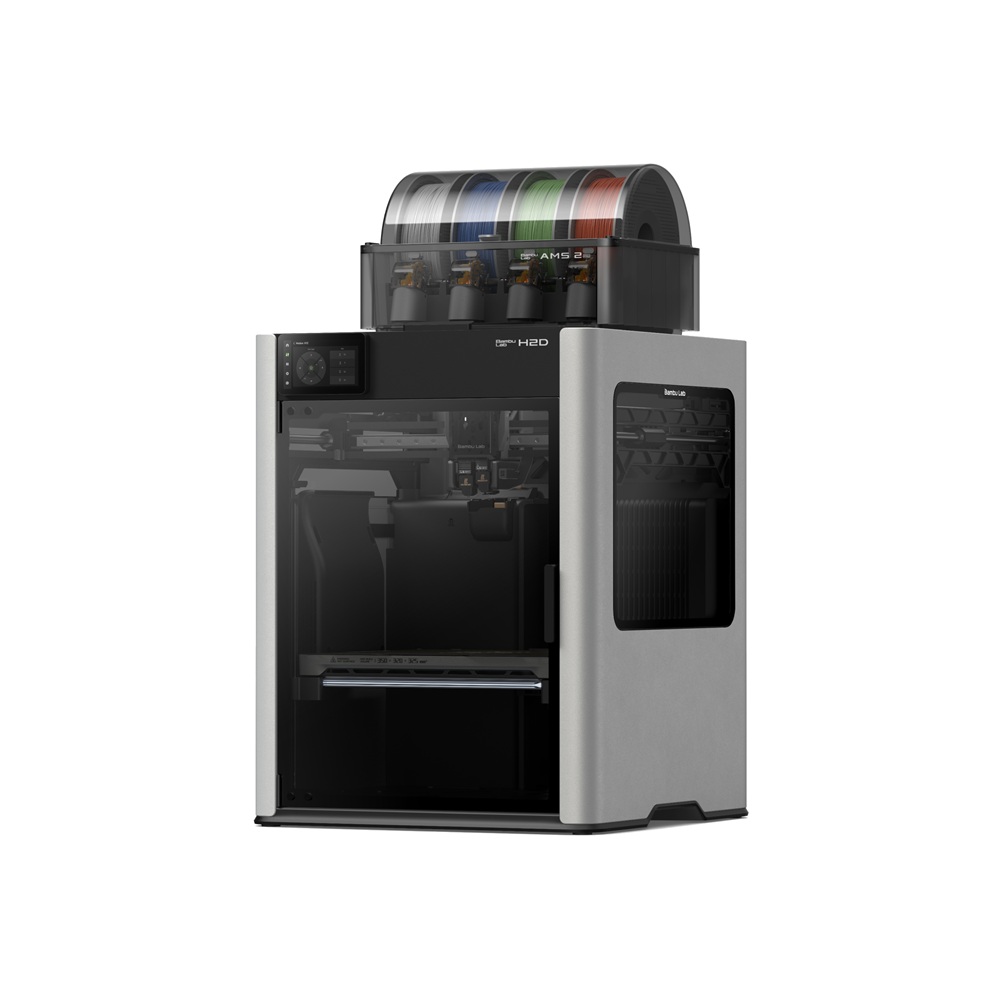 |
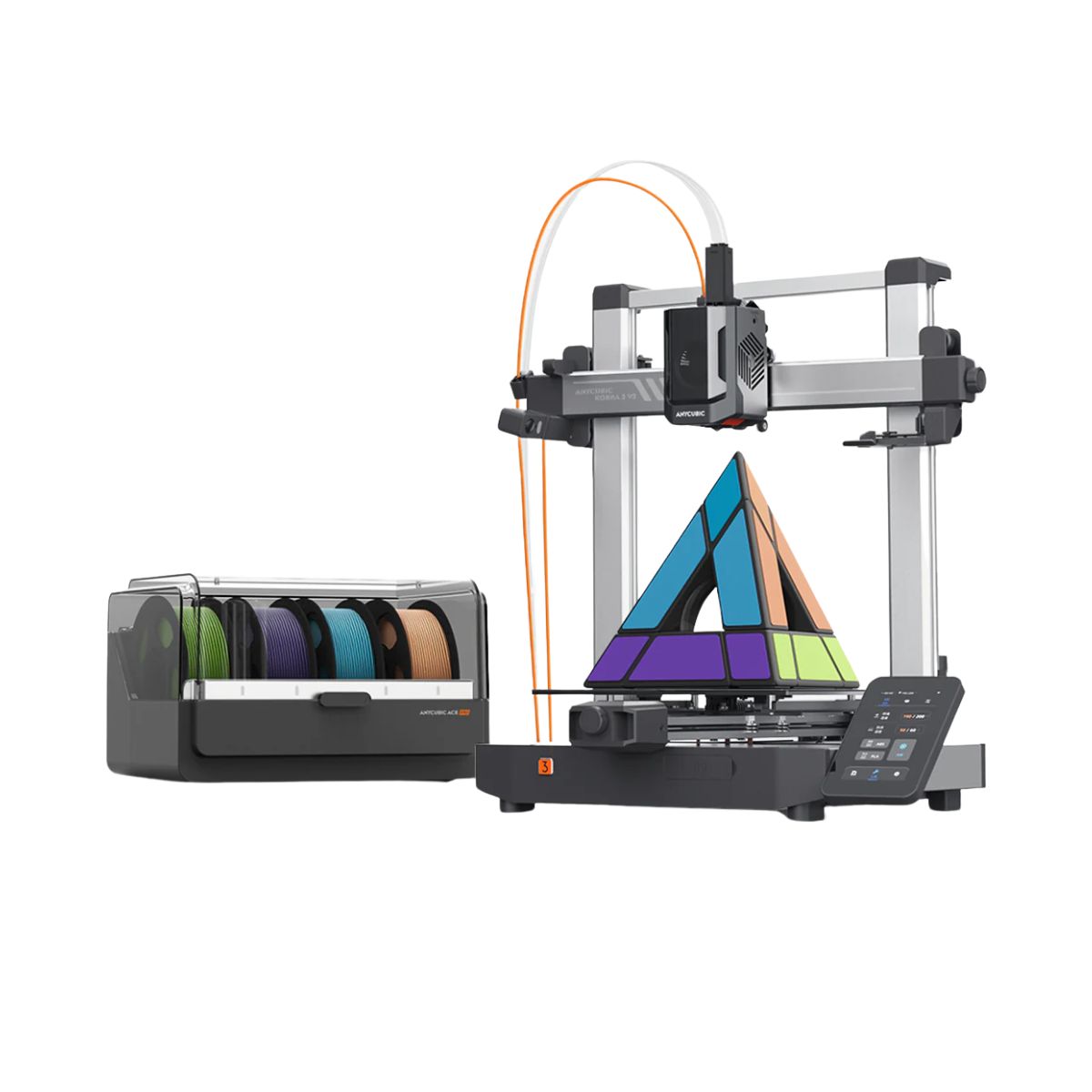 |
|
| Model | Bambu Lab H2D |
Anycubic Kobra 3 V2 Combo[BUY Kobra 3 V2 Combo] |
| Printing Material | Filament | Filament |
| Estimated price | $1899,00 | $379,00 |
| Date of registration in the system | ||
| Manufacturer | Bambu Lab | Anycubic |
| Release Year | 2025 | 2025 |
| Print Volume [mm] | 350x320x325 | 255x255x260 |
| Printer Size [mm] | 492x514x626 | 452x504x483 |
| Weight [kg] | 42,3 | 9,37 |
| Power Loss Recovery | YES | YES |
| Enclosed printer | YES | NO |
| Bed Leveling | Automatic | Automatic |
| Filament End Sensor | YES | YES |
| Bed type | Heated | Heated |
| Power supply system | Direct Drive | Direct Drive |
| Standard nozzle | 0,4 | 0,4 |
| Maximum Nozzle Temperature [°C] | 350 | 300 |
| Maximum Bed Temperature [°C] | 120 | 110 |
| Maximum printing speed [mm/s] | 600 | 600 |
| Filament holder | YES | YES |
| Camera for supervision | YES | NO |
| Recommended filaments | PLA, PETG, ABS, ASA, TPU, PVA, Nylon (PA) | PLA/PETG/TPU (TPU is not compatible with the ACE Pro) |
| Recommended slicers | Bambu Studio | Anycubic Slicer, Cura, Orca Slicer |
| Maximum Resolution [mm] | 0,01 | 0,1 |
| Kinematics | - | - |
| Extruder Type | - | - |
| Klipper Firmware | NO | NO |
| Input Shaping | NO | NO |
| Max Volumetric Flow [mm³/s] | - | - |
| Power Supply | 400 W | |
| Connectivity | Wifi, Bambu bus, Cartão SD | USB, Wi-Fi, Cloud |
| Release date | 2025 | 2025 |
| Extra features | Bambu Labâs H2D combines high-speed 3D printing with a chamber heated up to 65 °C, dual extrusion with automatic nozzle switching, an AMS for filament drying and exchange, and AI sensors that detect failures. It offers optional laser and digital cutting capabilities, features intelligent calibration through computer vision, vibration control, enhanced fire safety, and real-time camera monitoring. | The Kobra 3 V2 Combo brings notable upgrades: a wider Y-axis and SG15 bearings on the X-axis for greater stability, a redesigned nozzle to prevent leakage, a larger build volume (255x255x260 mm), a built-in 720p camera, and native support for 4- or 8-color printing with no extra hub required. All of this combined with LeviQ 3.0 auto-leveling and integrated filament drying. |
| Support for multiple colors and materials (AMS and CFS) | YES | YES |
Notes * |
||
| Cost-benefit | 6 / 10 | 8 / 10 |
| Hardware | 8.1 / 10 | 6.3 / 10 |
| Screen | . | . |
| Print volume | 10 / 10 | 10 / 10 |
| Performance | 10 / 10 | 10 / 10 |
| [BUY Kobra 3 V2 Combo] |
Conclusion |
Conclusion: Comparative Review of H2D (Bambu Lab) and Kobra 3 V2 Combo (Anycubic) In the rapidly evolving landscape of 3D printing technology, the H2D from Bambu Lab and the Kobra 3 V2 Combo from Anycubic stand out as two compelling options tailored for different user profiles. Each printer has its unique strengths and weaknesses that cater to specific needs. H2D (Bambu Lab)
Kobra 3 V2 Combo (Anycubic)
Final Verdict Choosing the right 3D printer ultimately depends on the user profile:
In conclusion, both printers excel in their respective categories, and the choice hinges on the user's specific needs and budget. If high performance and advanced features are your priority, the H2D is the way to go. For a more budget-friendly and versatile option, the Kobra 3 V2 Combo is an excellent pick. |