

Compare Elegoo Centauri Carbon vs Creality 3D K1C
Comparison between the best 3D printers
Choose the best 3D printer at the best price. The cheapest 3D printers are here.
Buy a 3D printer here with 3D Fila.
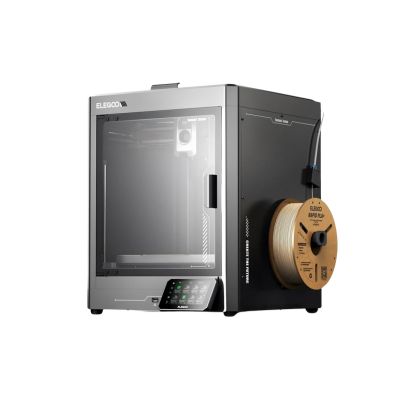 |
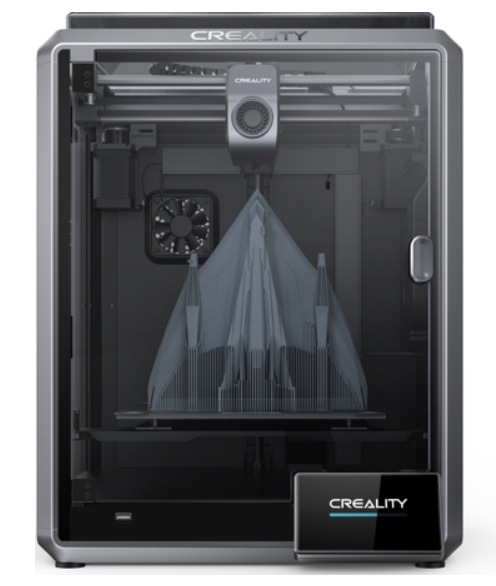 |
|
| Model | Elegoo Centauri Carbon |
Creality 3D K1C[BUY K1C] |
| Printing Material | Filament | Filament |
| Estimated price | $500,00 | $449,00 |
| Date of registration in the system | ||
| Manufacturer | Elegoo | Creality 3D |
| Release Year | 2025 | 2024 |
| Print Volume [mm] | 256x256x256 | 220x220x250 |
| Printer Size [mm] | 500x500x600 | 355x355x480 |
| Weight [kg] | 17,5 | 12,4 |
| Power Loss Recovery | YES | YES |
| Enclosed printer | YES | YES |
| Bed Leveling | Automatic | Automatic |
| Filament End Sensor | YES | YES |
| Bed type | Heated | Heated |
| Power supply system | Direct Drive | Direct Drive |
| Standard nozzle | 0,4 | 0,4 |
| Maximum Nozzle Temperature [°C] | 300 | 300 |
| Maximum Bed Temperature [°C] | 110 | 120 |
| Maximum printing speed [mm/s] | 500 | 600 |
| Filament holder | YES | YES |
| Camera for supervision | YES | YES |
| Recommended filaments | PLA, PETG, ABS, ASA, TPU, NYLON, CARBON FIBER | ABS, PLA, PETG, PET, TPU, PA, ABS, ASA, PC, PLA-CF, PA-CF, PET-CF |
| Recommended slicers | Elegoo Slicer, Orca Slicer | Creality Print; Cura, Simplify3D e PrusaSlicer |
| Maximum Resolution [mm] | 0,1 | 0,1 |
| Kinematics | - | - |
| Extruder Type | - | - |
| Klipper Firmware | NO | NO |
| Input Shaping | NO | NO |
| Max Volumetric Flow [mm³/s] | - | - |
| Power Supply | 350 W | 110/220V / 350W |
| Connectivity | WiFi, SD, USB | Ethernet / USB / Wi-Fi |
| Release date | 2025 | 2024 |
| Extra features | The Elegoo Centauri Carbon is a CoreXY 3D printer with an enclosed structure, direct drive extruder, and hardened steel components for abrasive materials. It features automatic bed leveling, a touchscreen, a filament cutting system, and an elongated nozzle designed to reduce clogs. It offers Wi-Fi connectivity for remote file transfer and runs on a Klipper-based firmware, providing advanced control and precise adjustments. | The Creality K1C is a fully enclosed CoreXY 3D printer featuring an all-metal extruder, tri-metal âUnicornâ nozzle for abrasive materials, automatic bed leveling with nozzle cleaning, AI-assisted failure detection, built-in camera for timelapse, enhanced cooling system, root access to Klipper firmware, and compatibility with PLA-CF, PA-CF, PET-CF, TPU, ABS, and more. |
| Support for multiple colors and materials (AMS and CFS) | NO | NO |
Notes * |
||
| Cost-benefit | 7 / 10 | 8 / 10 |
| Hardware | 5.4 / 10 | 4.8 / 10 |
| Screen | . | . |
| Print volume | 10 / 10 | 10 / 10 |
| Performance | 9 / 10 | 10 / 10 |
| [BUY K1C] |
Conclusion |
Conclusion: Comparative Review of Centauri Carbon (Elegoo) vs. K1C (Creality 3D) When evaluating the Elegoo Centauri Carbon and the Creality K1C, both printers are designed for users who appreciate high-speed, enclosed FDM printing with a focus on versatility and compatibility with abrasive materials. However, they cater to slightly different user profiles and have unique advantages and disadvantages that may influence buyer decisions. Centauri Carbon (Elegoo)
K1C (Creality 3D)
Final Verdict: The choice between the Centauri Carbon and the K1C largely depends on the user profile:
In conclusion, both printers are excellent in their own right, but the final decision should be based on your specific needs, budget, and level of expertise in 3D printing. |