
Compare Creality 3D CR5 PRO H vs Creality 3D K1C
Comparison between the best 3D printers
Choose the best 3D printer at the best price. The cheapest 3D printers are here.
Buy a 3D printer here with 3D Fila.
 |
 |
|
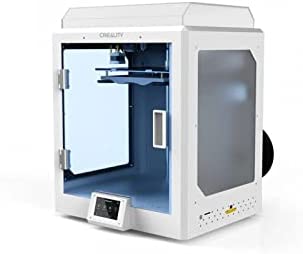
| Model | Creality 3D CR5 PRO H[BUY CR5 PRO H] |
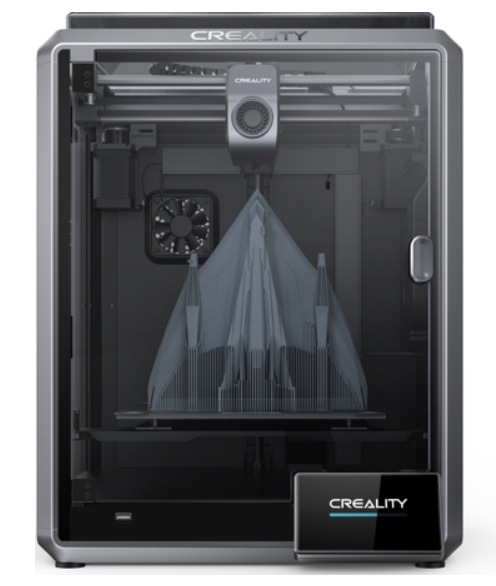
Creality 3D K1C[BUY K1C] |
| Printing Material | Filament | Filament |
| Estimated price | $1300,00 | $449,00 |
| Date of registration in the system | ||
| Manufacturer | Creality 3D | Creality 3D |
| Release Year | 2022 | 2024 |
| Print Volume [mm] | 300x225x380 | 220x220x250 |
| Printer Size [mm] | 530x487x612 | 355x355x480 |
| Weight [kg] | 32,5 | 12,4 |
| Power Loss Recovery | YES | YES |
| Enclosed printer | YES | YES |
| Bed Leveling | Automatic | Automatic |
| Filament End Sensor | YES | YES |
| Bed type | Heated | Heated |
| Power supply system | Bowden | Direct Drive |
| Standard nozzle | 0,4 | 0,4 |
| Maximum Nozzle Temperature [°C] | 300 | 300 |
| Maximum Bed Temperature [°C] | 100 | 120 |
| Maximum printing speed [mm/s] | 100 | 600 |
| Filament holder | YES | YES |
| Camera for supervision | NO | YES |
| Recommended filaments | PLA, PETG, Tritan, Flex, ABS | ABS, PLA, PETG, PET, TPU, PA, ABS, ASA, PC, PLA-CF, PA-CF, PET-CF |
| Recommended slicers | Cura, Simplify, Slic3r, IdeaMaker | Creality Print; Cura, Simplify3D e PrusaSlicer |
| Maximum Resolution [mm] | 0,1 | 0,1 |
| Kinematics | - | - |
| Extruder Type | - | - |
| Klipper Firmware | NO | NO |
| Input Shaping | NO | NO |
| Max Volumetric Flow [mm³/s] | - | - |
| Power Supply | 110/220V / 350W | 110/220V / 350W |
| Connectivity | SD / USB | Ethernet / USB / Wi-Fi |
| Release date | 2022 | 2024 |
| Extra features | The Creality CR-5 PRO H 3D Printer stands out with a high-temperature nozzle (up to 300°C), a 300 x 225 x 380mm print volume, and a closed chamber for thermal stability. It includes BLTouch auto-leveling, a carbon-crystal silica glass base for easy model grip and removal, a filament sensor, and a resume print function. It has a 4.3-inch touchscreen interface, quiet operation, an attractive design, and is pre-assembled, ideal for technical materials. | The Creality K1C is a fully enclosed CoreXY 3D printer featuring an all-metal extruder, tri-metal âUnicornâ nozzle for abrasive materials, automatic bed leveling with nozzle cleaning, AI-assisted failure detection, built-in camera for timelapse, enhanced cooling system, root access to Klipper firmware, and compatibility with PLA-CF, PA-CF, PET-CF, TPU, ABS, and more. |
| Support for multiple colors and materials (AMS and CFS) | NO | NO |
Notes * |
||
| Cost-benefit | 5 / 10 | 8 / 10 |
| Hardware | 3 / 10 | 4.8 / 10 |
| Screen | . | . |
| Print volume | 10 / 10 | 10 / 10 |
| Performance | 6 / 10 | 10 / 10 |
| [BUY CR5 PRO H] | [BUY K1C] |
Conclusion |
Conclusion: Comparative Review of CR5 PRO H and K1C 3D Printers In the world of 3D printing, selecting the right printer can be a daunting task, especially with the growing variety of options. In this review, we will compare two notable models from Creality: the CR5 PRO H and the K1C. Each printer offers unique features tailored to different user needs. Below, we will explore the pros and cons of each model to help you determine which is the best buy for your particular profile. CR5 PRO H (Creality 3D)Pros:
Cons:
K1C (Creality 3D)Pros:
Cons:
Final VerdictThe choice between the CR5 PRO H and K1C ultimately depends on the user's needs and priorities:
In conclusion, both printers have their merits and can cater to different segments of the 3D printing community effectively. Choose based on your specific needs, and you will be satisfied with either option. |