

Compare TwoTrees Bluer vs Elegoo Centauri Carbon
Comparison between the best 3D printers
Choose the best 3D printer at the best price. The cheapest 3D printers are here.
Buy a 3D printer here with 3D Fila.
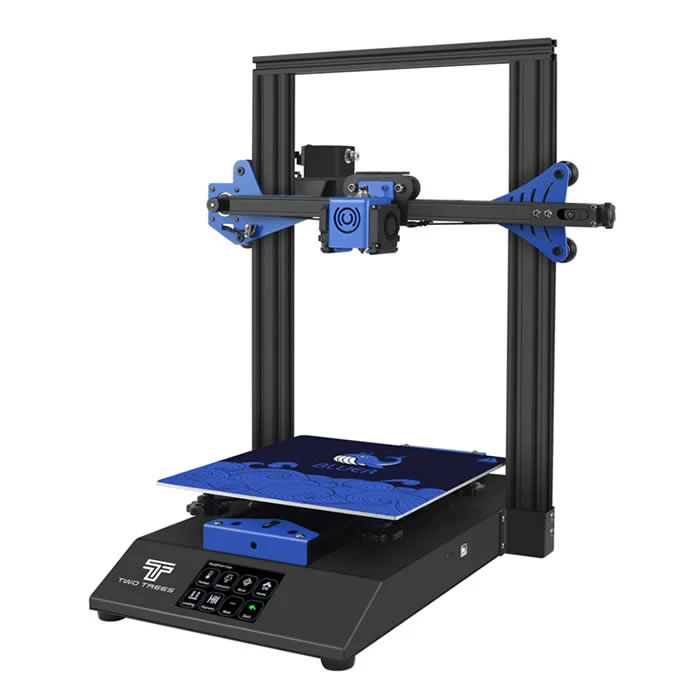 |
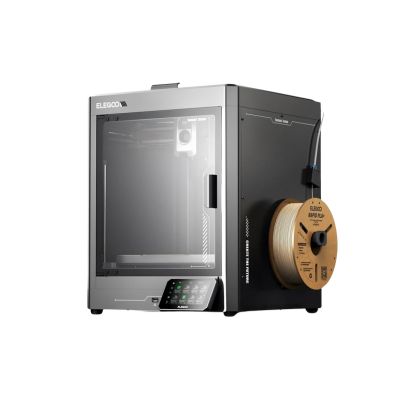 |
|
| Model | TwoTrees Bluer |
Elegoo Centauri Carbon |
| Printing Material | Filament | Filament |
| Estimated price | $169,00 | $500,00 |
| Date of registration in the system | ||
| Manufacturer | TwoTrees | Elegoo |
| Release Year | 2019 | 2025 |
| Print Volume [mm] | 230x230x280 | 256x256x256 |
| Printer Size [mm] | 400x410x520 | 500x500x600 |
| Weight [kg] | 8 | 17,5 |
| Power Loss Recovery | YES | YES |
| Enclosed printer | NO | YES |
| Bed Leveling | Manual | Automatic |
| Filament End Sensor | YES | YES |
| Bed type | Heated | Heated |
| Power supply system | Bowden | Direct Drive |
| Standard nozzle | 0,4 | 0,4 |
| Maximum Nozzle Temperature [°C] | 260 | 300 |
| Maximum Bed Temperature [°C] | 100 | 110 |
| Maximum printing speed [mm/s] | 200 | 500 |
| Filament holder | YES | YES |
| Camera for supervision | NO | YES |
| Recommended filaments | PLA, PETG | PLA, PETG, ABS, ASA, TPU, NYLON, CARBON FIBER |
| Recommended slicers | Cura, Simplify, Slic3r | Elegoo Slicer, Orca Slicer |
| Maximum Resolution [mm] | 0,1 | 0,1 |
| Kinematics | - | - |
| Extruder Type | - | - |
| Klipper Firmware | NO | NO |
| Input Shaping | NO | NO |
| Max Volumetric Flow [mm³/s] | - | - |
| Power Supply | 240W | 350 W |
| Connectivity | SD / USB | WiFi, SD, USB |
| Release date | 2019 | 2025 |
| Extra features | The Bluer offers interesting features such as automatic bed leveling, a 3.5-inch color touchscreen for easy operation, and a filament sensor to prevent print failures. It has a robust metal extruder and a generous 230 x 230 x 280 mm print volume, suitable for a variety of projects. The community mentions improvements made by Two Trees based on feedback, increasing its reliability. | The Elegoo Centauri Carbon is a CoreXY 3D printer with an enclosed structure, direct drive extruder, and hardened steel components for abrasive materials. It features automatic bed leveling, a touchscreen, a filament cutting system, and an elongated nozzle designed to reduce clogs. It offers Wi-Fi connectivity for remote file transfer and runs on a Klipper-based firmware, providing advanced control and precise adjustments. |
| Support for multiple colors and materials (AMS and CFS) | NO | NO |
Notes * |
||
| Cost-benefit | 8 / 10 | 7 / 10 |
| Hardware | 1 / 10 | 5.4 / 10 |
| Screen | . | . |
| Print volume | 10 / 10 | 10 / 10 |
| Performance | 7 / 10 | 9 / 10 |
Conclusion |
| In conclusion, when comparing the TwoTrees Bluer and the Elegoo Centauri Carbon 3D printers, it’s evident that both have unique advantages that cater to different user needs and budgets. The TwoTrees Bluer stands out as a highly affordable entry-level option with a solid set of features, making it a suitable choice for hobbyists or newcomers to 3D printing. Despite its lower price point, it offers essential functionalities such as a heated bed, filament end sensor, and a user-friendly interface through its touchscreen display. However, its limitations include a smaller print volume and manual bed leveling, which may restrict its use for larger or more complex projects. On the other hand, the Elegoo Centauri Carbon is positioned as a premium offering, providing advanced features that justify its higher price. Its larger print volume, automatic bed leveling, and direct drive extruder enhance usability and versatility, particularly for users who require the ability to print with a wider range of materials. The CoreXY design also allows for faster print speeds and high precision, making it better suited for more demanding printing tasks. In terms of overall cost-benefit, the TwoTrees Bluer offers decent value for its cost, but the Elegoo Centauri Carbon provides a more robust feature set that could be a better investment for serious makers and professionals. Ultimately, the choice between the two will depend on your specific needs, budget, and intended applications in 3D printing. |