
Compare Bambu Lab A1 Mini vs Creality 3D K1C
Comparison between the best 3D printers
Choose the best 3D printer at the best price. The cheapest 3D printers are here.
Buy a 3D printer here with 3D Fila.
 |
 |
|
| Model | Bambu Lab A1 Mini |
Creality 3D K1C[BUY K1C] |
| Printing Material | Filament | Filament |
| Estimated price | $549,00 | $449,00 |
| Date of registration in the system | ||
| Manufacturer | Bambu Lab | Creality 3D |
| Release Year | 2023 | 2024 |
| Print Volume [mm] | 180x180x180 | 220x220x250 |
| Printer Size [mm] | 315x347x365 | 355x355x480 |
| Weight [kg] | 5,5 | 12,4 |
| Power Loss Recovery | YES | YES |
| Enclosed printer | NO | YES |
| Bed Leveling | Automatic | Automatic |
| Filament End Sensor | YES | YES |
| Bed type | Heated | Heated |
| Power supply system | Direct Drive | Direct Drive |
| Standard nozzle | 0,4 | 0,4 |
| Maximum Nozzle Temperature [°C] | 300 | 300 |
| Maximum Bed Temperature [°C] | 80 | 120 |
| Maximum printing speed [mm/s] | 500 | 600 |
| Filament holder | YES | YES |
| Camera for supervision | YES | YES |
| Recommended filaments | PLA, PETG, TPU, PVA | ABS, PLA, PETG, PET, TPU, PA, ABS, ASA, PC, PLA-CF, PA-CF, PET-CF |
| Recommended slicers | Bambu Studio, Super Slicer, Cura, Prusa Slicer, Orca | Creality Print; Cura, Simplify3D e PrusaSlicer |
| Maximum Resolution [mm] | 0,1 | 0,1 |
| Kinematics | - | - |
| Extruder Type | - | - |
| Klipper Firmware | NO | NO |
| Input Shaping | NO | NO |
| Max Volumetric Flow [mm³/s] | - | - |
| Power Supply | 150 W | 110/220V / 350W |
| Connectivity | Wifi, Bambu bus, Cartão SD | Ethernet / USB / Wi-Fi |
| Release date | 2023 | 2024 |
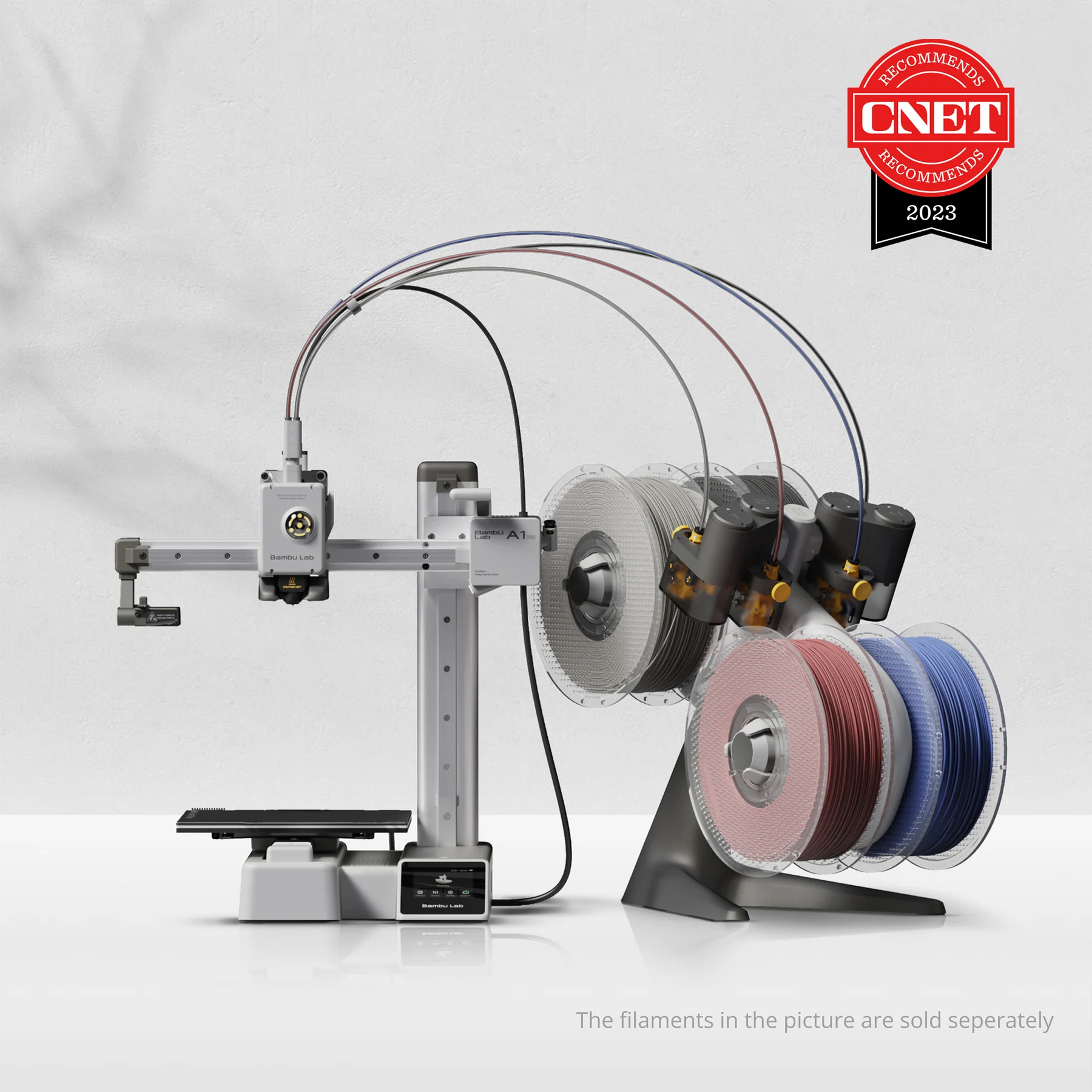
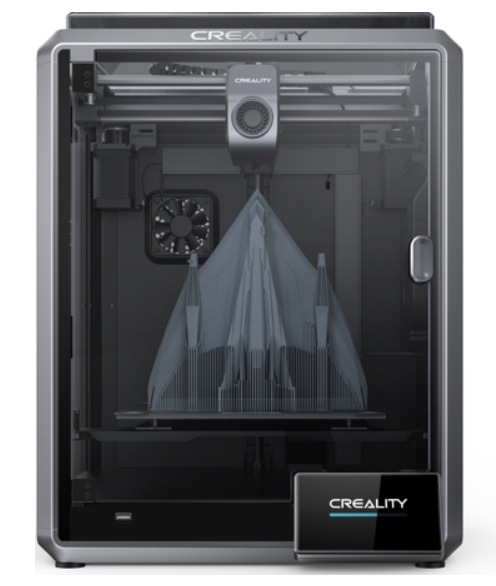
| Extra features | The Bambu Lab A1 Mini stands out not only for its impressive speed and automatic calibration, but also for its multi-color printing capability thanks to AMS Lite. This innovative system makes multi-color printing easy, making it accessible to everyone. AMS Lite, specific to the A1 Mini, supports up to four different materials simultaneously, providing creative freedom without complications. With comprehensive sensors for energy monitoring and recovery, a camera for timelapses and Wi-Fi control, the A1 Mini and AMS Lite together offer an intuitive and advanced 3D printing experience, ideal for materials such as PLA, PETG and TPU, and designed for simplicity and fast maintenance with quick-change nozzles. | The Creality K1C is a fully enclosed CoreXY 3D printer featuring an all-metal extruder, tri-metal âUnicornâ nozzle for abrasive materials, automatic bed leveling with nozzle cleaning, AI-assisted failure detection, built-in camera for timelapse, enhanced cooling system, root access to Klipper firmware, and compatibility with PLA-CF, PA-CF, PET-CF, TPU, ABS, and more. |
| Support for multiple colors and materials (AMS and CFS) | YES | NO |
Notes * |
||
| Cost-benefit | 8 / 10 | 8 / 10 |
| Hardware | 5.6 / 10 | 4.8 / 10 |
| Screen | . | . |
| Print volume | 10 / 10 | 10 / 10 |
| Performance | 9 / 10 | 10 / 10 |
| [BUY K1C] |
Conclusion |
| When comparing the Bambu Lab A1 Mini and the Creality 3D K1C, several key aspects emerge that can help potential buyers in choosing the most suitable 3D printer for their needs. Firstly, while both printers utilize filament and offer automatic bed leveling, the A1 Mini is particularly noted for its innovative multi-color printing capabilities through the AMS Lite system, supporting up to four materials simultaneously. This feature caters to users interested in creative projects involving various colors, whereas the K1C is more focused on compatibility with a broader range of materials, including several variants of carbon fiber and tougher materials due to its advanced metal extruder design. In terms of physical dimensions, the K1C offers a larger print volume compared to the A1 Mini, accommodating bigger projects, which is an essential consideration for users requiring larger prints. The fully enclosed design of the K1C also provides enhanced temperature stability and safety during printing, a feature that's lacking in the A1 Mini. Price differences and value assessments also play a crucial role in the decision-making process. While the A1 Mini is priced higher, it offers unique features that might justify the cost for hobbyists interested in multi-material printing. On the other hand, the K1C, being slightly cheaper, provides solid value for those prioritizing material versatility and robustness in construction. Lastly, connectivity options and design aesthetics differ, with the K1C boasting a larger touchscreen and various connectivity methods, enhancing usability. In contrast, the A1 Mini excels in speed and efficiency, making it an attractive option for quick prototyping. In conclusion, the choice between the Bambu Lab A1 Mini and the Creality 3D K1C ultimately hinges on individual user preferences. For those seeking advanced features in color printing and speed, the A1 Mini is a compelling choice, while the K1C offers significant advantages in material compatibility and larger print capacity at a more attractive price point. Each model has its strengths, making them suitable for different types of 3D printing enthusiasts. |