
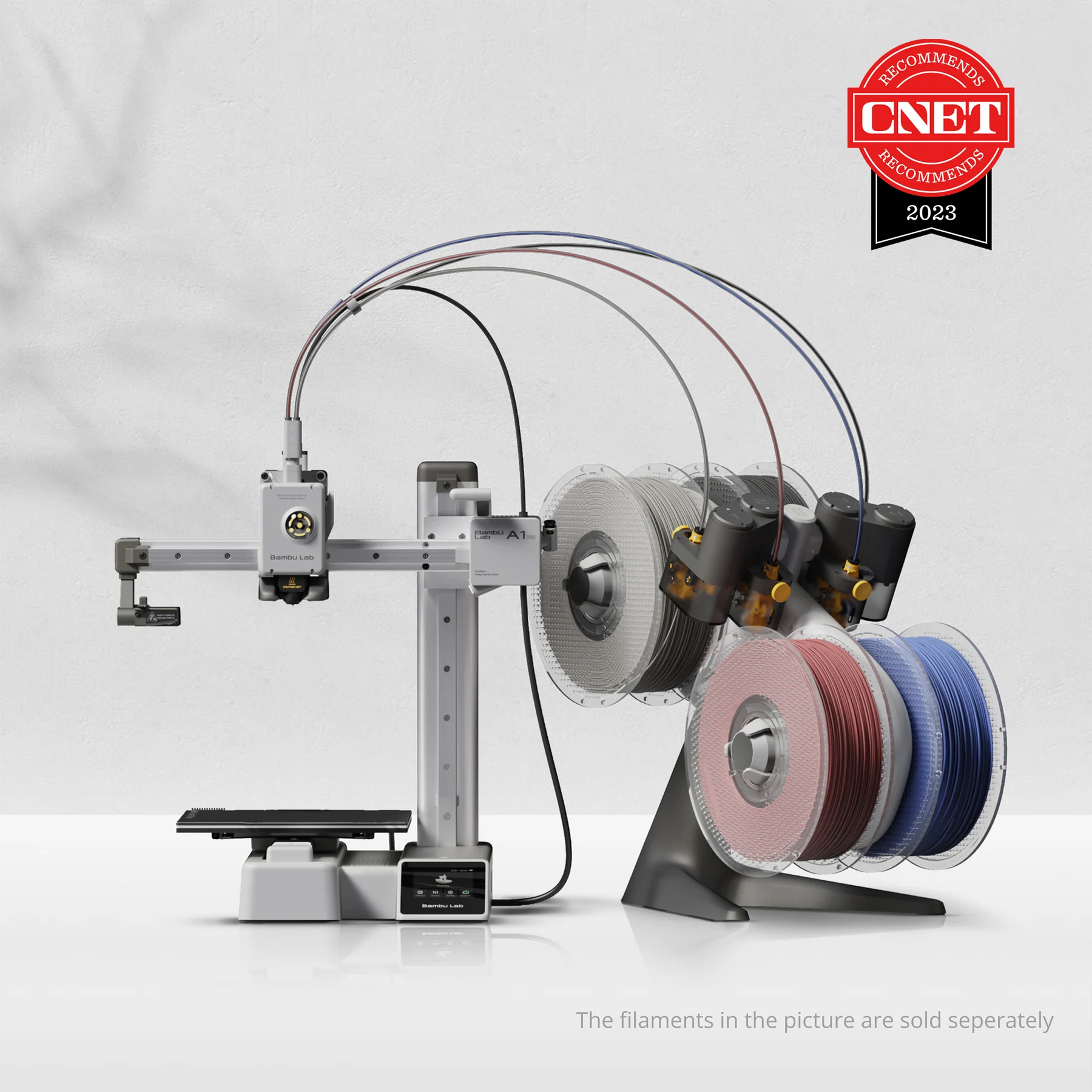
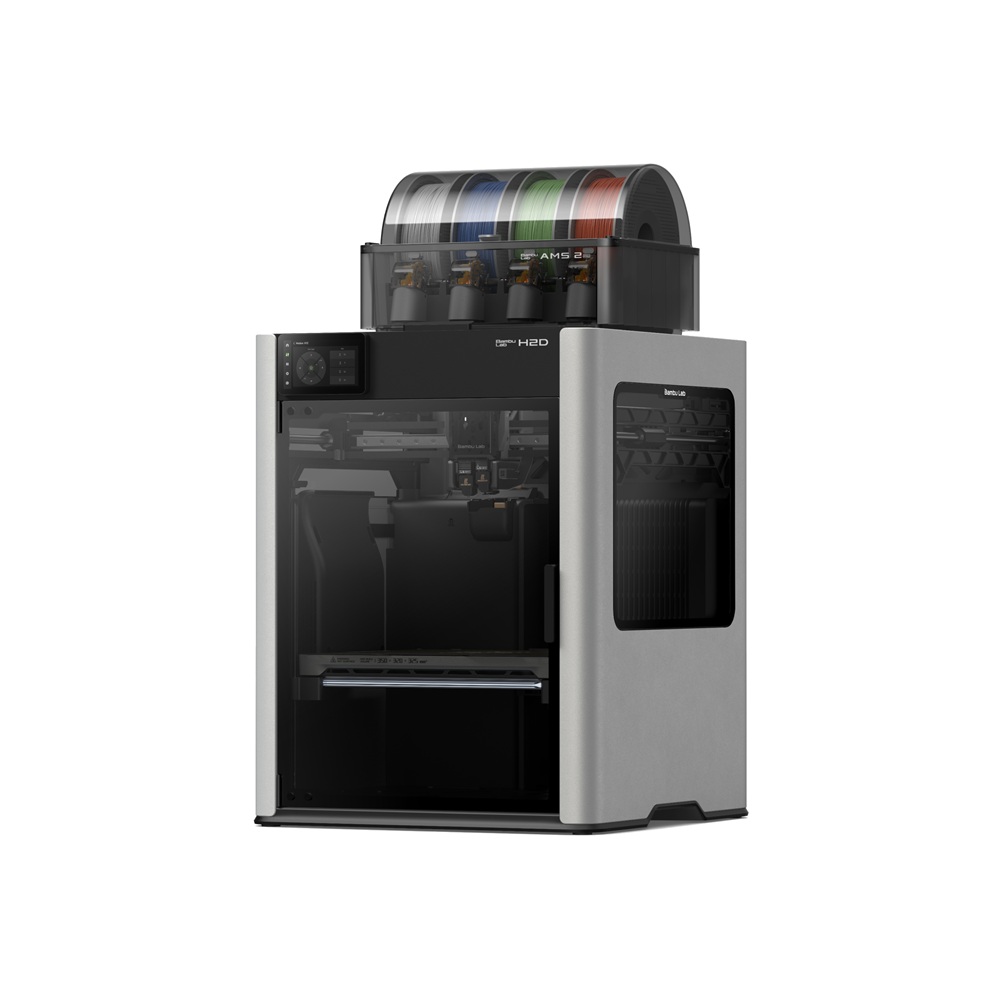
Compare Bambu Lab A1 Mini vs Bambu Lab H2D
Comparison between the best 3D printers
Choose the best 3D printer at the best price. The cheapest 3D printers are here.
Buy a 3D printer here with 3D Fila.
 |
 |
|
| Model | Bambu Lab A1 Mini |
Bambu Lab H2D |
| Printing Material | Filament | Filament |
| Estimated price | $549,00 | $1899,00 |
| Date of registration in the system | ||
| Manufacturer | Bambu Lab | Bambu Lab |
| Release Year | 2023 | 2025 |
| Print Volume [mm] | 180x180x180 | 350x320x325 |
| Printer Size [mm] | 315x347x365 | 492x514x626 |
| Weight [kg] | 5,5 | 42,3 |
| Power Loss Recovery | YES | YES |
| Enclosed printer | NO | YES |
| Bed Leveling | Automatic | Automatic |
| Filament End Sensor | YES | YES |
| Bed type | Heated | Heated |
| Power supply system | Direct Drive | Direct Drive |
| Standard nozzle | 0,4 | 0,4 |
| Maximum Nozzle Temperature [°C] | 300 | 350 |
| Maximum Bed Temperature [°C] | 80 | 120 |
| Maximum printing speed [mm/s] | 500 | 600 |
| Filament holder | YES | YES |
| Camera for supervision | YES | YES |
| Recommended filaments | PLA, PETG, TPU, PVA | PLA, PETG, ABS, ASA, TPU, PVA, Nylon (PA) |
| Recommended slicers | Bambu Studio, Super Slicer, Cura, Prusa Slicer, Orca | Bambu Studio |
| Maximum Resolution [mm] | 0,1 | 0,01 |
| Kinematics | - | - |
| Extruder Type | - | - |
| Klipper Firmware | NO | NO |
| Input Shaping | NO | NO |
| Max Volumetric Flow [mm³/s] | - | - |
| Power Supply | 150 W | |
| Connectivity | Wifi, Bambu bus, Cartão SD | Wifi, Bambu bus, Cartão SD |
| Release date | 2023 | 2025 |
| Extra features | The Bambu Lab A1 Mini stands out not only for its impressive speed and automatic calibration, but also for its multi-color printing capability thanks to AMS Lite. This innovative system makes multi-color printing easy, making it accessible to everyone. AMS Lite, specific to the A1 Mini, supports up to four different materials simultaneously, providing creative freedom without complications. With comprehensive sensors for energy monitoring and recovery, a camera for timelapses and Wi-Fi control, the A1 Mini and AMS Lite together offer an intuitive and advanced 3D printing experience, ideal for materials such as PLA, PETG and TPU, and designed for simplicity and fast maintenance with quick-change nozzles. | Bambu Labâs H2D combines high-speed 3D printing with a chamber heated up to 65 °C, dual extrusion with automatic nozzle switching, an AMS for filament drying and exchange, and AI sensors that detect failures. It offers optional laser and digital cutting capabilities, features intelligent calibration through computer vision, vibration control, enhanced fire safety, and real-time camera monitoring. |
| Support for multiple colors and materials (AMS and CFS) | YES | YES |
Notes * |
||
| Cost-benefit | 8 / 10 | 6 / 10 |
| Hardware | 5.6 / 10 | 8.1 / 10 |
| Screen | . | . |
| Print volume | 10 / 10 | 10 / 10 |
| Performance | 9 / 10 | 10 / 10 |
Conclusion |
| In comparing the Bambu Lab A1 Mini and the H2D 3D printers, it becomes clear that both models cater to different needs and preferences among 3D printing enthusiasts. The A1 Mini is a compact and budget-friendly option with a focus on accessibility and ease of use. It features a smaller print volume, making it suitable for hobbyists or those with limited workspace. Its speed, multi-color printing capability, and intuitive design make it an excellent choice for beginners or casual users who want quick results with materials like PLA and PETG. Additionally, the automatic calibration and monitoring features enhance its user-friendliness. On the other hand, the H2D is designed for professionals or serious makers who demand more from their 3D printing capabilities. With a significantly larger print volume, superior resolution, and dual extrusion capabilities, it can handle a wider range of materials, including more advanced filaments like ABS and Nylon. The integrated features such as intelligent calibration, filament drying, and advanced safety measures position it as a high-performance machine suited for more complex projects. While the A1 Mini offers an attractive entry point with a good cost-benefit ratio, the H2D justifies its higher price with additional features and capabilities that cater to demanding applications. Ultimately, the choice between the two boils down to the user’s specific needs—whether seeking a cost-effective starter printer or a powerful, versatile machine for professional use. |